Rooting Bolete
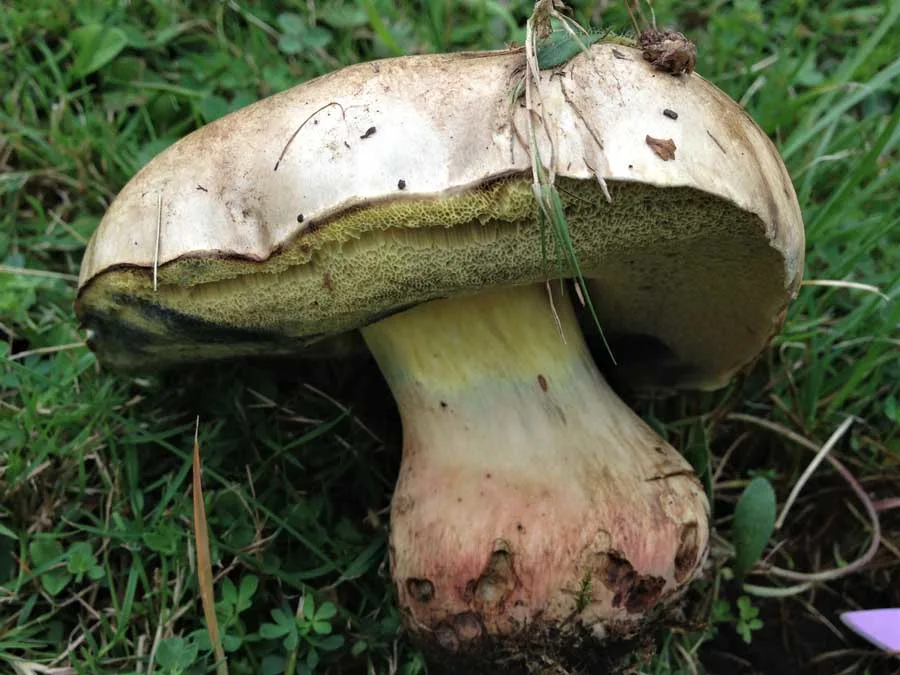


Caloboletus radicans, also known as the rooting bolete or whitish bolete, is a large ectomycorrhizal fungus found in Europe under broad-leaved trees, fruiting during the summer and autumn months.
Scientific Name – Boletus / Caloboletus radicans


Common Names:
Rooting Bolete (EN), Cap Tyllog Gwreiddiog (CY), Gorzkoborowik Korzeniasty (PL), Kesernyés Tinóru (HU)
Please note that each and every mushroom you come across may vary in appearance to these photos.
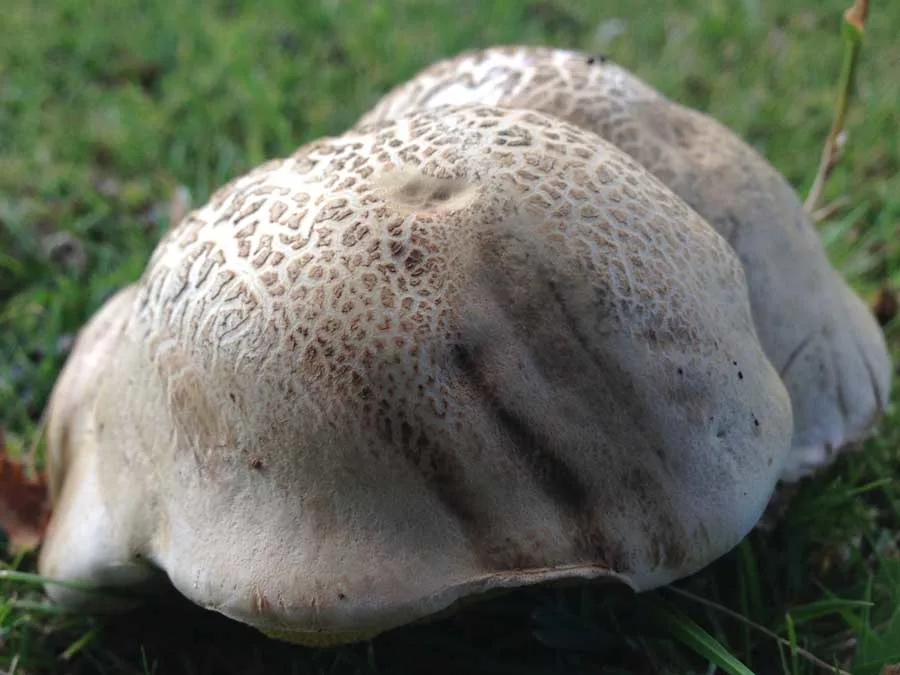
Cap
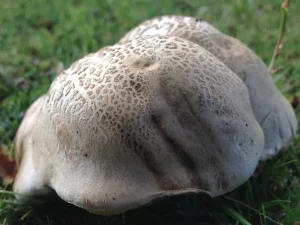
7-12 cm. Off white to grey/brown, darkening with age. Can get very big and uneven and will show cracking on the surface of the cap.
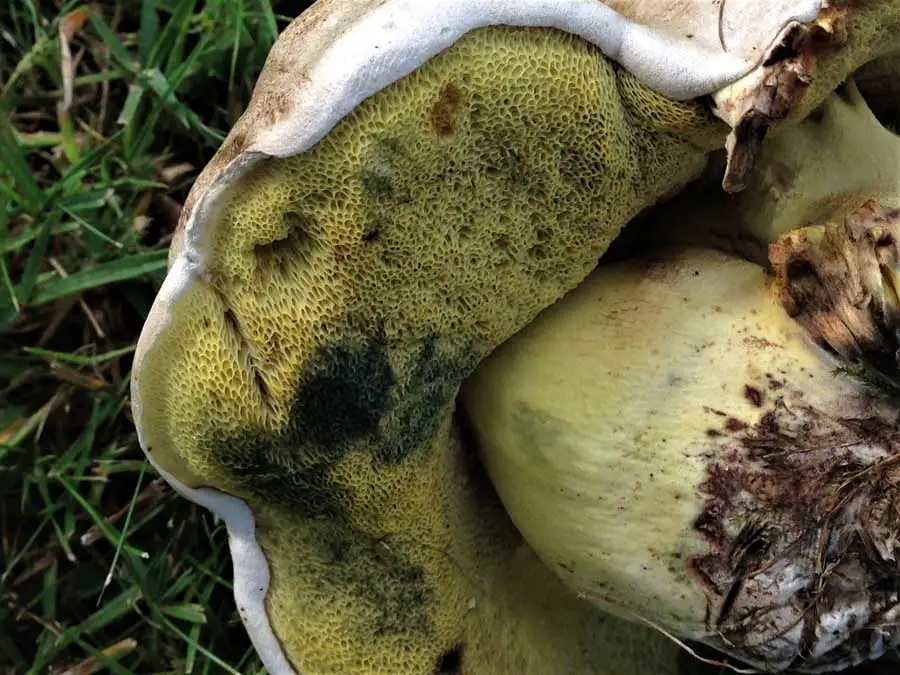
Pores
Has yellow, tight, sponge like pores which bruise blue.
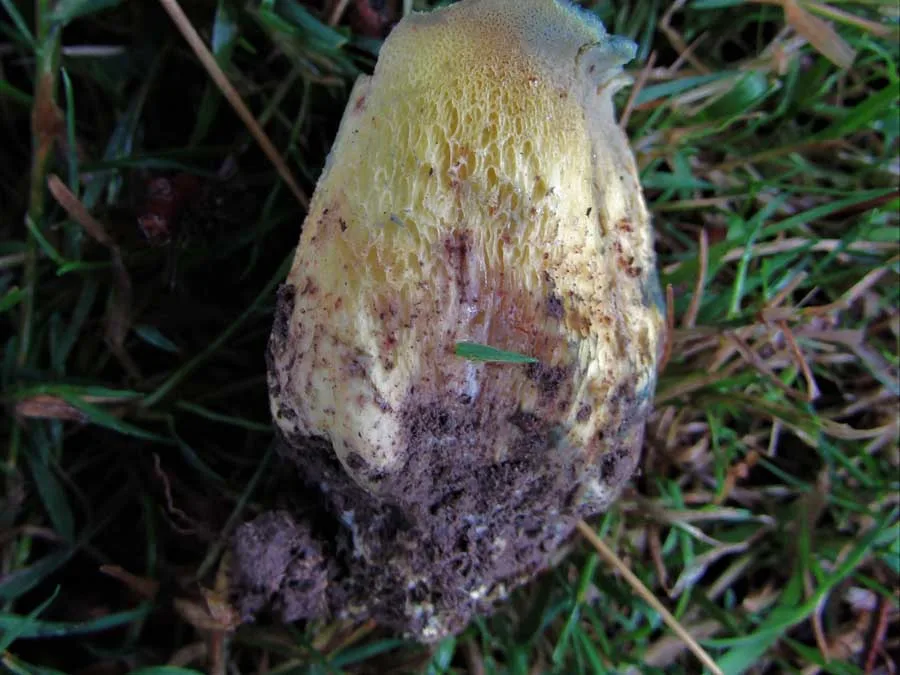
Stem
7-10 long, 3-4 cm diameter . Lemon yellow at the top becoming pale red or brown and ‘dirtier’ towards the swollen, slightly rooting base. The stem has a light coloured reticulation which is easiest to see towards the apex.

Flesh
Yellow when first cut but quickly changing to off white in the cap and then turning blue.

Habitat
Usually with oak and beech but will grow with other deciduous trees.

Possible Confusion
Other Boletes, particularly Bitter Beech Bolete (Caloboletus calopus), pictured.
Other Facts
Often seen on compacted roadside verges, the Rooting Bolete, Caloboletus radicans, looks as though it has been pelted with fast-flying chippings thrown out from the tyres of passing traffic. The pale grey caps are usually dented and misshapen, particularly in more mature specimens. It comes as quite a surprise, therefore, when you look underneath the cap and discover beautiful yellow pores that turn pale to mid blue if you touch them.