Amethyst Deceiver
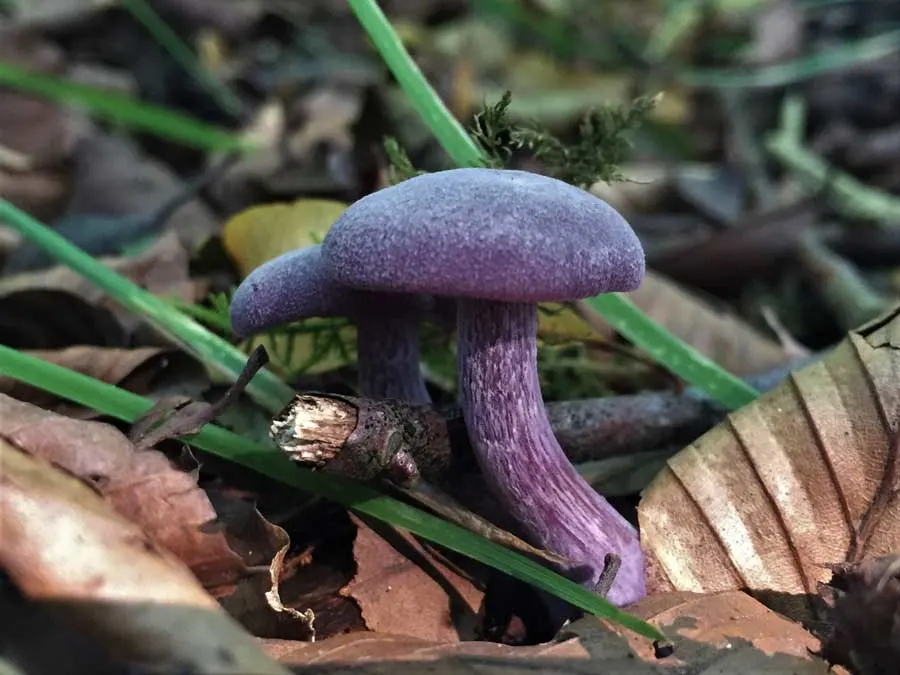




Please note that each and every mushroom you come across may vary in appearance to these photos.

Cap
1.5-5 cm. Convex to flattened with depressed centre and even upturned edges, often becoming deformed with age. Deep purple/lilac when young fading to pale brown/tan.

Gills
Gills deep purple/lilac when young fading to pale brown/tan. Widely spaced, broad and irregular with shorter gills in-between. The gills have a smooth notch just before reaching the stem or become shallow before reaching the stem (adnate, emarginate).
Stem
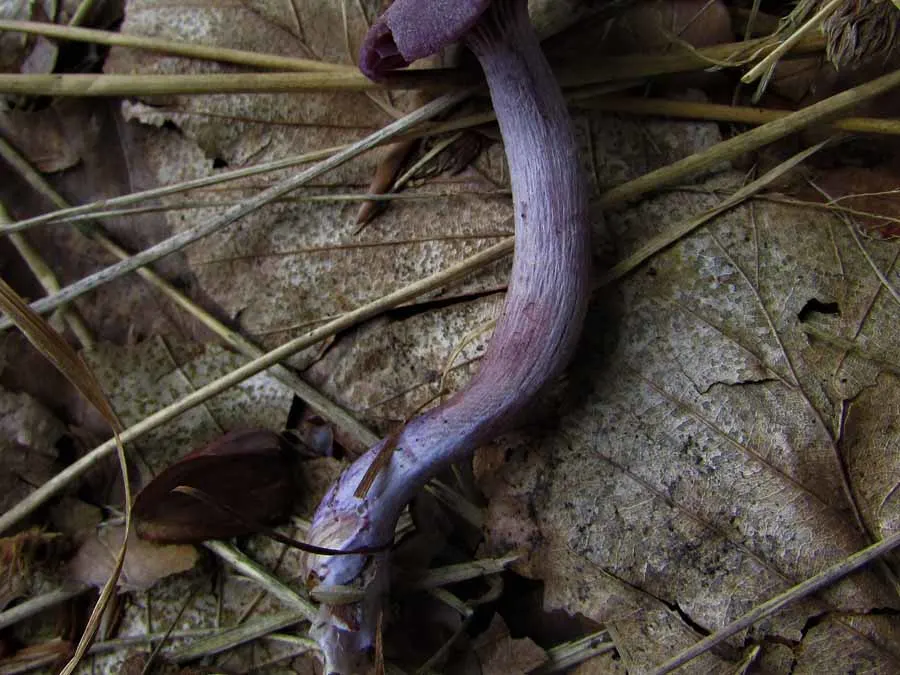
4-6 cm long, 0.2-0.8 cm diameter. Deep purple/lilac when young fading to pale brown/tan. Fibrous, usually twisted and sometimes hollow.
Flesh
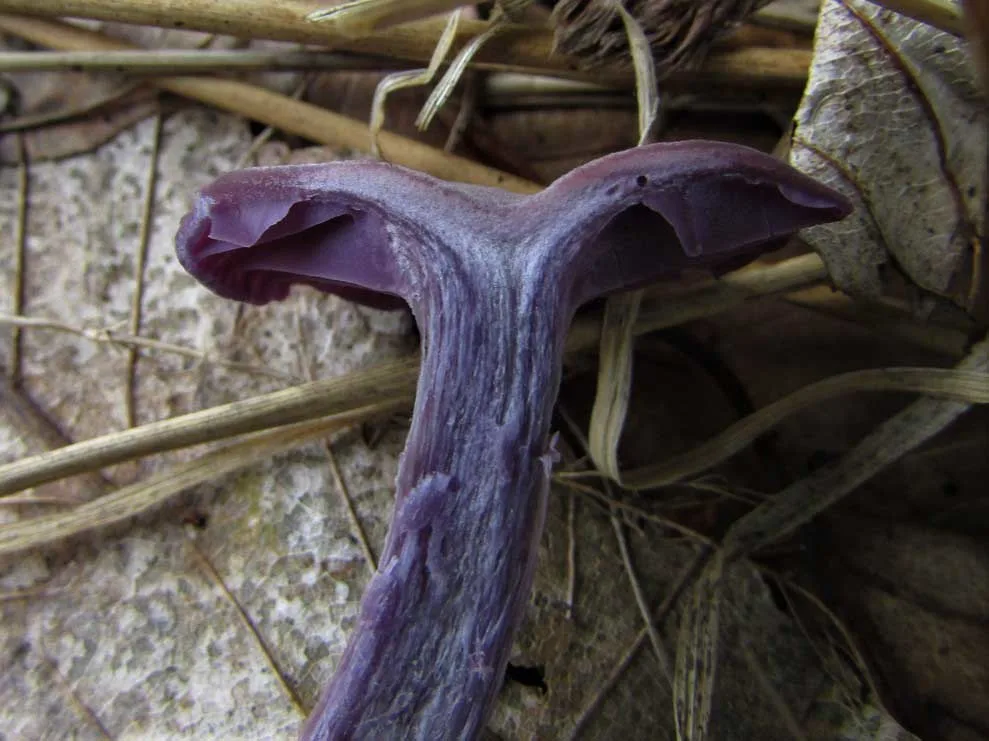
Purple can be white with a purple flush.

Habitat
The species is common in most temperate zones of Europe (June–December), Asia, Central, South, and eastern North America. It grows solitary to scattered with a variety of deciduous and coniferous trees, with which it is mycorrhizally associated, though it most commonly occurs with trees in the Fagales. It appears in late summer to early winter, and often with beech; in Central and South America, it more commonly grows in association with oak. Research has shown that L. amethystina is a so-called “ammonia fungus”, an ecological classification referring to those fungi that grow abundantly on soil after the addition of ammonia, or other nitrogen-containing material; the congeneric species Laccaria bicolor is also an ammonia fungus.
Possible Confusion
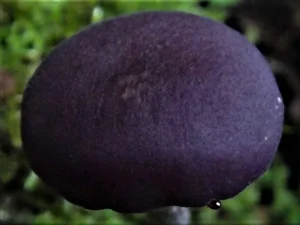
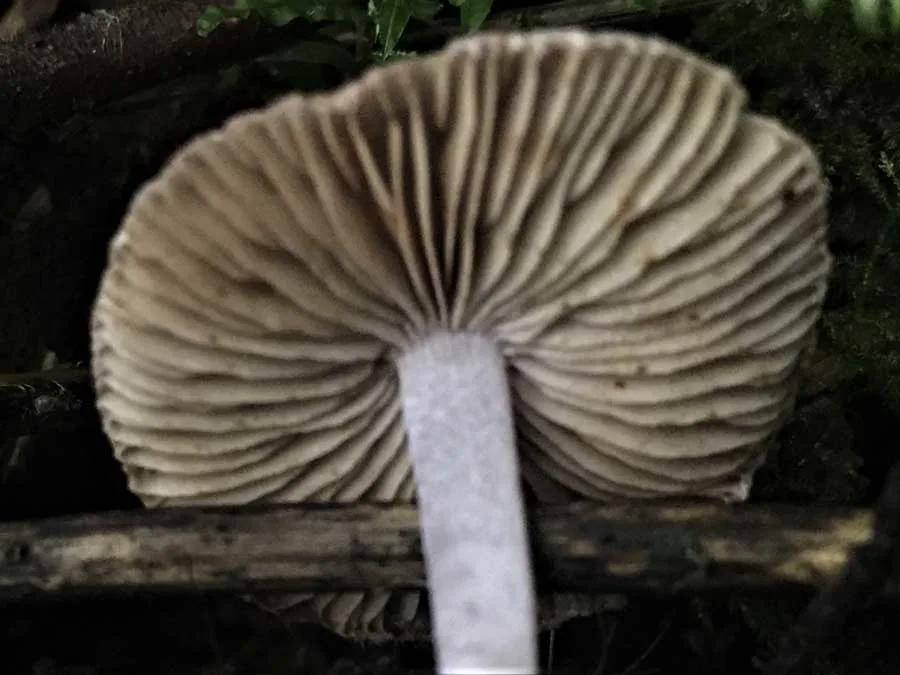
When young the deep purple of the Amethyst Deceiver is quite distinctive. Caution should be taken with older specimens however as the whole mushroom can fade and look more tinged than purple. The fading can make identification less sure as there could easily be a confusion with the potentially deadly Lilac Fibrecap (Inocybe lilacina), pictured, but this mushroom has off white or grey gills whereas the Amethyst Deceiver has the same colour in the cap, gills and stem.
Other Facts
As with other members of the genus, this species is edible, though generally not considered choice.[citation needed] While not inherently toxic, in soils that are polluted with arsenic, it can bioaccumulate a high concentration of that element. The gills of nontoxic specimens should be cleaned thoroughly.