Beech Milkcap


Lactarius blennius (commonly known as the slimy milkcap or beech milkcap) is a medium-sized mushroom of the genus Lactarius found commonly in beech forests in Europe, where it is mycorrhizal, favouring the European beech (though associations with other trees are known). It was first described by Elias Magnus Fries. Though its colour and size vary, it is distinctive because it is slimy when wet and exudes copious amounts of milk. It has been the subject of some chemical research, and it can be used to produce pigments and blennins.
Scientific Name – Lactarius blennius
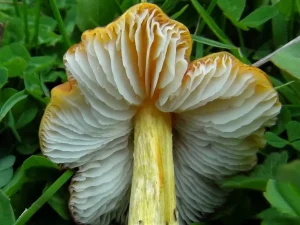
Common Names:
Beech Milkcap (EN), Slimy Milkcap (US), Cap Llaeth Llysnafeddog (CY), Mleczaj Śluzowaty (PL), Zöldes Tejelőgomba (HU)
Please note that each and every mushroom you come across may vary in appearance to these photos.
Cap
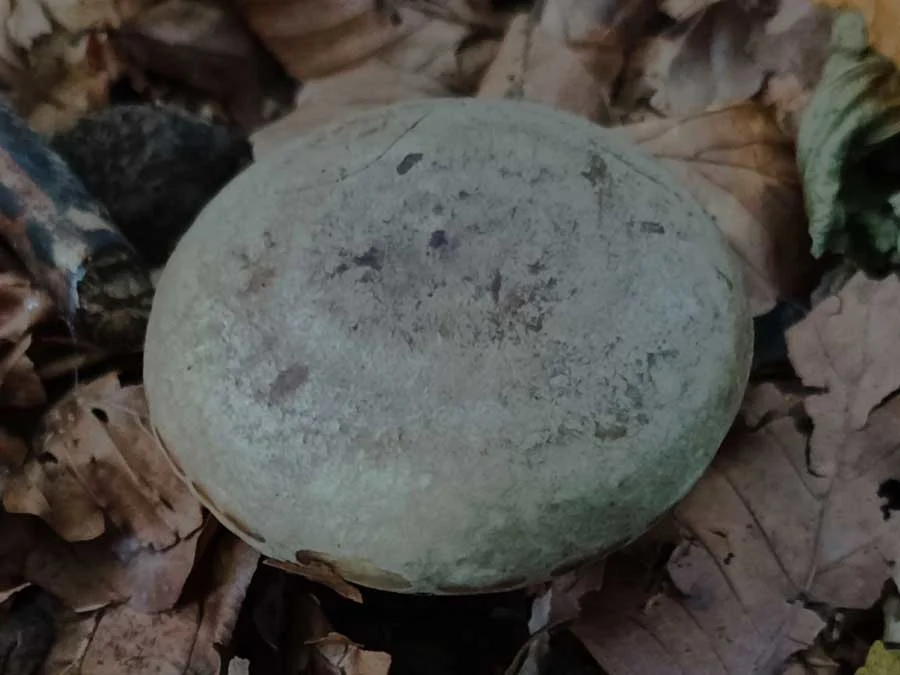
4–10 cm across. Very pale and dull coloured varying from olive yellow to grey to grey green to buff. Can have darker patches or concentric rings. Starting convex with an in-rolled margin but flattening out and developing a depressed centre with uneven wavy edges.

Gills
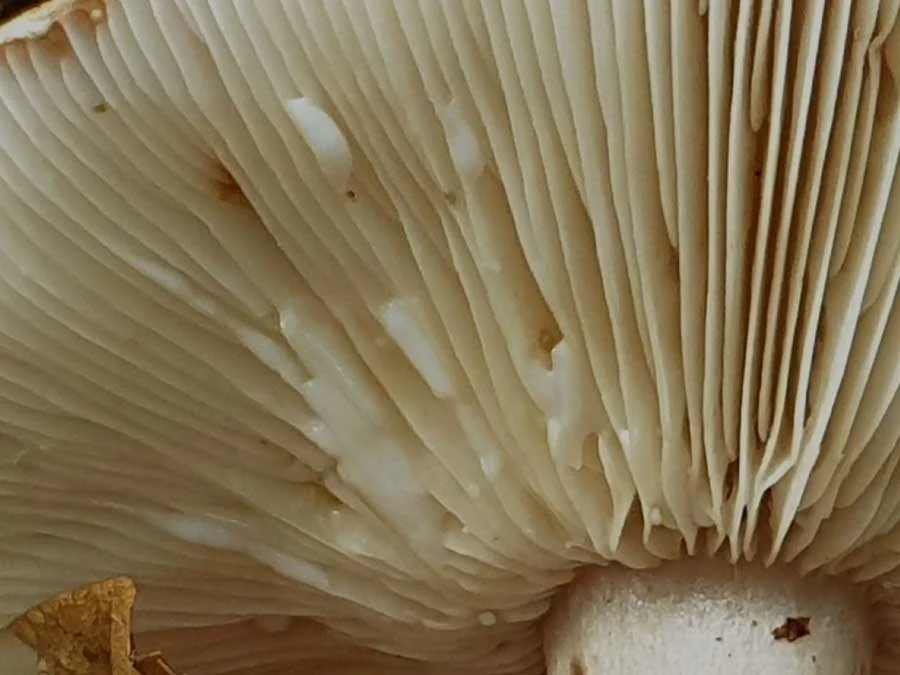
Crowded, almost fully attached to the stem (adnate) or slightly decurrent. Starting white becoming cream to pal tan, the edge is smooth. The gills bruise darker if damaged and produce latex.
Milk
White and copious, dries grey and is very hot to taste.
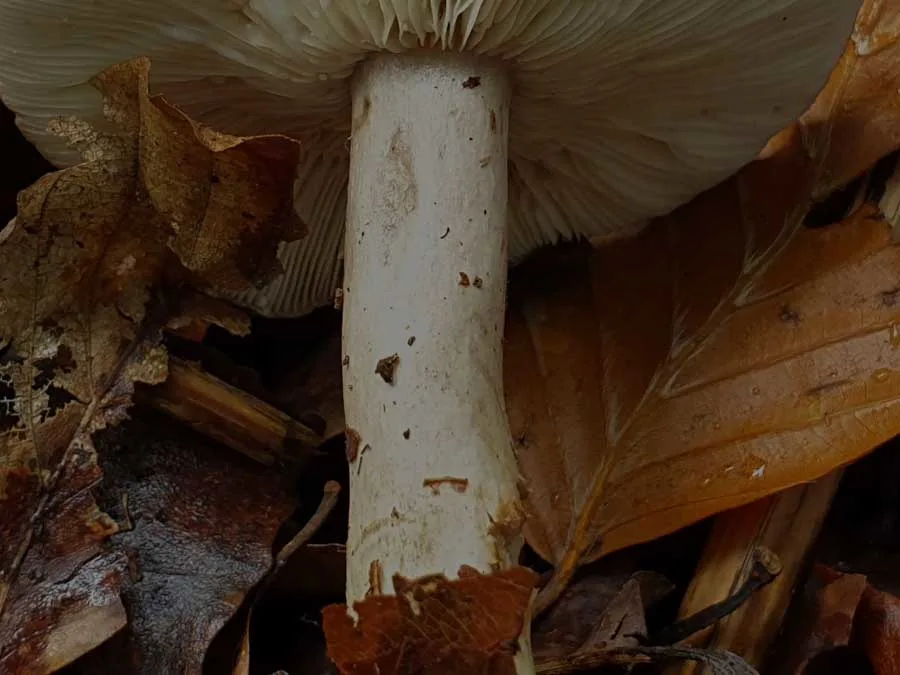
Stem
Usually concolorous with the cap but a little lighter. Smooth or slightly grooved or wrinkled.
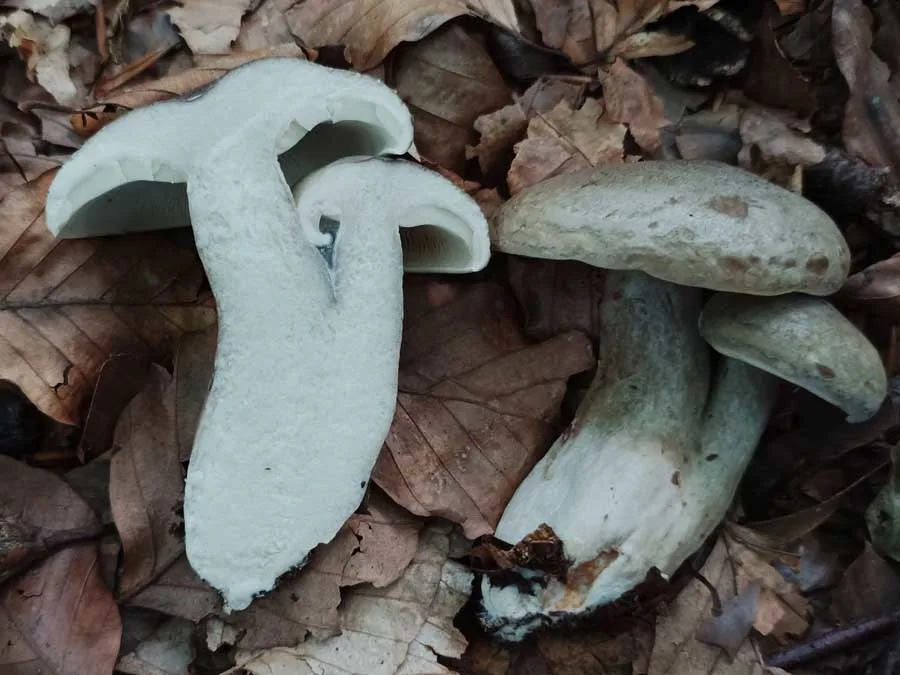
Flesh
Off white and granular.
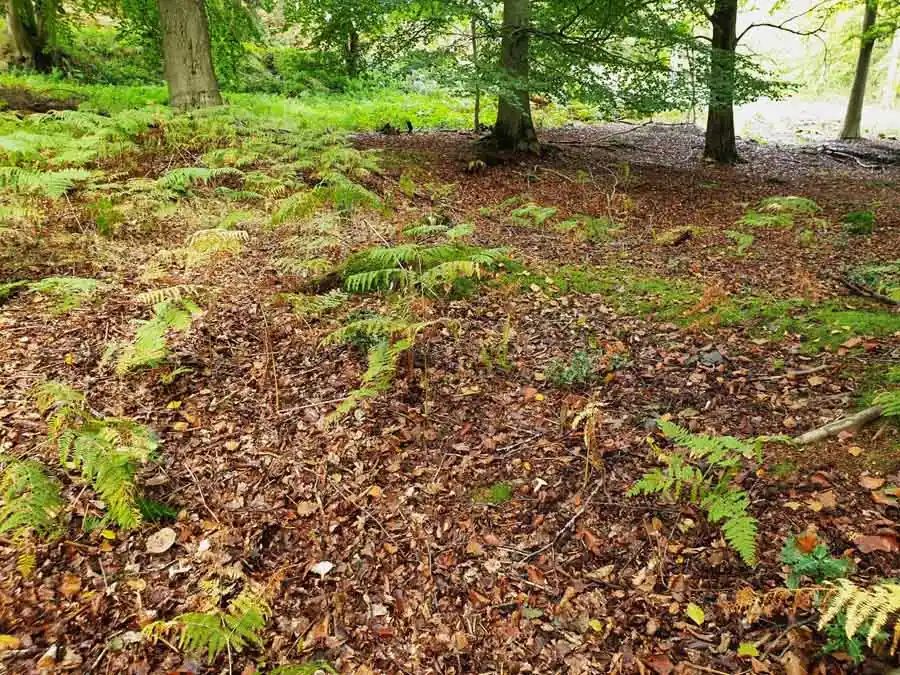
Habitat
Lactarius blennius is very common and is found in broad-leaved woodland, favouring beech; it is most associated with Fagus sylvatica, the European Beech, though it has also been observed growing in association with species of oak. It forms an ectomycorrhizal association with trees, and can grow on a wide variety of subsoil types, but is more typical of acidic soil. It is found between late summer and late autumn, and is native to Europe. The distribution of the mushroom coincides with the distribution of beech. In the British Isles, the species is one of the one hundred most common mushrooms. Other areas in which it has been recorded include Sweden, France, Italy, and Poland.
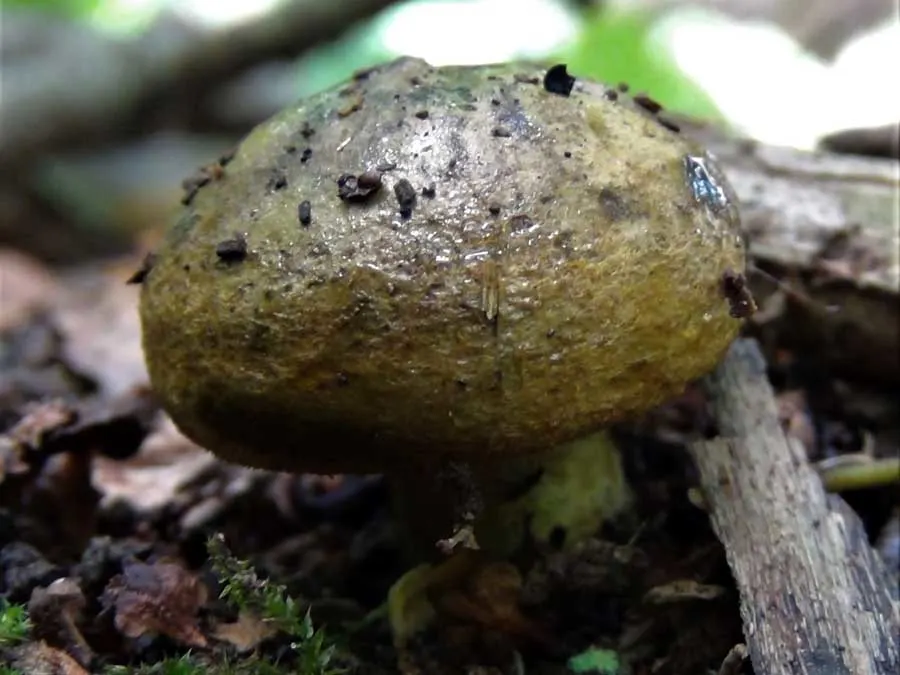
Possible Confusion
The Ugly Milkcap (Lactarius turpis), pictured, is similar, slimy and produces copious amounts of latex but has a darker cap with olive/brown colours.
The Nimbus Milkcap (Lactarius fluens) looks rather similar, growing on the same habitat (also mycorrhizal with Beech), but it has pale cap margin, its stem is white, and its latex is not as hot as Beech the Milkcap’s.
Other Facts
Lactarius blennius has been the subject of some research in chemistry. Lactarane derivatives (known as “blennins”) have been acquired from the mushroom, including the lactone blennin D, and blennin A, which was first isolated from this species. Lactaranes are chemicals so named because of their occurrence in Lactarius species. Blennins have been shown to be potentially useful- blennin A, for instance (a lactarane-type sesquiterpene) has been shown to be an anti-inflammatory, having a strong inhibitative affect against leukotriene C4 biosynthesis. L. blennius can also be refined to create a green pigment, known as blennione.