Beech Woodwart


Hypoxylon fragiforme, commonly called the Beech Woodwart, appears throughout the year but is particularly noticeable during late autumn and winter. This ubiquitous little rotter is one of the pyromycetes or flask fungi.
Hypoxylon fragiforme



Common Names:
Beech Woodwart, Dafaden Ffawydd (CY), Drewniak Szkarłatny (PL), Vöröses Ripacsgomba (HU)
Please note that each and every mushroom you come across may vary in appearance to these photos.
Fruiting Body
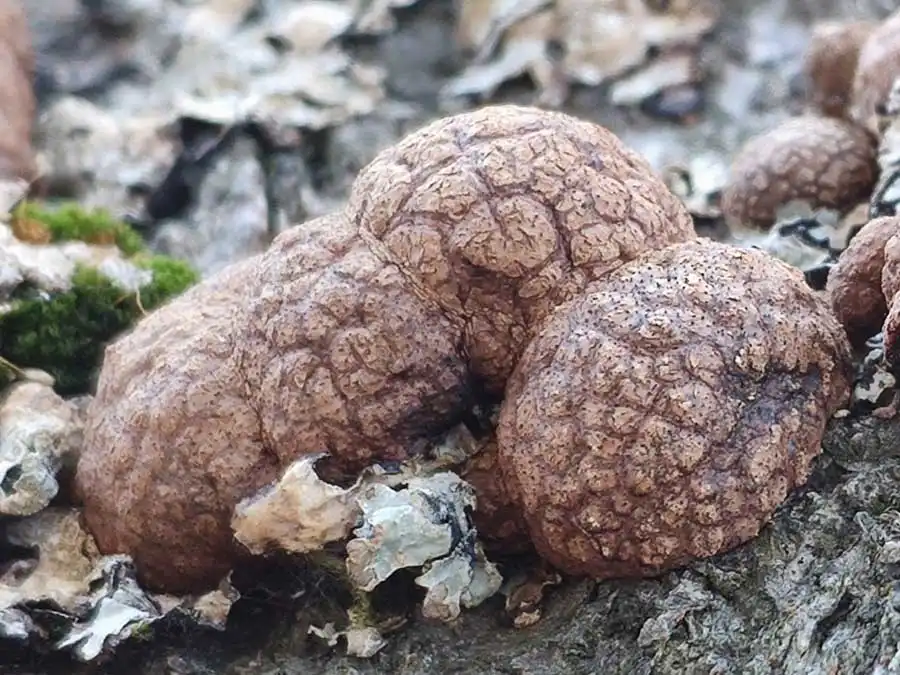
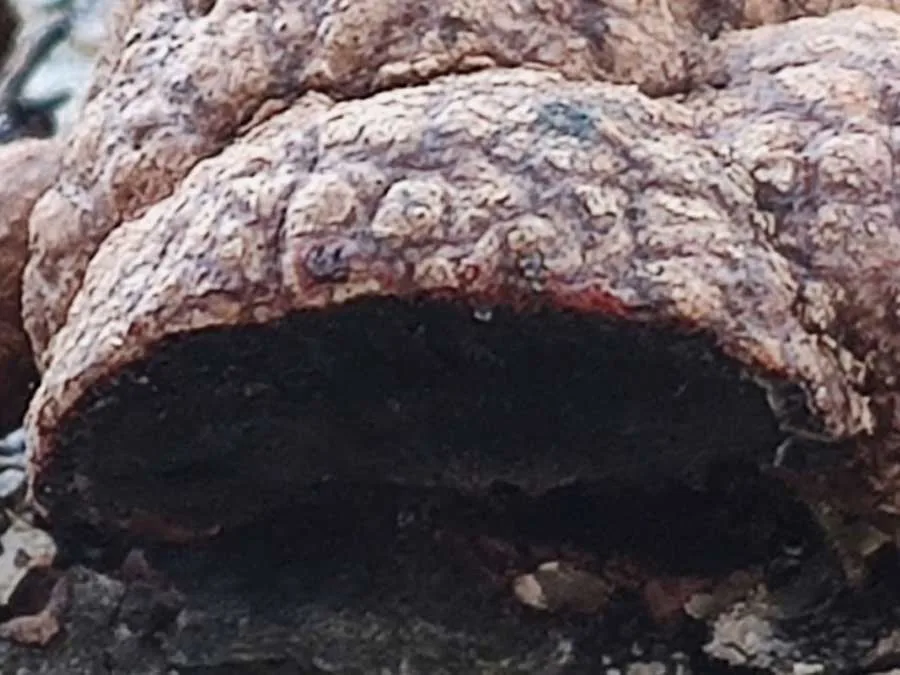
Stroma (plural stromata) – the name given to the communal fruitbody of an ascomycete fungi – hemispherical to nearly globose, 2 to 9mm in diameter and 2-7mm in height; initially greyish-white, becoming salmon pink and then rusty brown to mid brown at maturity before blackening when old; the surface is minutely bumpy (pimple-dotted) at maturity. The bumps are the openings of the ascospore-forming perithecia embedded in the surface.
Flesh
Tough and black.
Habitat
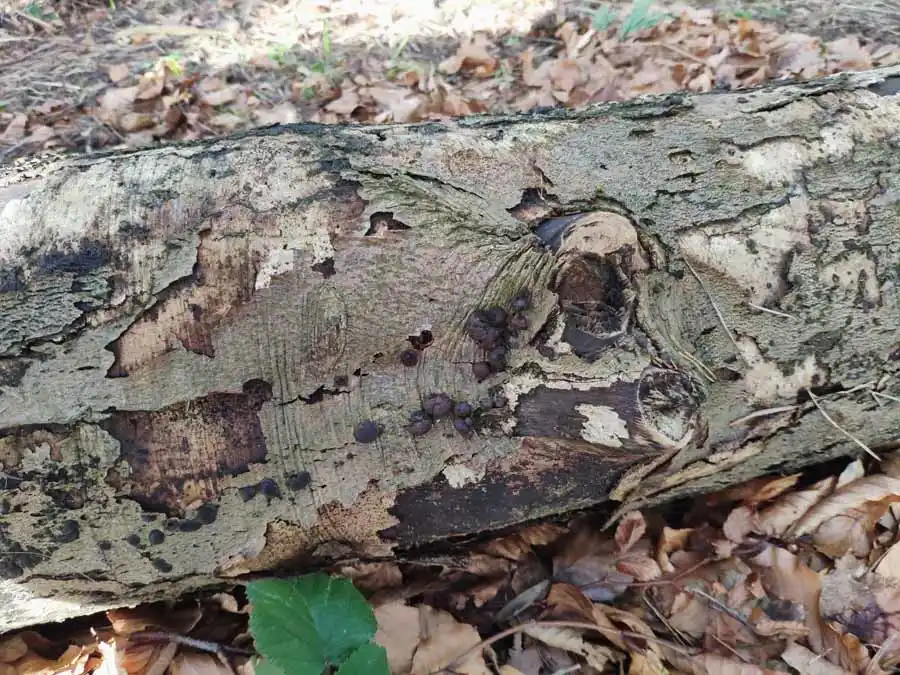
Saprotrophic on dead wood (fallen branches and rotting stumps) of several hardwoods, but most of all Beech (Fagus), causes white-rot. Same as its relatives, it is one of the earliest colonisers of the suitable hosts/substrates. Once it has started to colonise the dead wood, it will start growing in large numbers.
Possible Confusion
Beech woodwart (Hypoxylon fragiforme) mostly can be confused with other woodwarts.
Hazel woodwart (Hypoxylon fuscum) is smaller and growing on Hazel (Corylus) and sometimes Alder (Alnus) instead of Beech (Fagus).
Fully mature Hypoxylon howeanum fruit bodies look almost identical to Beech Woodwart (microscopy is a must for a solid, species-level ID), while it is easy to separate the two species in their younger stage. Hypoxylon howeanum can grow on many different deciduous trees, but mostly found on Hornbeam (Carpinus).
Taste / Smell
Taste and smell not distinctive.
Other Facts
The genus name hypoxylon comes from hypo– meaning beneath (or less than) and –xylon meaning wood. The specific epithet fragiforme comes from the Latin name for a strawberry, fragaria, and refers to the strawberry-like shape and pimply surface texture of the stromata.