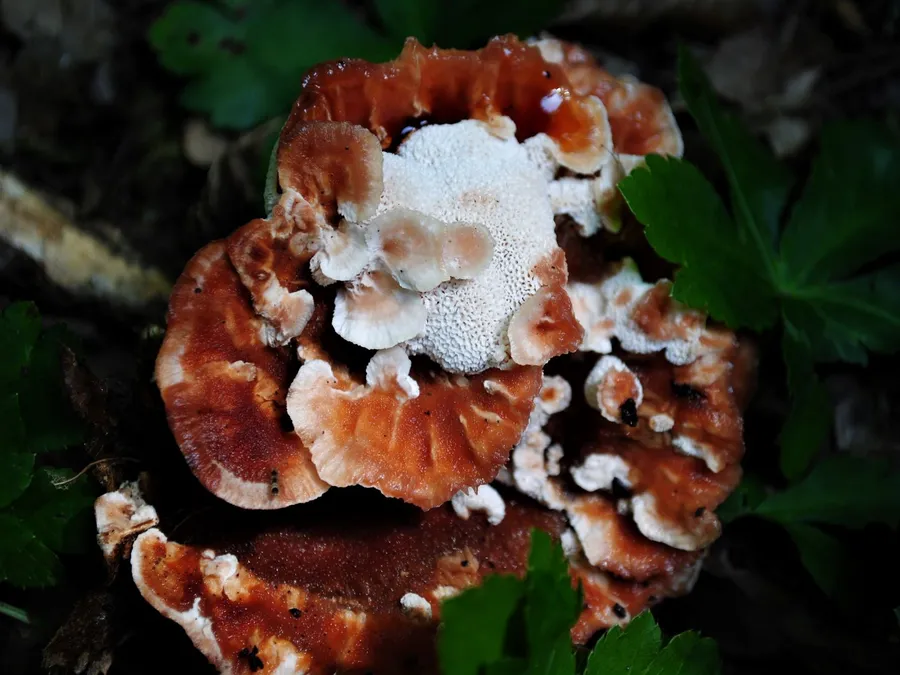
Beefsteak Fungus


This mushroom is best cooked in a creamy recipe, or mixed with other mushrooms due to the slight acidic taste. The wood of trees infected with the beefsteak fungus develops brown rot, which makes the wood richer, darker and of great interest to the furniture building trade.
Scientific Name – Fistulina hepatica


Common Names:
Beefsteak Fungus (EN), Beefsteak Polypore (US), Ox-Tongue Fungus, Tafod Bustach (CY), Ozorek Dębowy (PL), Májgomba (HU)
Please note that each and every mushroom you come across may vary in appearance to these photos.

Fruiting Body
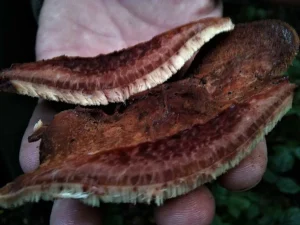
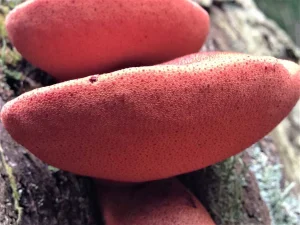
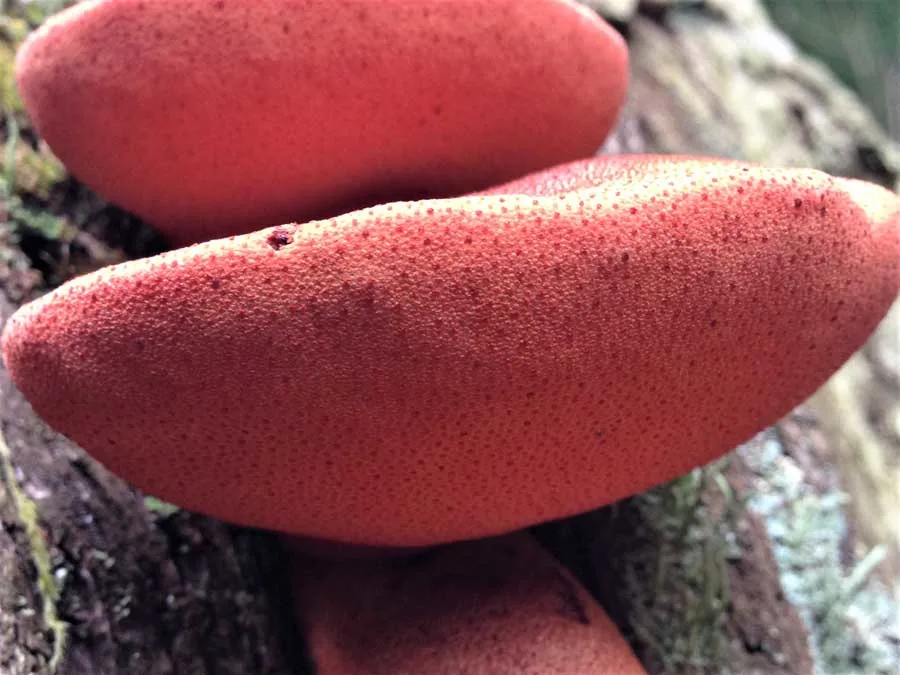
6-20cm. Tongue to liver shaped semicircular bracket with an inflated edge when young flattening with age. Red or red/pink/brown. Usually moist or sticky.
Pores
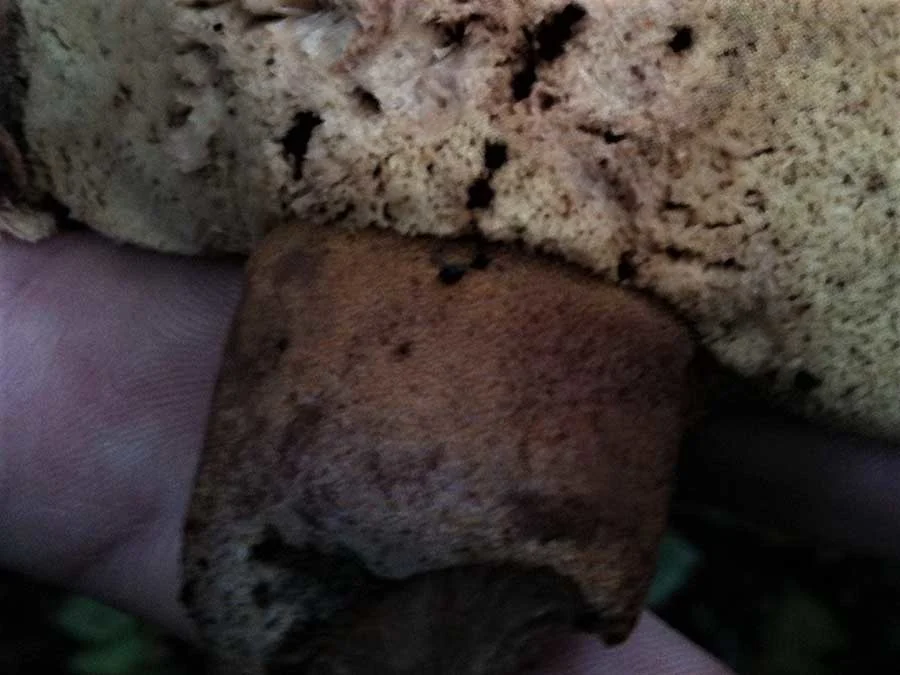
Off-white to cream tiny round pores or tubules which bruise red/brown.
Stem
Concolourous with the cap, lateral, short and thick if present.

Flesh
Red with white ‘veins’ very much resembling raw meat. Exudes a blood like liquid in drops.

Habitat
Growing on living or dead oak and sweet chestnut.
Possible Confusion
You are unlikely to confuse this species with anything else.
Edibility
Can be eaten raw in salads where the fruity, acidic taste goes quite well.
Until recently we were told that the North American and East Asian Beefsteak Fungi are the same as what we have in Europe. However, in 2022 Yu-Cheng Dai and colleagues identified and described two new species to science. From that time, the North American Beefsteak Fungus is called Fistulina americana, while the East Asian one is called Fistulina orientalis.