Black Bulgar
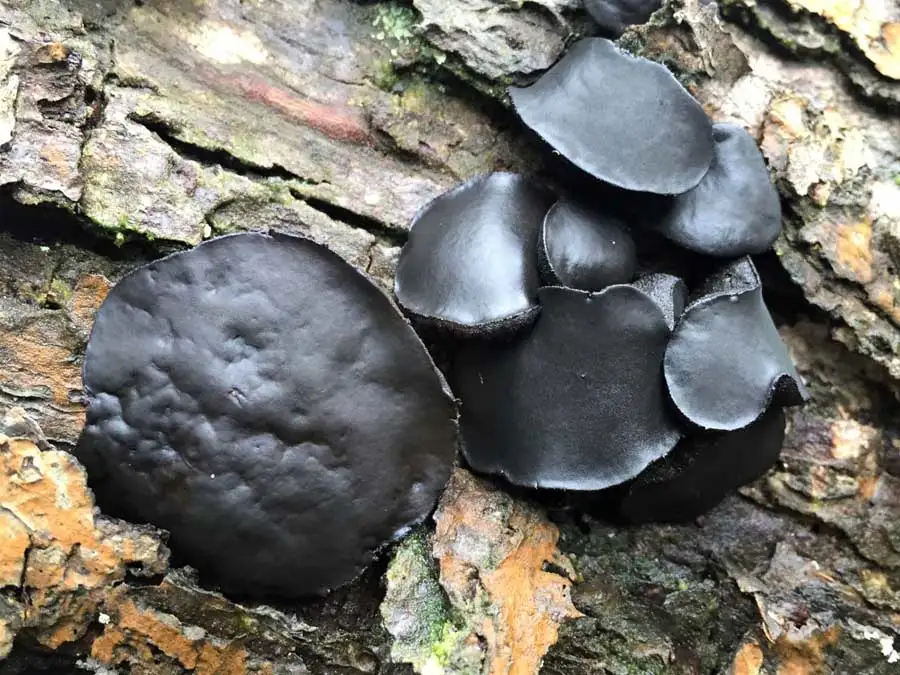


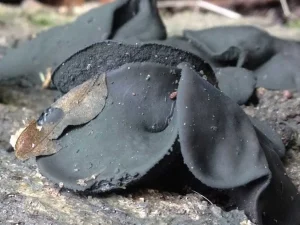
Bulgaria inquinans is a fungus in the family Phacidiaceae. It is commonly known by the names poor man’s licorice, black bulgar and black jelly drops. It grows on dead trees including oak, hornbeam, and ash, in Europe and North America.
Scientific Name – Bulgaria inquinans


Common Names:
Black Bulgar (EN), Batchelor’s Buttons (EN), Cwpanau Duon (CY), Prószyk Brudzący (PL), Kocsonyás Koronggomba (HU)
Please note that each and every mushroom you come across may vary in appearance to these photos.

Fruiting Body
0.5–4 cm across, cup-shaped at first, becoming more or less disc-shaped with age. Soft and gelatinous when young and moist. Often attached to the substrate with some sort of undeveloped stem-like structure.
The fertile inner surface (hymenium) is smooth to slightly wrinkled, shiny and brown to black, sometimes with blueish tinge. It is often covered with deposited spores.
Gills
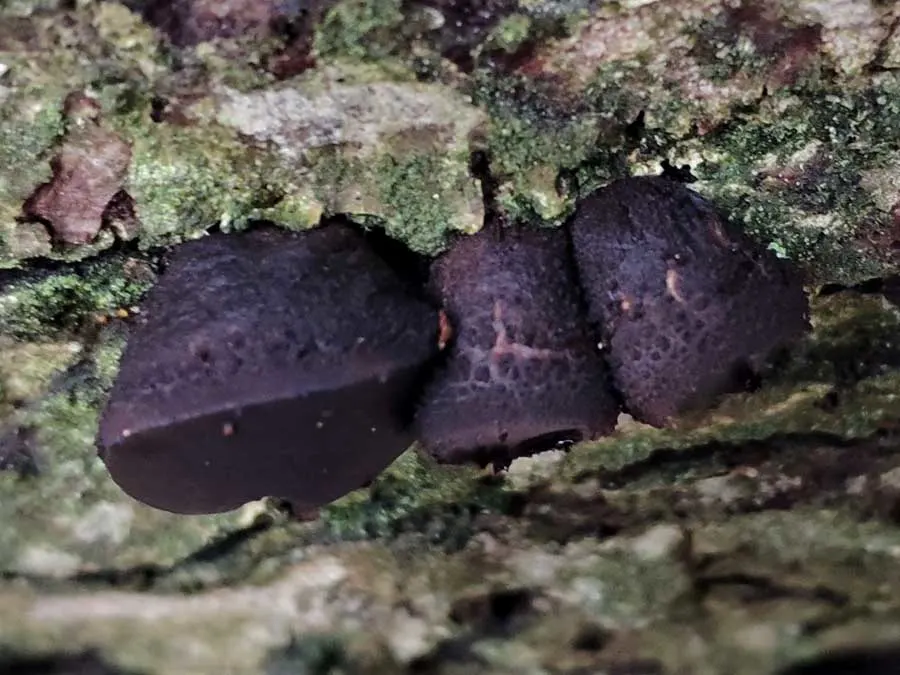
Does not have gills but the outer surface/underside is scurfy to covered with tiny scales (squamulose), often dark brown, but more or less concolorous with the hymenium.
Flesh
Dark brownish, marbled, gelatinous.
Habitat
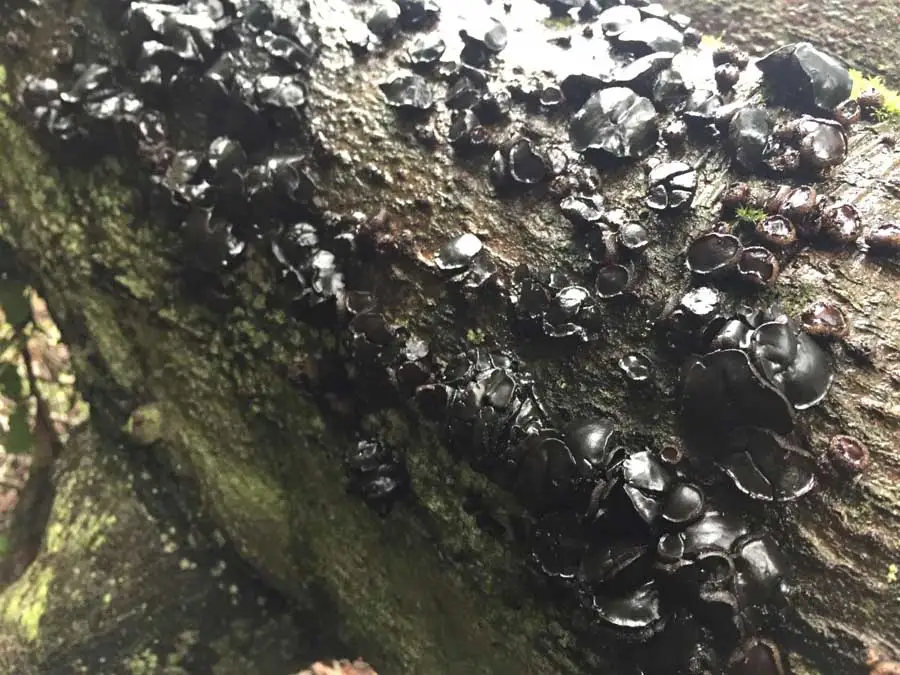
Grows in large numbers or very rarely solitary. Can be found in woodlands, parklands, mostly on recently fallen trunks or branches of oaks, sometimes beech trees, as long as the bark is intact. According to T. Læssøe and J.H. Petersen “probably an endophyte in the living trees”. Common and widespread.
Possible Confusion
Black Bulgar is a highly distinctive species, it is hard to confuse with anything else.
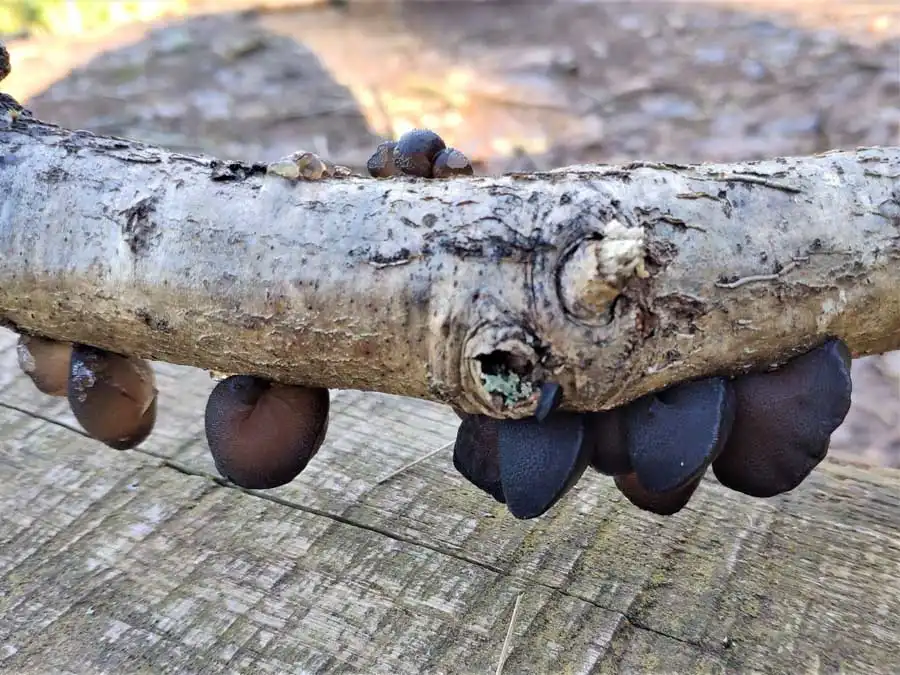
Witches’ Butter (Exidia glandulosa), pictured, has similar colour and jelly-like flesh, but it is much softer and has white spore print.
Beech Jellydisc (Neobulgaria pura, syn: Ombrophila pura), is much paler, translucent with some pinkish tinge when young, and it has strong preference for Beech.
Other Facts
Because of the current Ash Dieback disease, many more trees are falling or having to be felled for safety reasons, and so Bulgaria inquinans is probably in for a feast; we can expect to see these already fairly common little button-like fungi even more frequently in years to come. They may look like liquorice or black gumdrops (and indeed in the USA they are sometimes referred to a Black Jelly Drops or Poor Man’s Licorice), but Black Bulgars are not considered to be edible fungi and they may possibly contain toxins.