Bronze Bolete
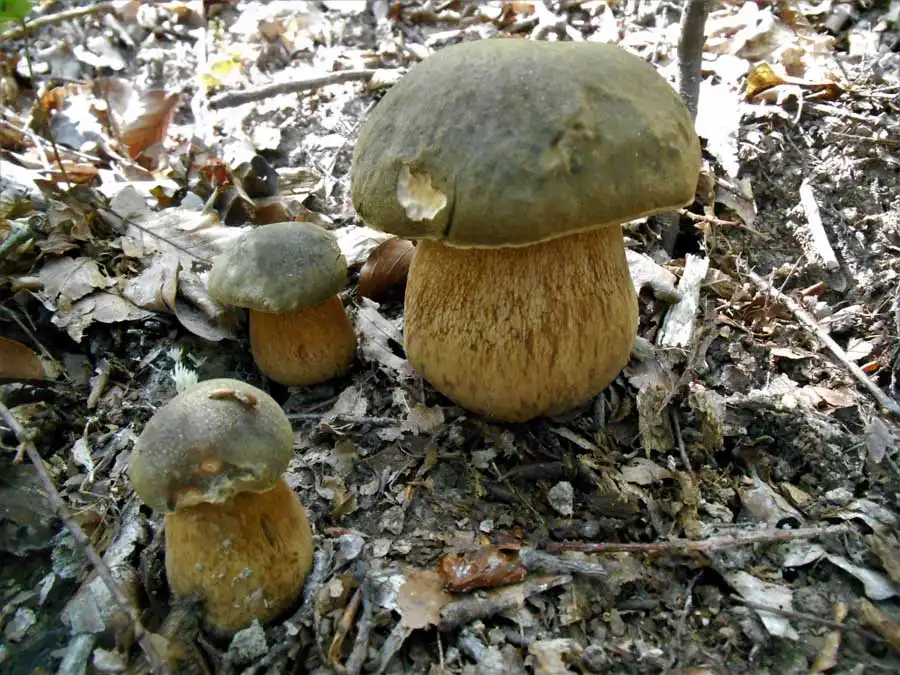


Bronze Bolete or Dark Cep (Boletus aereus) is one of the most sought-after porcini species. At first glance it looks like a “tanned” version of the classic porcini: same stout proportions and thick stem, but with a deep chocolate-bronze cap and slightly darker tones overall. Its dense, white flesh, rich nutty aroma and excellent texture have made it a favourite in Mediterranean cuisine. At the same time, it is a rather infrequent species and is red-listed or locally protected in several countries, so careful identification and responsible harvesting are essential.
Scientific Name – Boletus aereus

Common Names:
Bronze Bolete (EN), Queen Bolete, Dark Cep, Cap Tyllog Efydd (CY), Borowik Ciemnobrązowy (PL), Bronzos Vargánya (HU)
Please note that each and every mushroom you come across may vary in appearance to these photos.

Cap
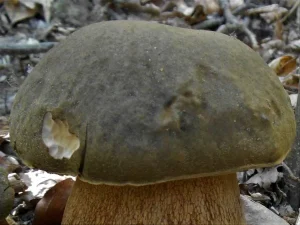
7-15 cm, usually dark brown to slightly red-brown. The caps starts a bit velvety and orange coloured but soon becomes smooth, dark and can have a finely cracked surface.
Pores
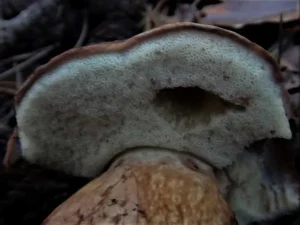
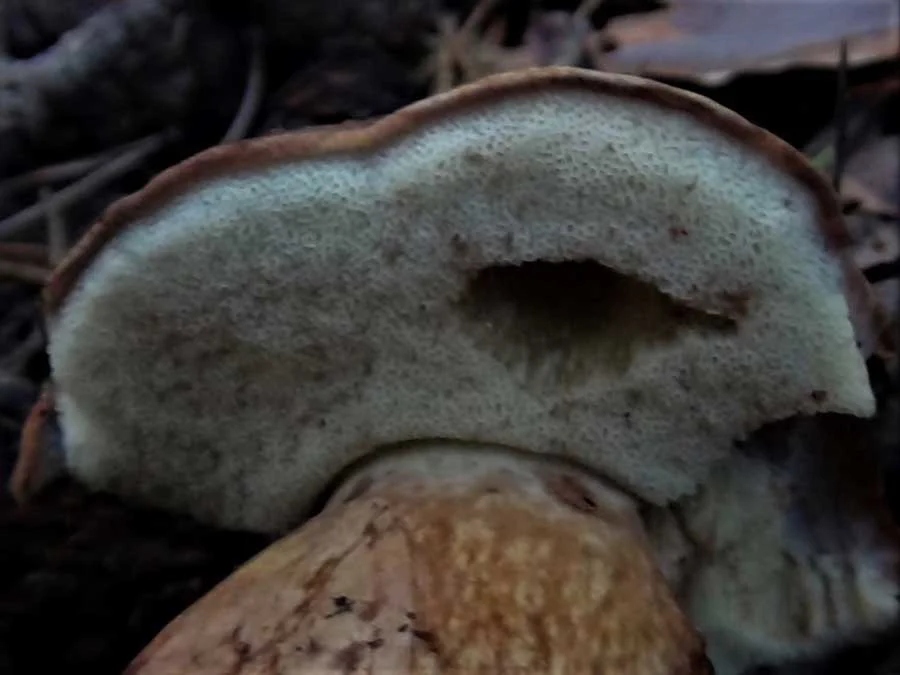
The sponge like pores start white to cream and mature to yellow. The pores do not change colour much when bruised or handled.

Stem
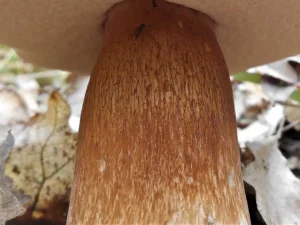
7-15 cm long, 2-4 cm diameter. Fairly robust and barrel shaped with a very fine brown mesh like pattern (reticulation) over a lighter brown background and can sometimes be slightly pinkish towards the middle of the stem.
Flesh
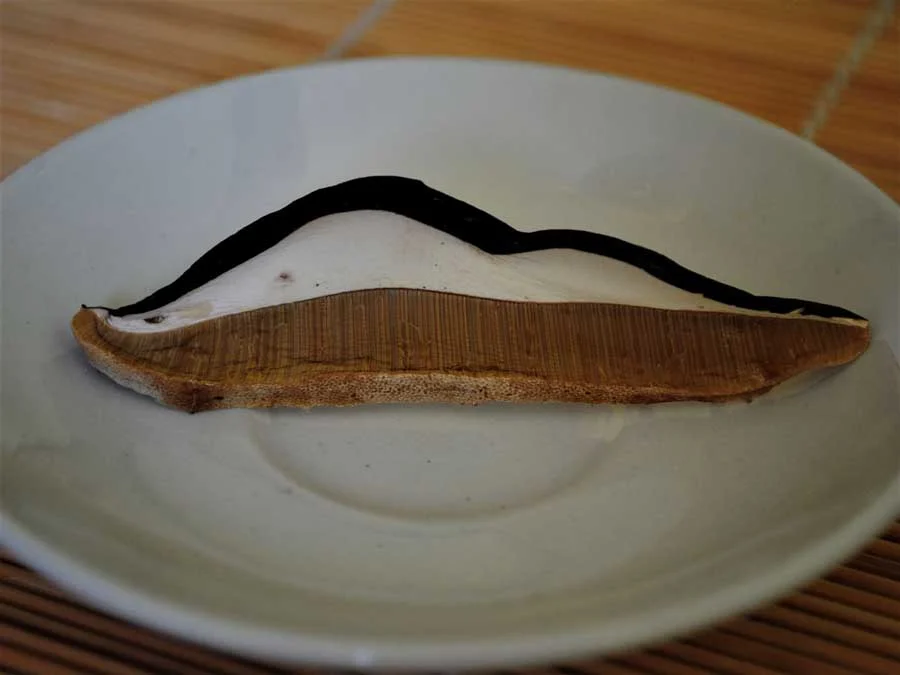
Firm, white and unchanging when cut.

Habitat
Ectomycorrhizal with various broad leaf trees, particularly Beech and Oak.

Possible Confusion
Summer Bolete (Boletus reticulatus), pictured, has a slightly velvety, pale brown to brown yellow cap. Its reticulation is paler than the stem, but still rather brownish.
Penny Bun (Boletus edulis) has a shiny, greasy cap, often with white margin. Its stem is pale, and the reticulation is white at the apex of the stem.
Pine Bolete (Boletus pinophilus) has a more red, shiny, greasy cap, often with paler (whitish) margin. Its reticulation is white at the apex of the stem, more brownish close to the base.
Bay Bolete (Imleria badia) has a thinner, unmeshed stem but as this is a good edible it is not a bad mistake to make.
Other Facts
It is still commonly called as Queen Bolete, regardless the very same common name is applied to a different species, Boletus regineus in North America which was described as a new species only in 2008. Phylogenetic studies showed it is rather closely related to our Pine Bolete (Boletus pinophilus) and only a more distant cousin of our Bronze Bolete (Boletus aereus).
Boletus aereus is a top-quality edible bolete, often ranked even higher than the classic Porcini (Boletus edulis) for flavour. The flesh remains firm when cooked, with a deep, nutty, slightly sweet taste that concentrates very well on drying. It can be eaten fried, stewed, grilled, baked, dried for later use, or preserved in oil or vinegar.