Clustered Domecap
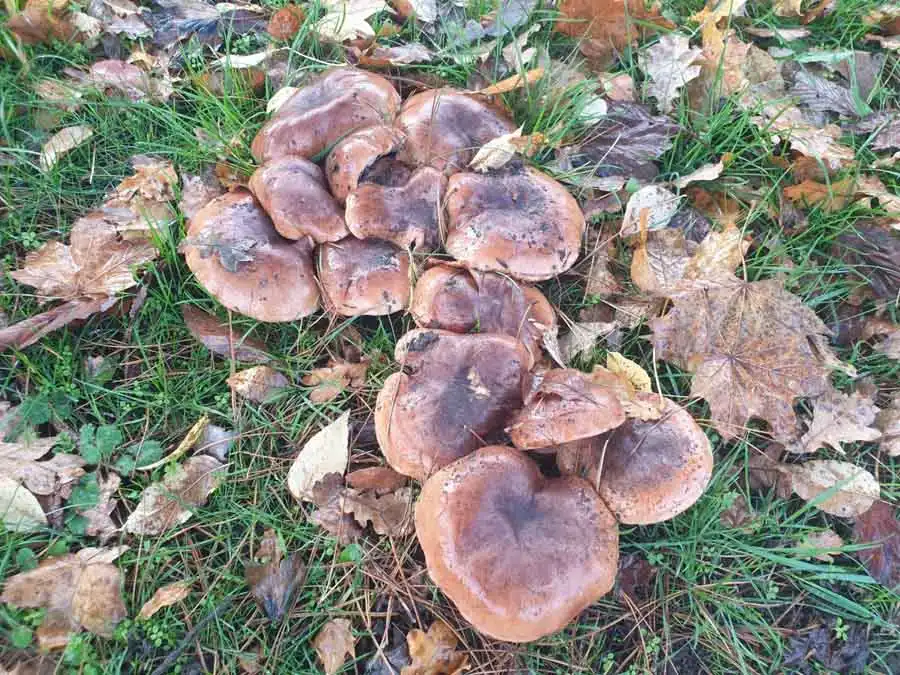


This is a large, frequent, and edible mushroom noted for its groups of ten or more caps – its scientific species name, decastes, means groups of ten. It often grows near gravel paths and roads and is associated with trees. Although a good edible it is also known to cause gastric upset in some people so only a small amount should be eaten first time.
Scientific Name – Lyophyllum decastes


Common Names:
Clustered Domecap (EN), Fried Chicken Mushroom (US), Chicken of the Gravel, Chicken Mushroom, Pengrwm Glystyrog (CY), Kępkowiec Jasnobrązowy (PL), Sötét Csoportospereszke (HU)
Please note that each and every mushroom you come across may vary in appearance to these photos.
Cap
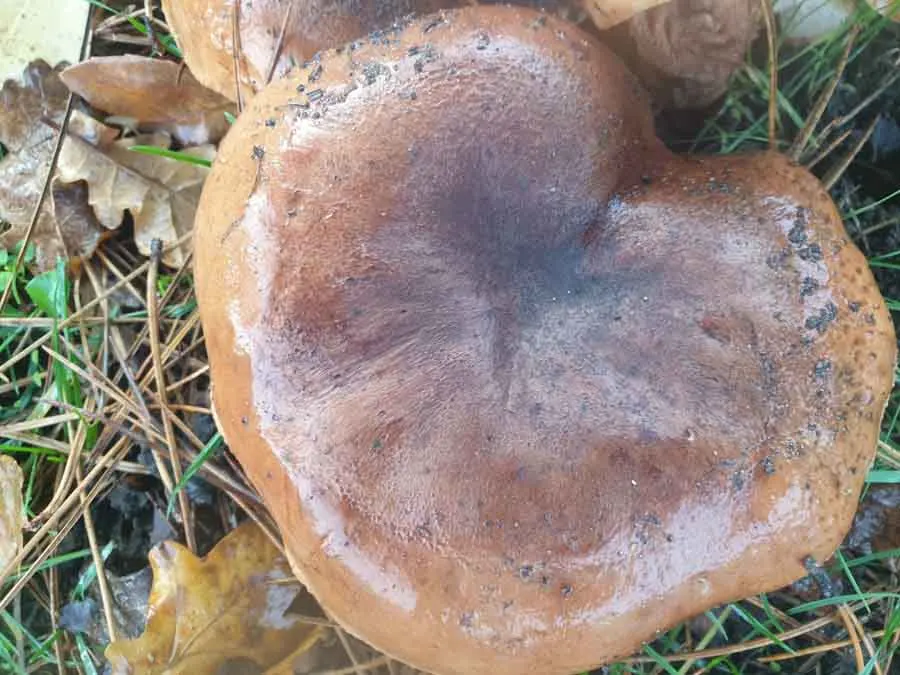
The caps are brown and greasy, reaching 10cm and exceptionally 15cm. They start off convex and flatten with age sometimes developing a depressed centre and frequently a wavy edge.
Gills
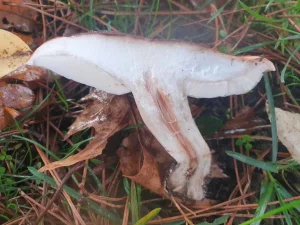
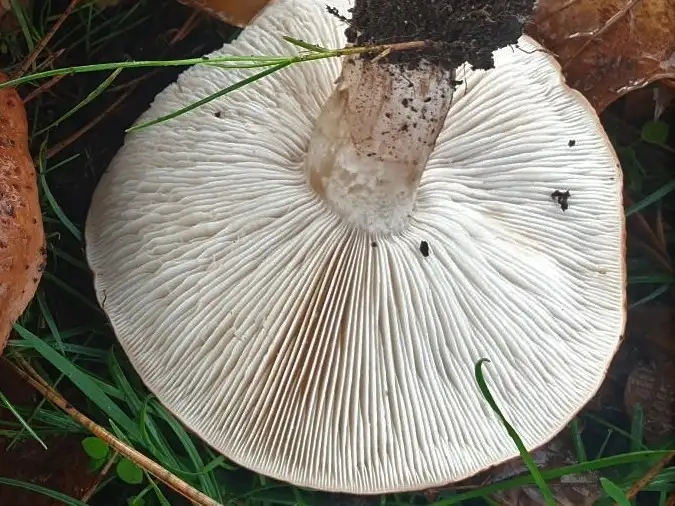
White, crowded gills, yellowing/greying with age. Adnate (straight) to adnexed (curvy) connection to the stem

Stem
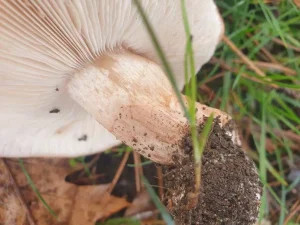
White with fibres running along the length, sometimes a few brown fibres. 1.5 to 2.5cm thick and 3 to 5cm long. Straight to slightly tapering at base. Often connected to nearby stems in the cluster.

Flesh
White firm flesh
Habitat
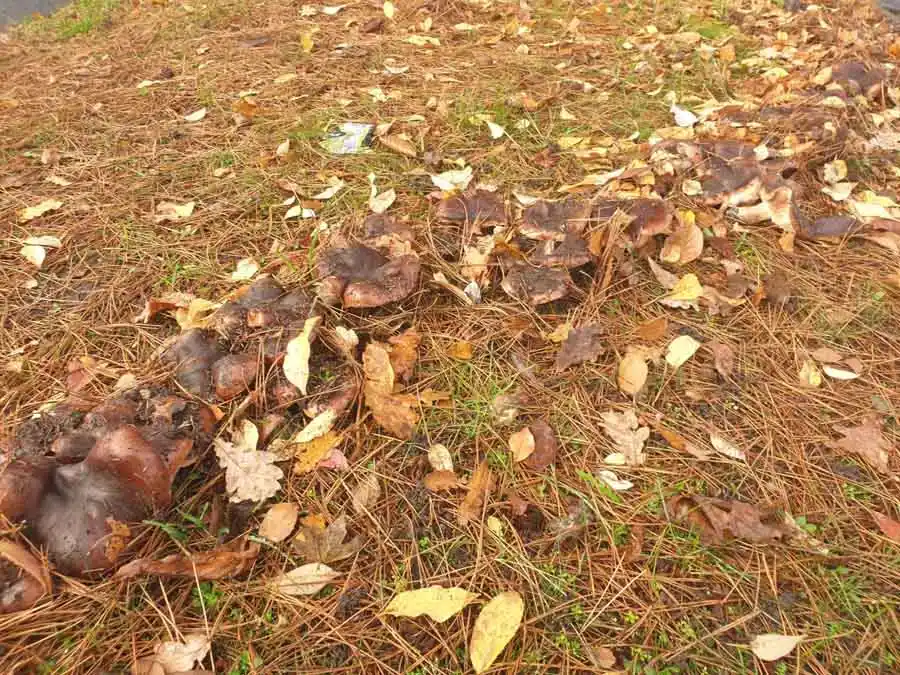
Growing from the ground, NOT on wood. Often near or in gravel drives, paths and roads. Frequently associated with trees in grass.
Possible Confusion
Clustered Domecap could be mistaken for several poisonous species if it were not for its clustering habit which is a key identifier. There is one similar brown capped mushroom growing in dense groups that is similar. Cucumber Cap (Macrocystidia cucumis), is a poisonous lookalike, in respect to being a brown capped mushroom growing in large numbers. However there are significant differences. The cap edge is always pale, the stem brown darkening towards the base, and it smells of a cross between cucumber and fish – sometimes described as pickled herring! The taste is acrid, oily, and generally not nice.
Other Facts
The specific epithet decastes comes from Latin and means occurring ‘in tens’ (as, of course, does the word ‘decades’, which comes from the same Latin root). It is quite surprising how often groups of exactly ten of these mushrooms are found… but then again, maybe we are always more likely to find what we are actively looking for – pattern recognition is very helpful when hunting for fungi! Although generally considered to be a good edible mushroom, the Clustered Domecap has been known to cause stomach upsets. For this reason it is not on our recommended list and should, we suggest, be treated with some caution.