Dryad’s Saddle
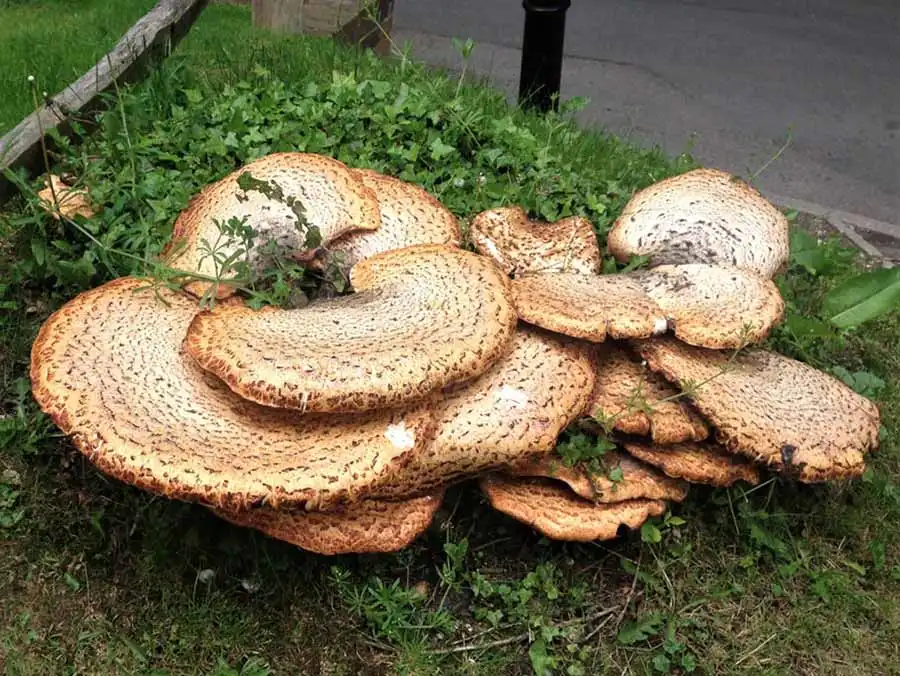


Dryad’s saddle (Cerioporus squamosus) is a common, edible, spring-fruiting bracket fungus known for its scaly, brownish, saddle-shaped cap that resembles a pheasant’s back. It has a distinctive watermelon rind scent and grows on dead or dying hardwood trees, often appearing in overlapping shelves.
Scientific Name – Cerioporus squamosus


Common Names:
Dryad’s Saddle (EN), Pheasant’s Back (US), Scaly Polypore (US), Cyfrwy Cennog (CY), Żagwiak Łuskowaty (PL), Pisztricgomba (HU)
Please note that each and every mushroom you come across may vary in appearance to these photos.

Cap
20-40cm but can sometimes be found much larger. A large circular or fan shaped bracket. Ochre to dark yellow with darker, concentric circles of brown scales.

Pores
Large angular and irregular off white to ochre pores that run down the stem.
Stem
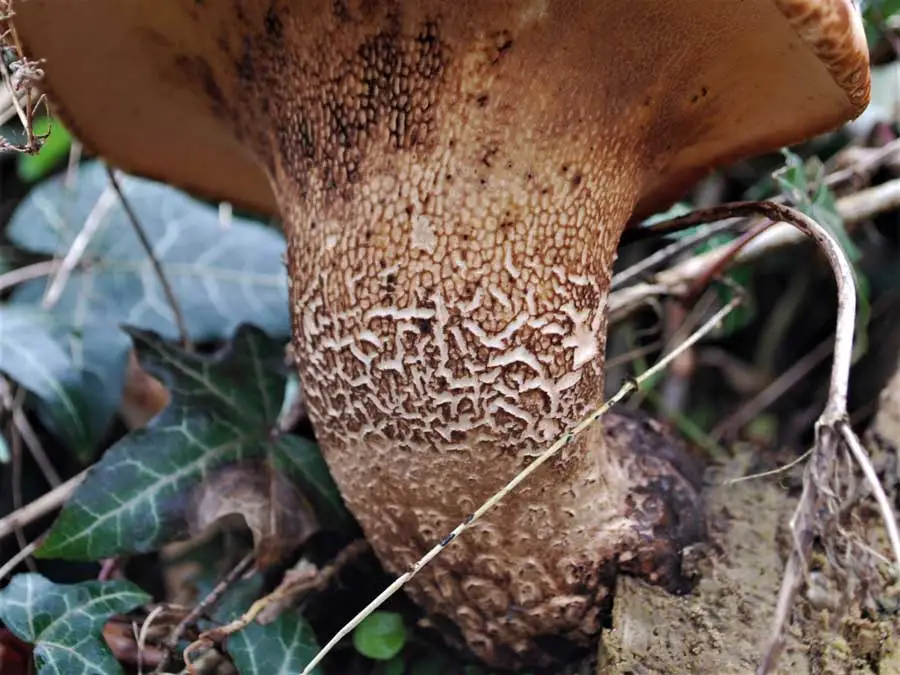
A woody lateral stem up to 8cm long and 5cm wide but tapering towards the darkening to black base.
Flesh
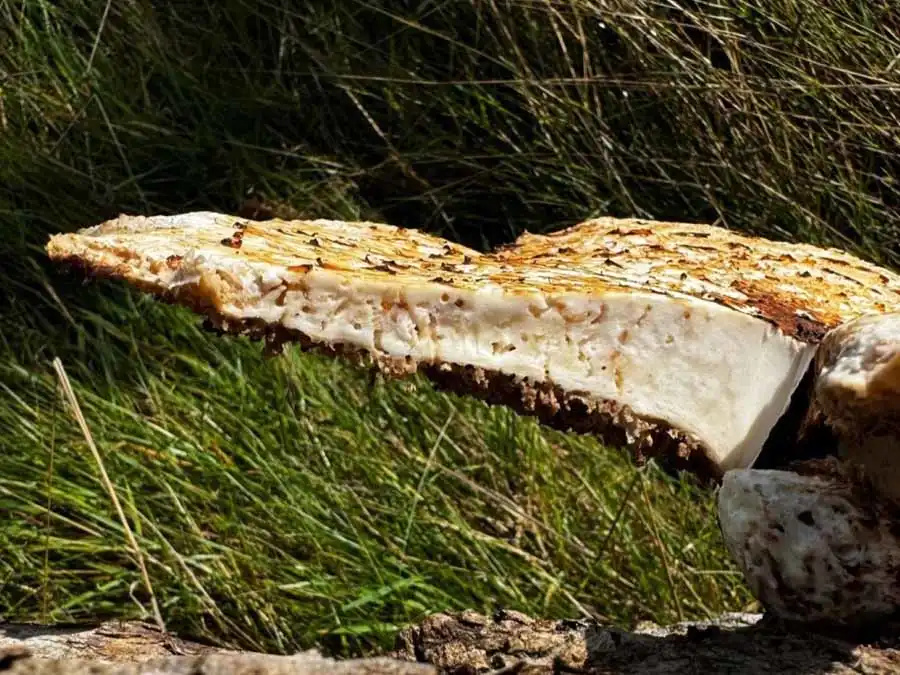
White, thick and succulent when young becoming leathery then corky as it matures.

Habitat
Deciduous trees and stumps.
Possible Confusion
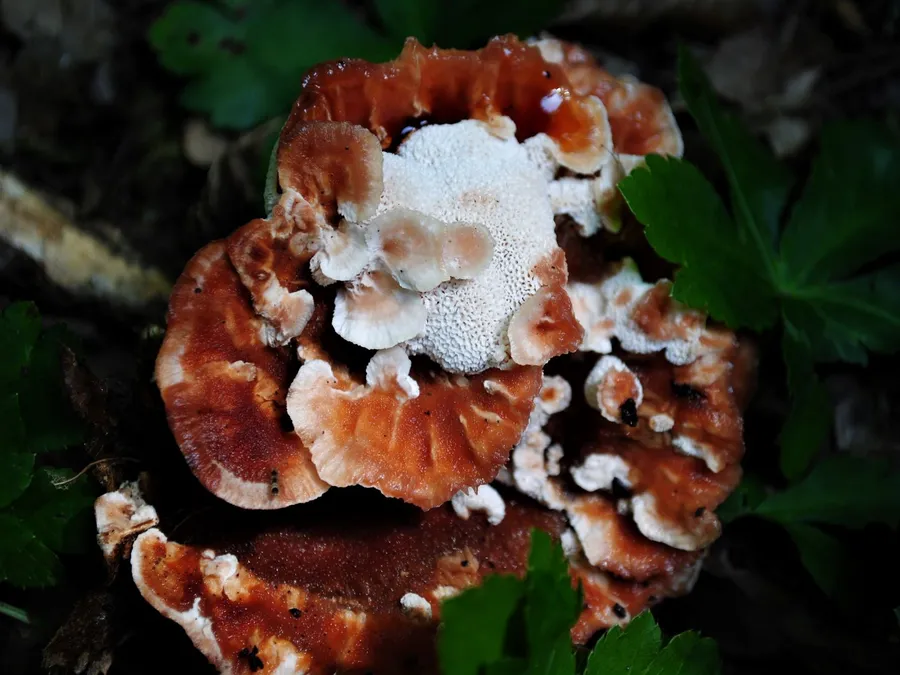
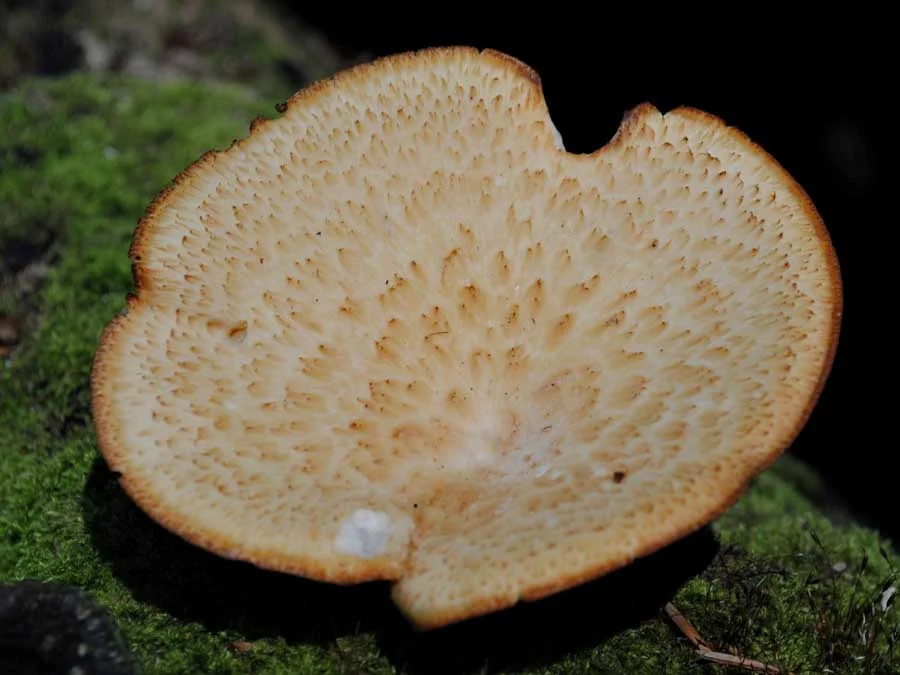
The Tuberous Polypore (Polyporus tuberaster), pictured, looks very similar but is generally smaller, the stem is more central and less eccentric, the stem base may darken but will not be black and the patterning on the cap is lighter than the Dryads Saddle.
Taste / Smell
A bit like water melon when young, fresh and raw but mushroomy when cooked or dried and powdered for stock.
Other Facts
This is the largest capped mushroom and can become so heavy it can no longer support itself and will fall from it’s position and be found unattached at the base of it’s host tree. Although this mushroom is edible fresh I prefer it dried and powdered to make a good mushroom stock and as it can be so large a lot of stock can be gathered. The species is edible when young and cooked. Specimens can become infested with maggots and become firm, rubbery and inedible as they mature. Cookbooks dealing with preparation generally recommend gathering these while young, slicing them into small pieces and cooking them over a low heat.