Fool’s Funnel


Clitocybe rivulosa, commonly known as the false champignon or fool’s funnel, is a poisonous basidiomycete fungus of the large genus Clitocybe. One of several species similar in appearance, it is a small white funnel-shaped toadstool widely found in lawns, meadows and other grassy areas in Europe and North America.
Scientific Name – Clitocybe rivulosa




Common Names:
Fool’s Funnel (EN), The Ivory Funnel, Twmffat / Twndish Rhychog (CY), Lejkówka Jadowita (PL), Mezei Tölcsérgomba (HU)
Please note that each and every mushroom you come across may vary in appearance to these photos.

Cap
3-6 cm. Convex to flattening becoming depressed in the middle with a slightly inrolled edge. White and slightly dusty when young, very pale grey/brown on aging.

Gills
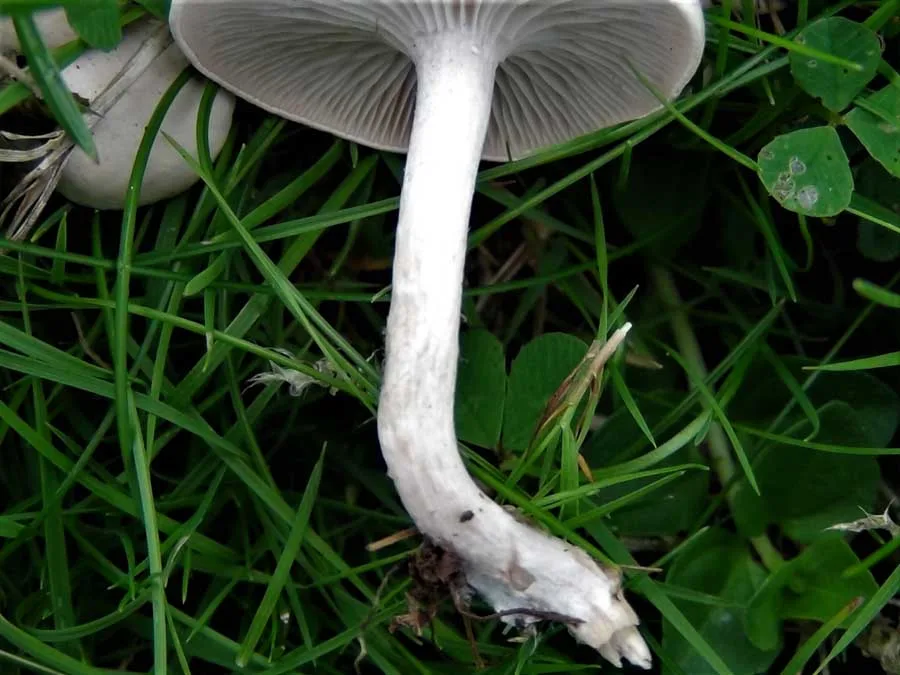
Gills white/cream, running down the stem (decurrent), fairly broad, becoming pinkish buff. Crowded.
Stem
4-7cm long, 0.5-1 cm diameter. White/Off-white, can have a tan blush. No skirt.
Flesh
Off white.

Habitat
Pasture, fields, lawns, beside paths and roadsides, frequently in rings or troops.

Possible Confusion
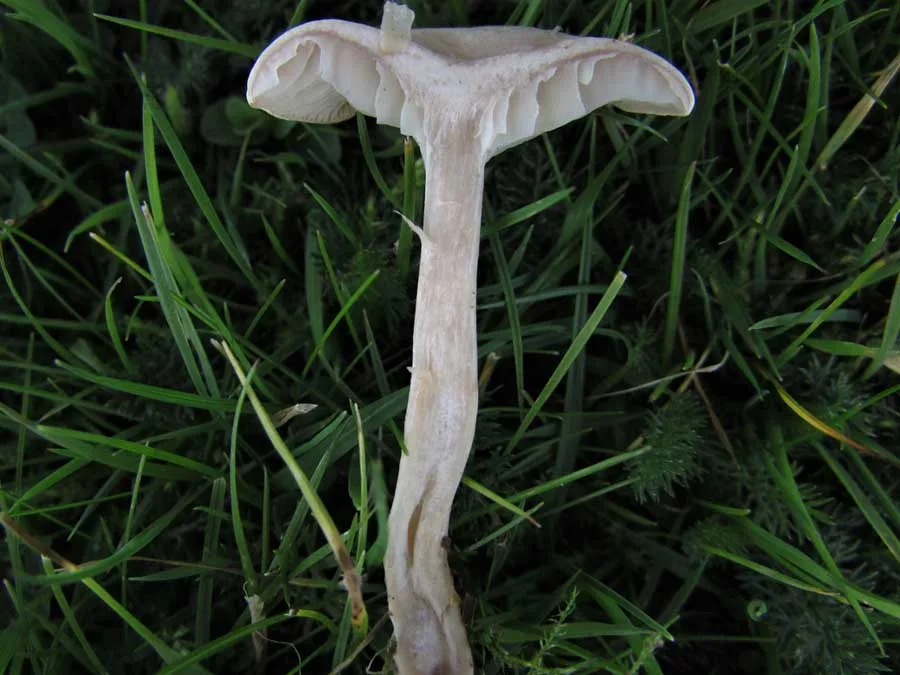
The Fairy Ring Champignon (Marasmius oreades). The gills are important for separating these two mushrooms. The gills of the Fairy Ring Champignon are free of the stem (see photo) while the gills of the Ivory Funnel are decurrent, they run down the stem.
The Miller, (Clitopilus prunulus), could also be confused with the Fools Funnel. The Miller tends to have an eccentrically positioned stem, has the raw dough smell and tends not to grow in rings although this can happen.
Other Facts
This mushroom is DEADLY POISONOUS, it contains a lethal amount of muscarine. The antidote for muscarine poisoning is atropine. The main toxin in Clitocybe rivulosa is muscarine, and thus the symptoms are somewhat like that of nerve agent exposure, namely, greatly increased salivation, perspiration (sweating), and lacrimation (tear production) within 15–30 minutes of ingestion. With large doses, these symptoms may be followed by abdominal pain, severe nausea, diarrhea, blurred vision, and labored breathing. Intoxication generally subsides within two hours. Death is rare, but may result from respiratory failure in severe cases. The specific antidote is atropine.