Horse Mushroom


A great mushroom with a rich, strong taste and as it can grow so large and in rings, usually provides quite a feast.
Scientific Name – Agaricus arvensis
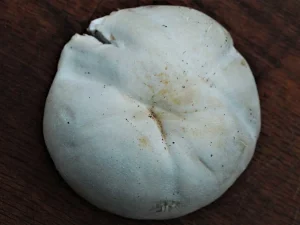

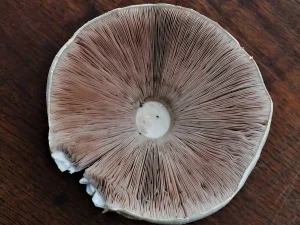

Please note that each and every mushroom you come across may vary in appearance to these photos.

Cap
10-16 cm. White, sometimes discoloured grey/brown, can be scaly or smooth. Starting spherical and opening out flat. Can bruise slightly yellow.

Gills
Crowded and free of the stem. When very young the gills are almost white but quickly turn from pale pink/grey to brown in more mature specimens. On unopened caps, the ring while still joined to the cap, looks like a ‘cog wheel’.

Stem
10-16 cm long, 2-3 cm diameter. Smooth and white with a double edged ring, can be finely flocculose toward the base.
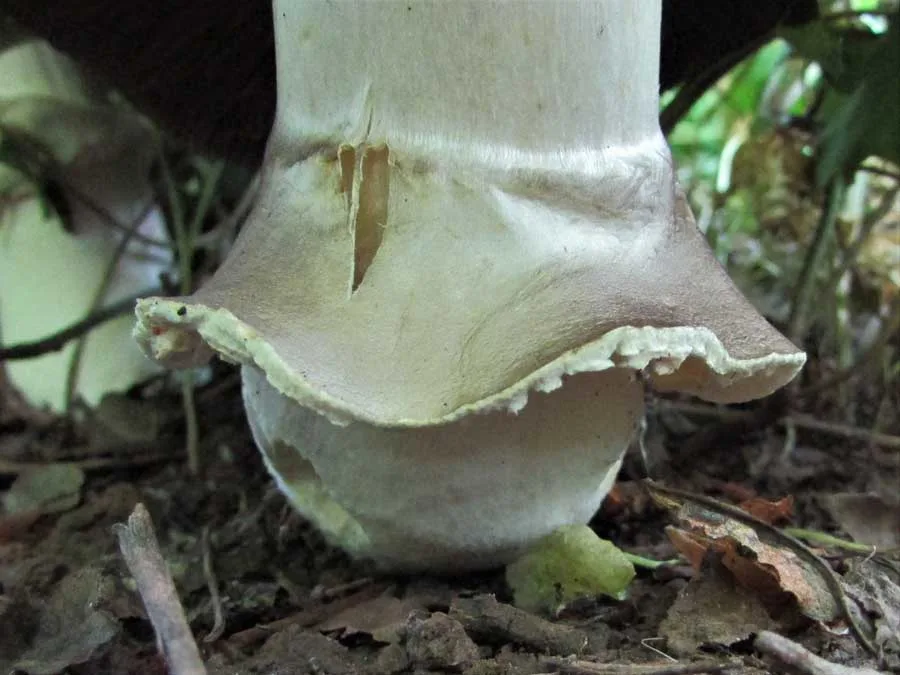
Skirt
Superior. Can start fairly large but usually becomes damaged or shrinks to a ring. Has a double edge.

Flesh
White, firm and bruising slightly yellow. The flesh has an aniseed smell.
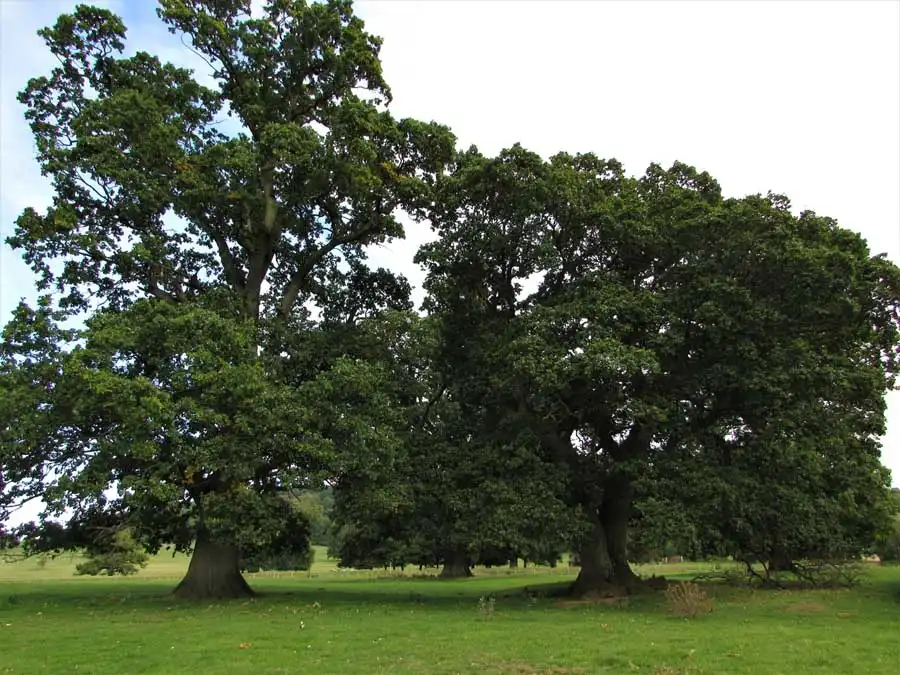
Habitat
Pasture, meadows, lawns, road verges and parks, often growing in rings.

Possible Confusion
The Yellow Stainer (Agaricus xanthodermus) but this mushroom stains chrome yellow when bruised or cut and smells of Indian ink, hospitals or iodine and is not edible.
The Macro Mushroom (Agaricus crocodilinus) looks very similar but has a stouter stem covered in floccules below the skirt and more of a bitter almond aroma although some people smell aniseed only. This wouldn’t be a dangerous mistake, the Macro Mushroom is a great edible Agaric.
Can look similar to some of the Amanitas when young and light gilled but the Horse Mushroom does not have the bulbous base or volval sack that Amanitas have.

Spore Print
Dark purple/brown. Ellipsoid. You should scrape your spores into a small pile to get an accurate spore colour.