Orange Bolete
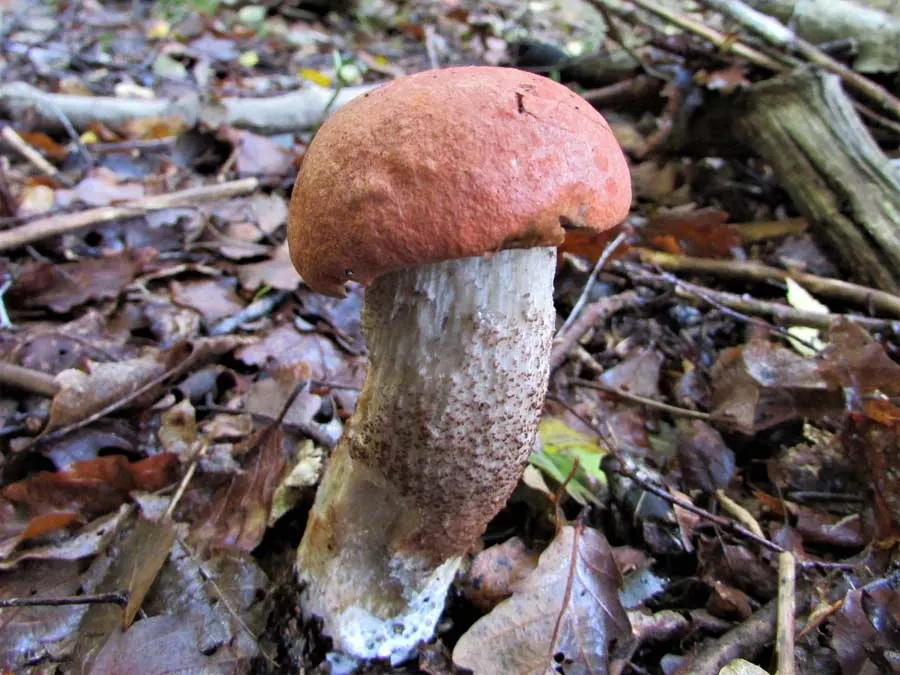


Although known to be associated with Oak, this mushroom can also be found under Poplar, Aspen, Beech or Birch, making the identification between other Leccinums difficult. Must be well cooked before consumption.
Scientific Name – Leccinum aurantiacum



Common Names:
Orange Oak Bolete (EN), Cap Tyllog Oren (CY), Koźlarz Czerwony (PL), Tölgyfa-Érdestinóru (HU)
Please note that each and every mushroom you come across may vary in appearance to these photos.

Cap
7-15 cm. Fox orange/brown but light blue/green where damaged. Starting ovate opening to broadly convex and staying like that until finally flattening out a bit with age, can be slightly downy especially when young. The top edge of the cap overhangs the pores which can help with identification.

Pores
Off white to cream quite tightly packed pores which can bruise grey with a slight pink hue.
Stem
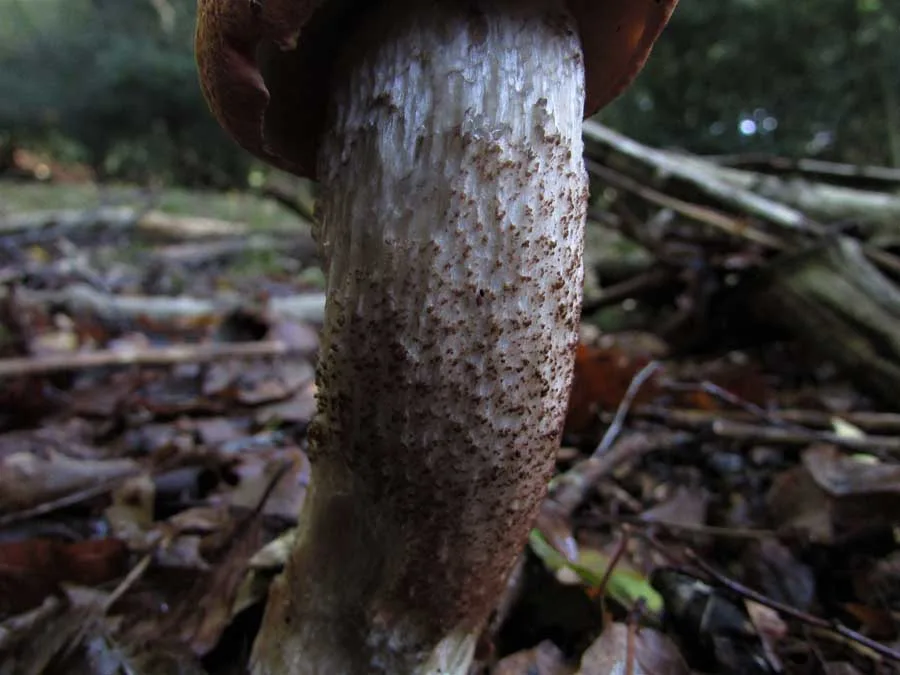
12-18 cm long, 1.5-4 cm diameter. Off white background covered in orange/brown floccules. Usually starts quite bulbous and short but thins out and elongates becoming almost straight with age.

Flesh
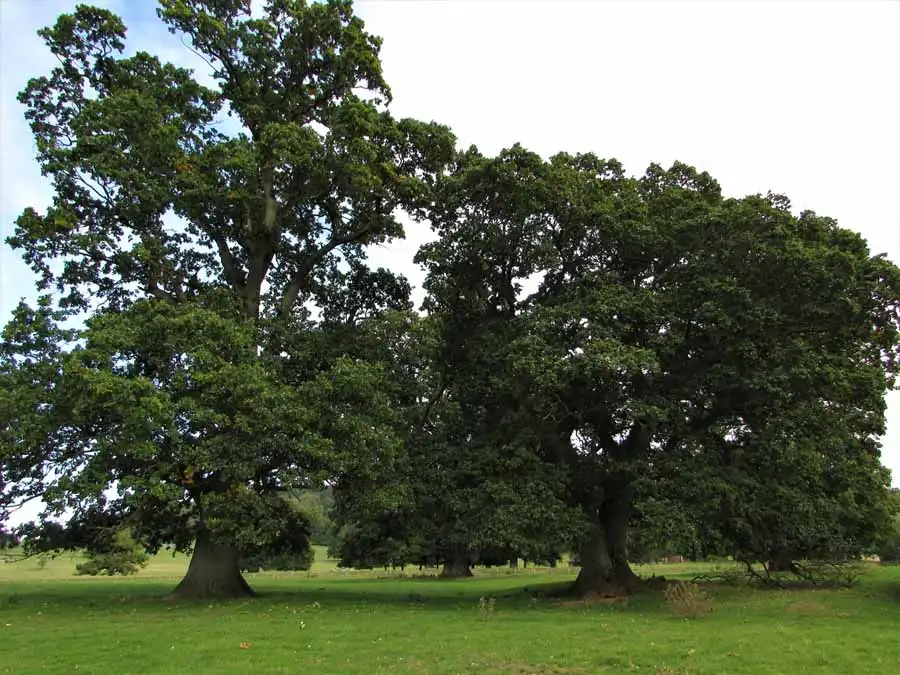
Grows with Oaks but can more often be found with Poplar or Aspen and can also be found with Beech and Birch.
Habitat
Mainly around Oak but will grow with other deciduous trees.

Possible Confusion
Orange Birch Bolete (Leccinum versipelle), pictured, is very similar but only grows with Birch, has a lighter cap colour and has dark brown to black floccules on the stem unlike the orange/brown floccules of the Orange Bolete.
Aspen Bolete (Leccinum albostipitatum) is a rare find in the UK and it grows exclusively with Poplar and Aspen. Its stem is initially white and the floccules turning reddish with age.
Foxy Bolete (Leccinum vulpinum) can be found under Pine and Spruce and it bruises blue-green at the stem base.
Edibility
This is a favorite species for eating and can be prepared as other edible boletes. Its flesh turns very dark on cooking. Like most members of the Boletaceae, these mushrooms are targeted by maggots. Due to a number of poisonings and the difficulty identifying species, Leccinum species are considered by some as possibly not safe to eat. This species also needs to be cooked well (not parboiled) or else it may cause vomiting or other negative effects. Some report gastrointestinal upset after eating this species. At least one death has been reported that was linked to consuming this species.