Poison Pie


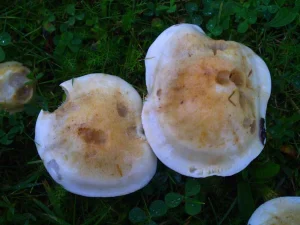
A common poisonous mushroom that is best identified by its strong radish like smell, greasy cap, very wide umbo and dark droplets or brown stains from the droplets on the gills.
Scientific Name – Heboloma crustuliniforme


Common Names:
Poison Pie (EN), Crwst Gwenwynig (CY), Włośnianka Rosista (PL), Zsemleszínű Fakógomba (HU)
Please note that each and every mushroom you come across may vary in appearance to these photos.

Cap
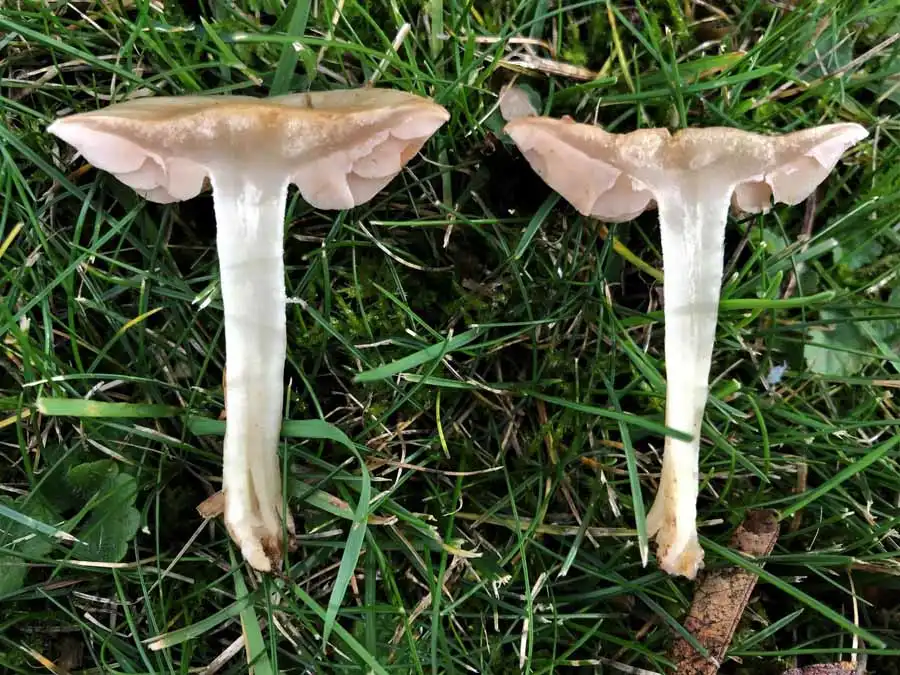
3-8 cm. Off white to pale tan, usually more brown towards the centre. The cap starts convex but develops a wide umbo. The cap margin can be uneven or lobed and in-rolled until quite mature. The cap feels sticky or greasy, especially in damp conditions.
Gills
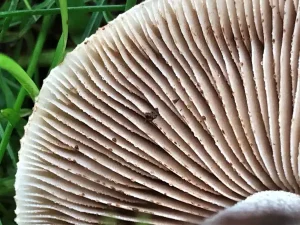
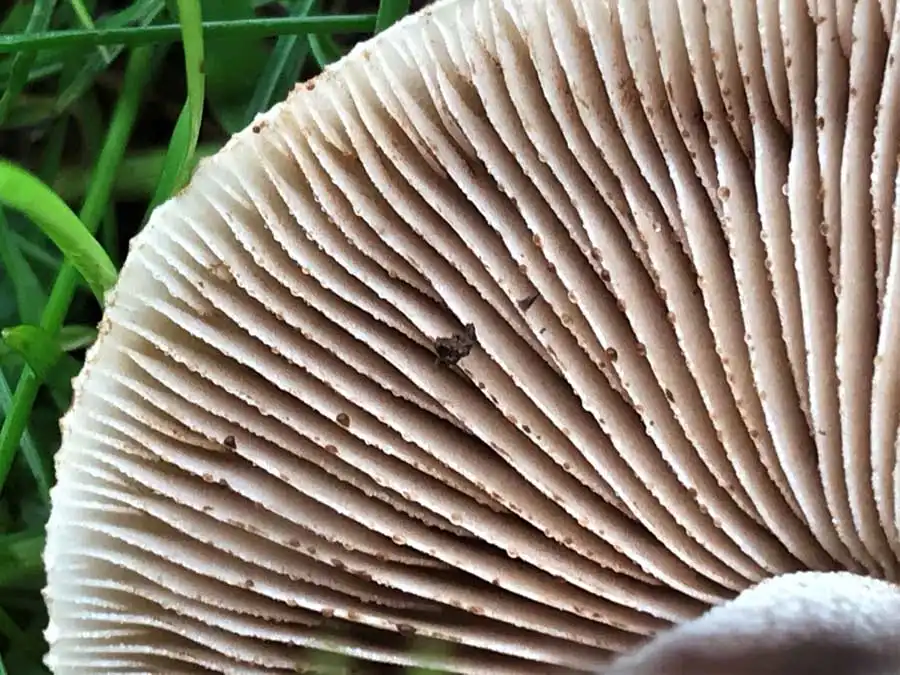
Starting off white turning to pale grey/brown but retaining a white edge. Dark droplets can form on the gills when conditions are damp, once dry these will leave brown spots. Free of the stem and quite crowded.

Stem
3-10 cm long, 1-2 cm diameter. Off white, can have a slightly wider base.
Flesh
White and firm.

Habitat
Mycorrhizal with both broadleaf and coniferous trees. Usually in small groups but can be found singly, mostly under Birch.
Possible Confusion
Bitter Posionpie (Hebeloma sinapizans) is similar but larger and lacking the droplets or brown spots on the edge of the gills. It prefers calcareous soil.
Other Facts
A fairly large genus of mushrooms belonging to the Hymenogastraceae family. Most Hebelomas have a radish or fruity/sweet smell, greasy or slimy caps and have grey/brown spores. Hebeloma comes from the ancient Greek language, ‘hebe‘ meaning youth and ‘loma‘ meaning veil or fringe and is a reference to the short lasting veil covering the gills on very young mushrooms. All Hebelomas are ectomycorrhizal and require trees to grow with. The Hymenogastraceae family used to contain only a handful of mushrooms but after molecular analysis, many genera have been added, including Hebeloma.