Redbelted Bracket
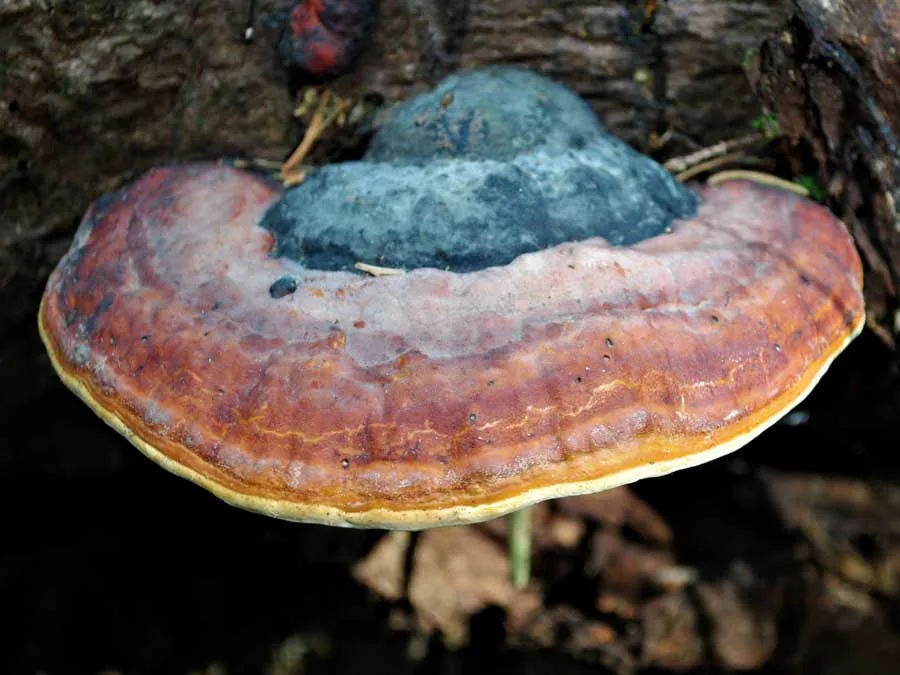


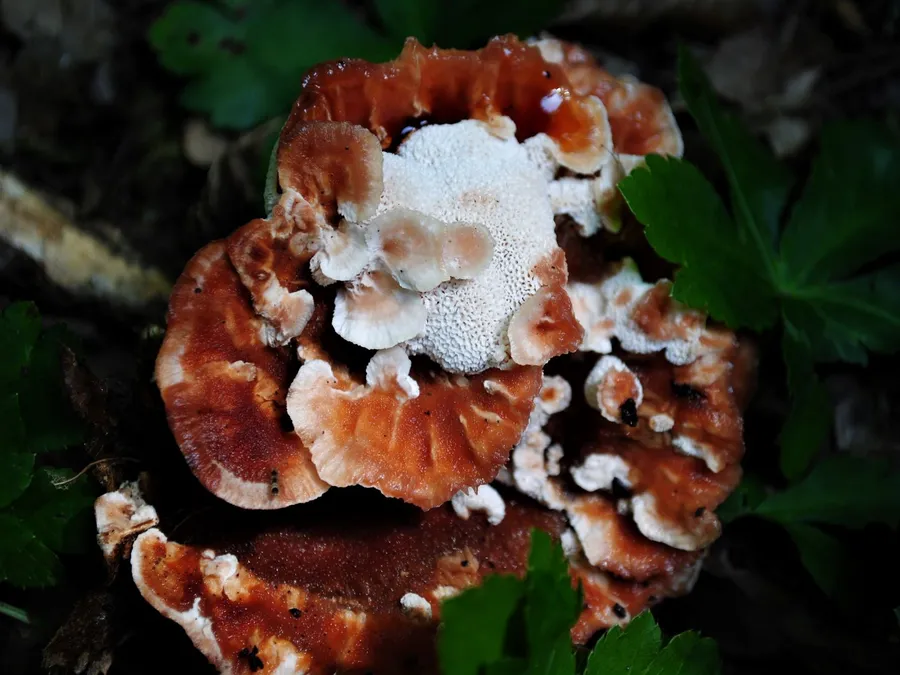
Fomitopsis pinicola, is a stem-decay fungus. Its conk is known as the red-belted conk or red-belted bracket. The species is common throughout temperate Eurasia. It is a decay fungus that serves as a small-scale disturbance agent in coastal rainforest ecosystems.
Fomitopsis pinicola



Common Names:
Redbelted Bracket (EN), Carn Pinwydd (CY), Pniarek Obrzeżony (PL), Szegett Tapló (HU)
Please note that each and every mushroom you come across may vary in appearance to these photos.
Fruiting Body
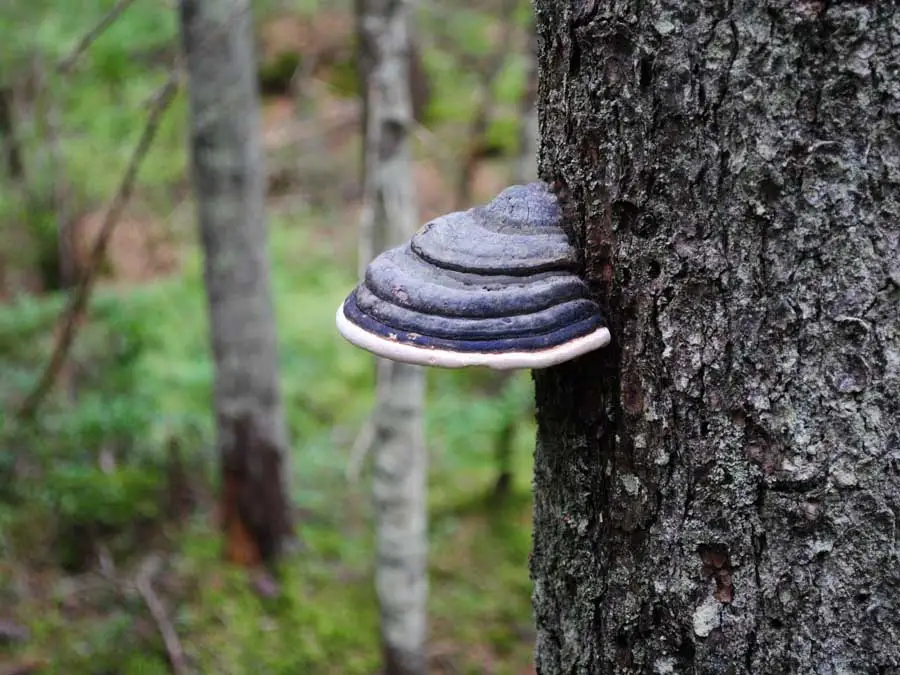
Perennial, 10–40 cm wide and 5–15 cm thick, shelf-like or hoof-shaped, rarely resupinate. Widely attached to its substrate, without having a stem (sessile).
Upper surface (skin): zonate, smooth, glabrous (shiny, almost laccate), variable in colour. It might have some yellow, orange, red to dark blueish to black on it, the central part is often covered with a dark resinous layer. Margin thick, rounded, white when young, turning orange to red with age.

Pores
Tubes 2–8 mm long, concolorous with the flesh. Pores 4–6 per mm, roundish, white when young, turning yellowish with age. Often secreting colourless droplets (this phenomenon is called: guttation).

Flesh
10–12 cm thick, yellowish, pale ochraceous. Might be zonate or non-zonate.
Habitat
Growing on dead standing or lying trunks or stumps of conifers, also on hardwoods, rarely on living trees too. It is necrotrophic parasite, causing cubical brown-rot.

Possible Confusion
As the genus’ name predicts, it has a rather similar appearance to Hoof Fungus, specimens of the two species are often confused.
Hoof Fungus (Fomes fomentarius), pictured, grows on hardwoods, preferably but not exclusively on Beech and causing white-rot. It might have really variable appearance, but it has grey and brown based colours on its upper surface (skin), and its pore surface is ochre to grey, not white to yellowish cream.
Taste / Smell
Smell and taste not distinctive.
Other Facts
The name of the genus Fomitopsis means ‘similar to Fomes‘ aka Hoof Fungus, while the epithet (the 2nd part of the scientific name) refers to its strong preference of Pines (Pinus spp.).
Fomitopsis pinicola is the type species of genus Fomitopsis. Until recently we believed our European Fomitopsis pinicola is native to the American continent too, but molecular studies showed it is a different species, called Fomitopsis mounceae. It might be confusing that F. mounceae is called Red-Belted Polypore in North America.