Rooting Shank


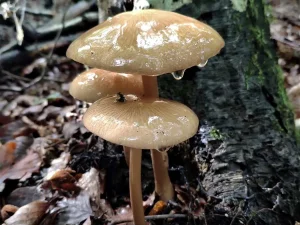
An edible but not worthwhile medium size mushroom with a wrinkled, viscid cap, white gills balancing on a slim, tall stem and having a ‘root’ underground.
Scientific Name – Hymenopellis radicata
Common Names:
Rooting Shank (EN), Coesyn Gwreiddiog (CY), Pieniążkówka Gładkotrzonowa (PL), Nyálkás Gyökeresfülőke (HU)
Please note that each and every mushroom you come across may vary in appearance to these photos.

Cap
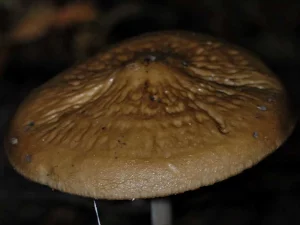
3-12 cm. Bell-shaped to convex, than flattened with a broad umbo. Pallid or ochraceous to olive-brown. Surface slimy (viscid) when wet, shiny when dry, radially wrinkled.

Gills
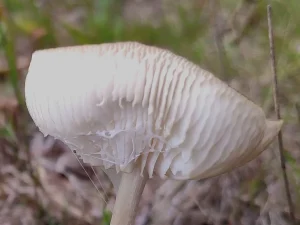
Notched (sinuate) and slightly decurrent, broad, widely spaced. White-cream, the edge can be pale brownish, and covered with loose, cotton-like scales (floccose).
Stem
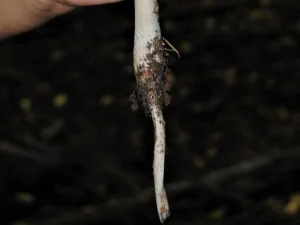
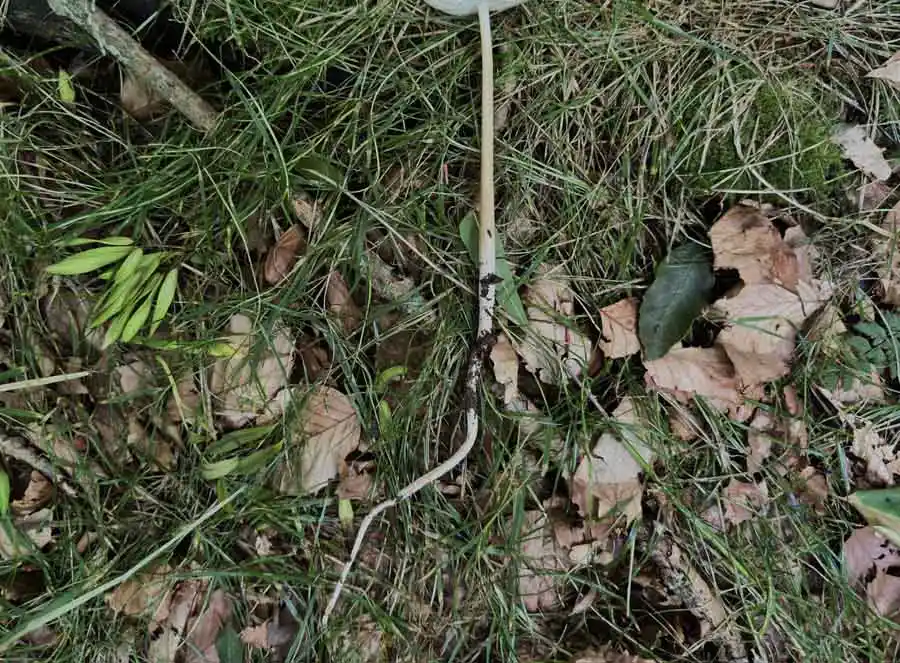
9-20 cm long, 0.3-1 cm diameter. Cylindrical with a thickened, long-rooting base, tapering towards the top. White at the apex, brownish with lengthwise grooves towards the base.
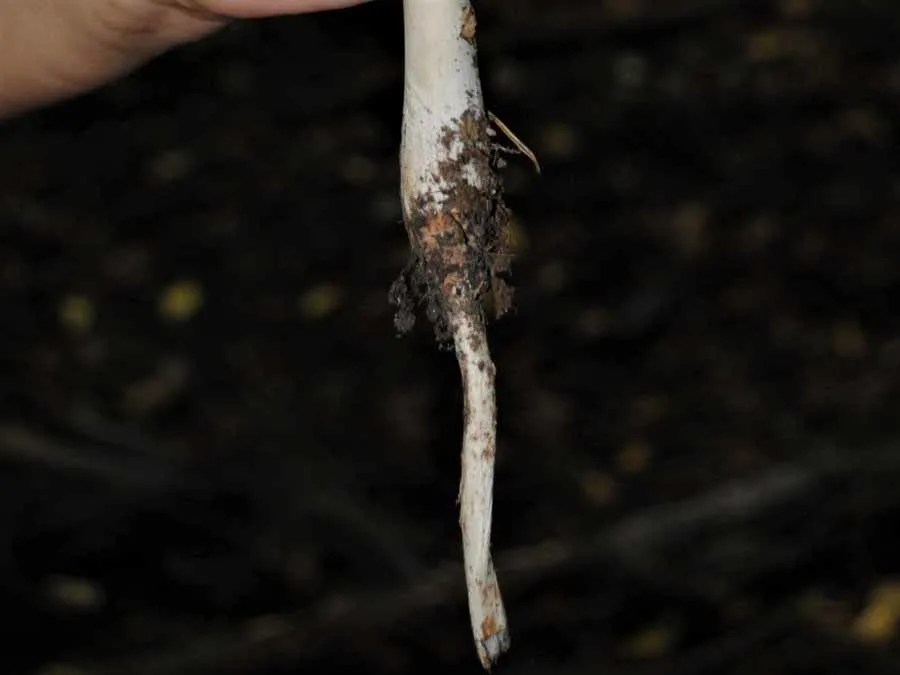
Bulbous Base
Has a slightly bulbous base with an obvious rooting section.
Flesh
Watery, soft and elastic in cap, tough and fibrous in stem, whitish.
Habitat
Saprotrophic on wood. Grows solitary or a few together, under or near deciduous trees, especially Beech, less often Oaks, attached to their roots or buried wood.
Possible Confusion
Xerula pudens has smaller, dry cap and cinnamon coloured velvety stem, it grows in the same habitat as Rooting Shank, but much less frequent.
Hydropus subalpinus has a silky-shiny, mostly dry or slightly sticky, smooth cap, and generally much smaller than Rooting Shank.
Other Facts
Odourless or slightly fruity in smell, taste not distinctive. Edible, but not worthwhile. If you still want to eat it, we recommend you remove the viscid skin of the cap. Rooting Shank is generally regarded as an edible mushroom, but it is not highly rated and, because it rarely occurs in any great numbers, not worthwhile.