Spindle Toughshank
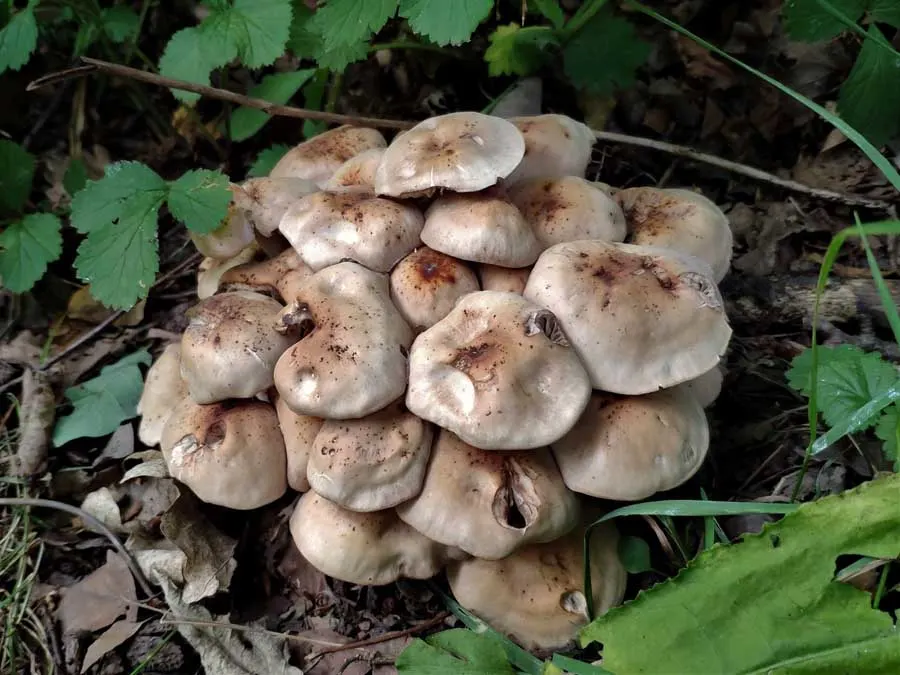


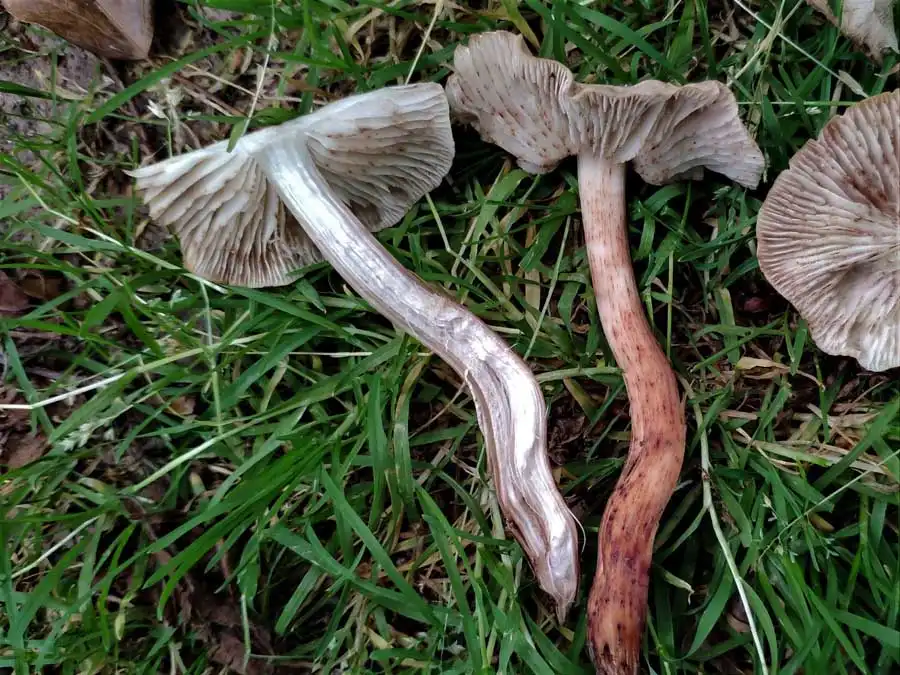
The Spindle Toughshank is a woodland mushroom known for its tough and elastic stem, which is deeply grooved or twisted. It is often found at the base of oak and beech trees, where it acts as a parasite on the root system. The mushroom is characterized by its spindle-shaped stem, which is greyish to reddish brown with a dark base, and its cap that starts deep russet-brown and fades to a paler tan. The gills are spaced widely and develop rusty-brown spots as the mushroom ages. This fungus is a necrotrophic parasite, causing root rot in oak trees, particularly in Pedunculate Oak and Northern Red Oak. It is generally considered inedible and is not recommended for foraging.
Scientific Name – Gymnopus fusipes
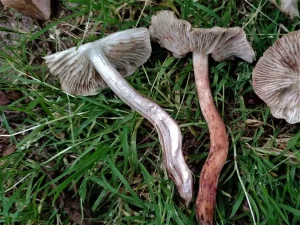


Common Names:
Spindle Toughshank (EN), Spindleshank (EN), Coeswydn Gwerthyd (CY), Łysostopek Wrzecionowatotrzonowy (PL), Árvégű Fülőke (HU)
Please note that each and every mushroom you come across may vary in appearance to these photos.
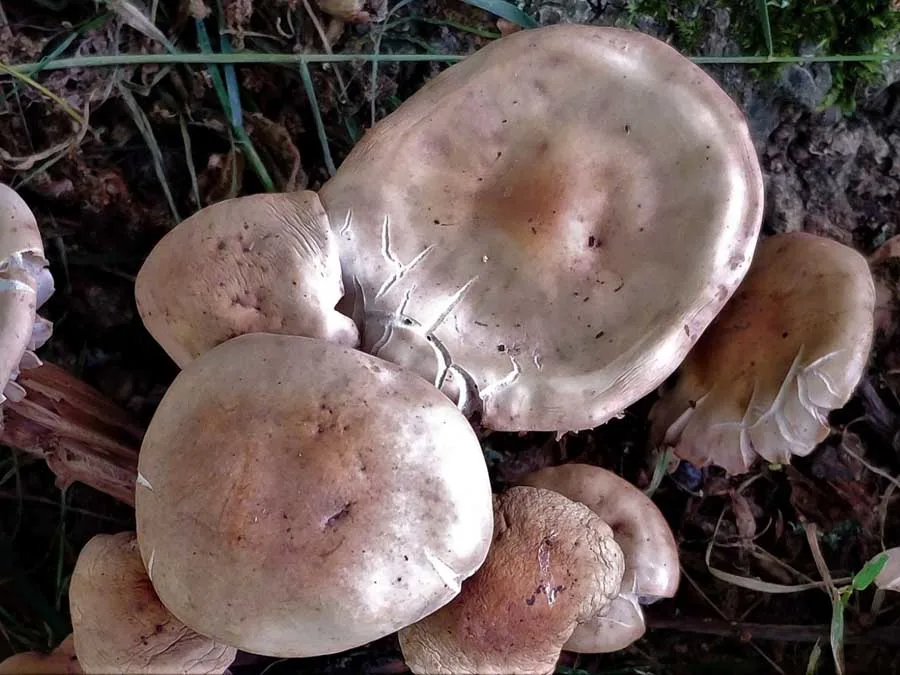
Cap
3-7 cm. Variable in colours, orangish to rusty, red-brown, and due to its hygrophanous nature, it could even be faded to pale cream. Often covered with darker, more or less rusty spots. Convex at first, flattening with age (with or without having an umbo remain), often becoming irregular. Margin is inrolled at first, but opens up with age, acute.
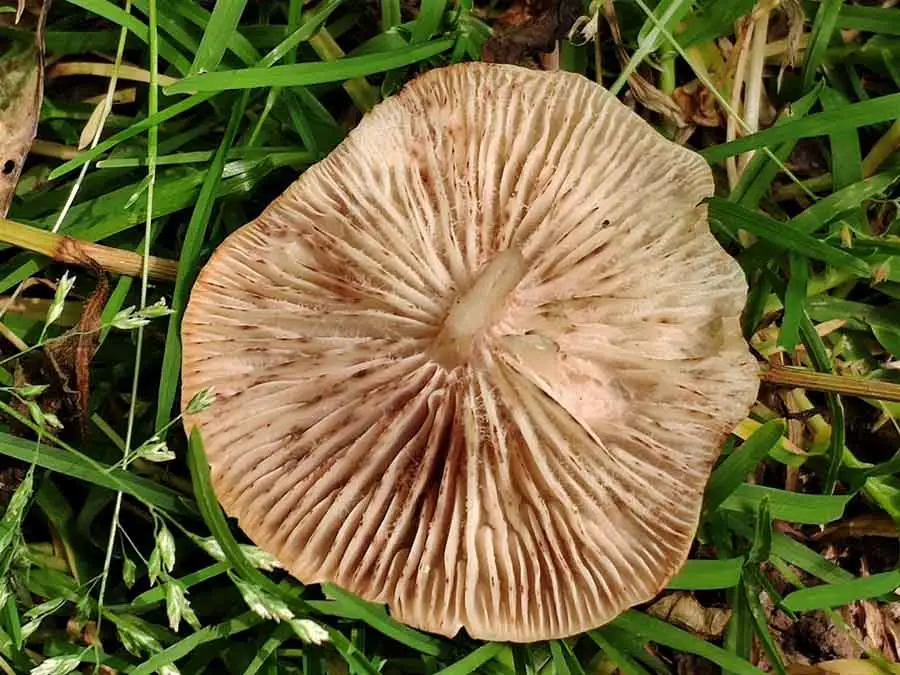
Gills
Cream to buff coloured, often covered with rusty spots. More or less widely spaced, (some authors say they are fairly crowded), free to finely attached to the stem. They have smooth edges.
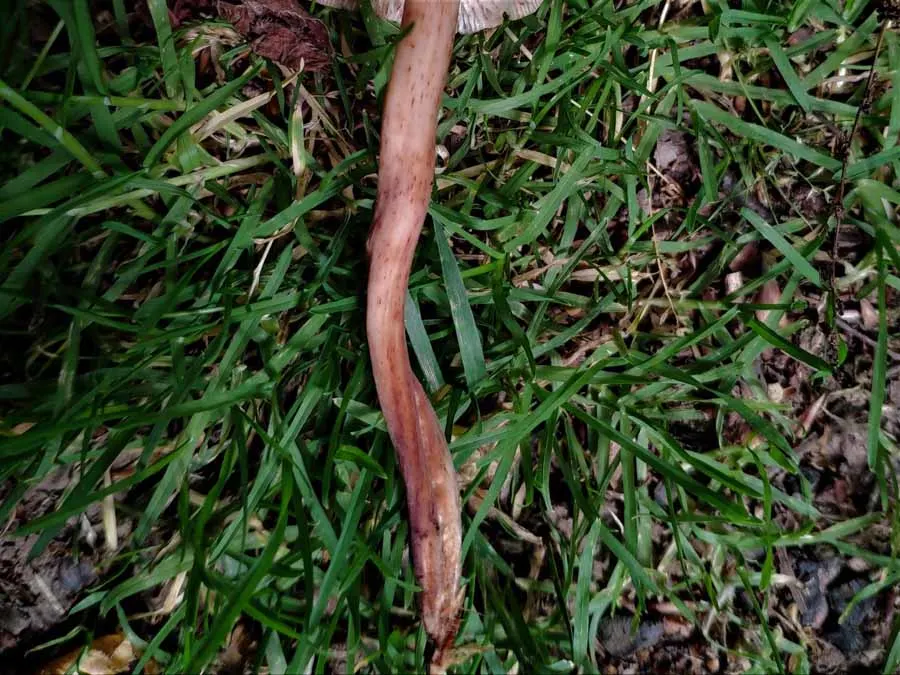
Stem
4–10 cm long, 1-2 cm diameter. Spindle-shape, often grooved longitudinally, also, often twisted. Whitish at the apex, darker tan or rusty towards the base which ends up in an elongated, rooting, pointy stem base.
Flesh
Thin, whitish pink in cap, similar in the tough stem.

Habitat
Fruiting in clusters around the roots, or on decaying stumps of hardwoods, preferably Oaks and Beech. It is a necrotrophic parasite, causing root rot, but also act as wood-inhabiting saprotrophic when it fruits on already dead hardwood.
Possible Confusion
Due to its unique, deeply rooting, pointy stem-base, it is hard to confuse with other species.
Other Facts
As a result of the long development and weather-resistance, the fruit bodies of Gymnopus fusipes often become colonized by microorganisms which may cause gastro-enteritis. Following the edibility rankings of many countries, we do not recommend this species for human consumption.