Stocking Webcap
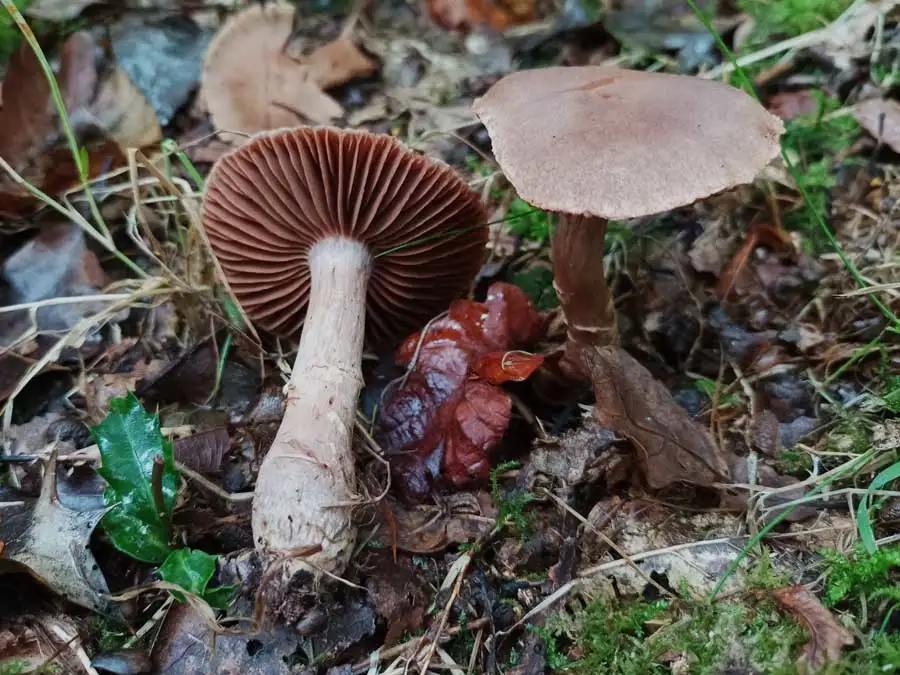


A distinctive, but rather variable looking medium-size Webcap, growing on acidic soil. Looks like the lovechild of a brown(ish) coloured webcap and Pippi Longstocking.
Scientific Name – Cortinarius torvus


Common Names:
Stocking Webcap, Cap Gweog Hosan (CY), Zasłonak Pachnący (PL), Szagos Pókhálósgomba (HU)
Please note that each and every mushroom you come across may vary in appearance to these photos.

Cap
4–10 cm across. Convex then flattening with a very shallow umbo. Pinkish clay brown to darker brown. Has darker radiating fibres.

Gills
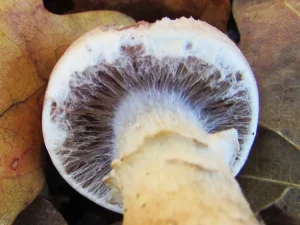
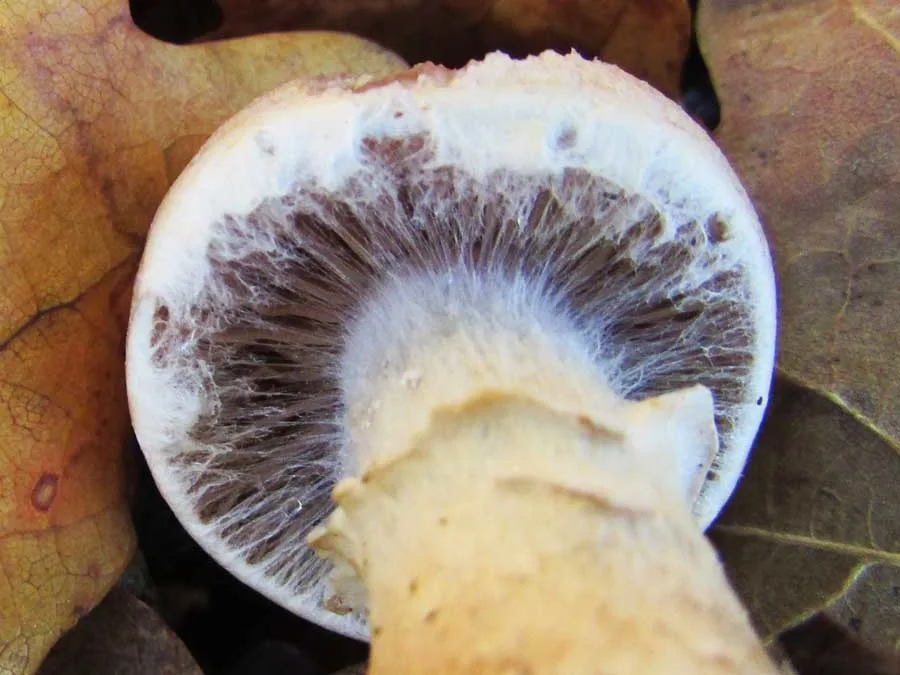
Distant, pale purplish at first, turning dark greyish-brown later, but always with paler edges.
Cortina / Veil
In cases of an immature specimen, an ephemeral veil (cortina), can be detected, which more or less covers the gills.
Stem
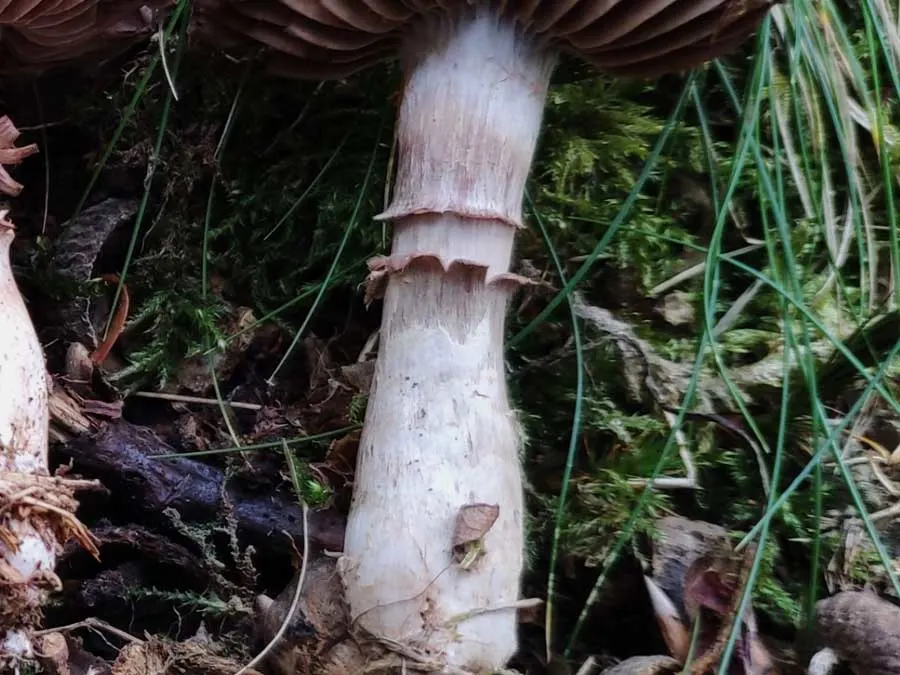
5-10 cm long, 1-1.5 cm diameter. Slightly swollen at the base or club shaped (clavate). The upper part of the stem can have a slight violet flush ‘stockinged’ below with cream to brown veil.

Flesh
Mainly white but can have a violaceous flush, particularly in the stem.

Habitat
It grows individually on acidic soil. Mycorrhizal with Beech, more rarely with Oak or Hornbeam.
Possible Confusion
It is a rather distinctive looking species, but does have at least one lookalike.
Feral Webcap (Cortinarius torvoides) looks rather similar, it is also mycorrhizal with Beech, but it grows on calcareous soil.
Other Facts
The epithet (2nd part of the scientific name) torvus means ‘wild’, ‘savage’, ‘harsh’, etc.
This species is in subgenus Telamonia. Identifying (former or current) Cortinarius species is never easy, especially if we are talking about Telamonias, which is possibly the most diverse subgenus within the genus Cortinarius. Subgenus Telamonia had been divided to many subsections.