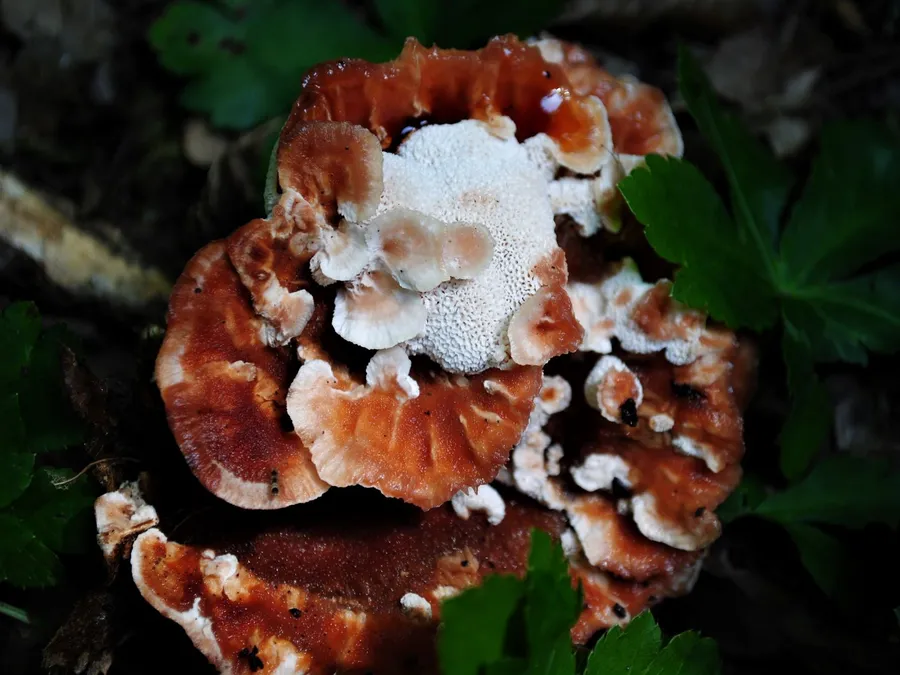
The Deceiver


Laccaria laccata, commonly known as the deceiver, lackluster laccaria, or waxy laccaria, is a species of fungus. It is a small but highly variable mushroom, and can look quite washed out, colorless and drab, but when younger it often assumes red, pinkish brown, and orange tones. It has white spores.
Scientific Name – Laccaria laccata



Common Names:
The Deceiver (EN), Waxy Laccaria, Twyllwr Gloyw (CY), Lakówka Pospolita (PL), Húsbarna Pénzecskegomba (HU)
Please note that each and every mushroom you come across may vary in appearance to these photos.

Cap
1.5-5 cm. Convex to flattened with depressed centre and even upturned edges, can have undulating edges with age. Red/orange/salmon pink/brown but fading with age.
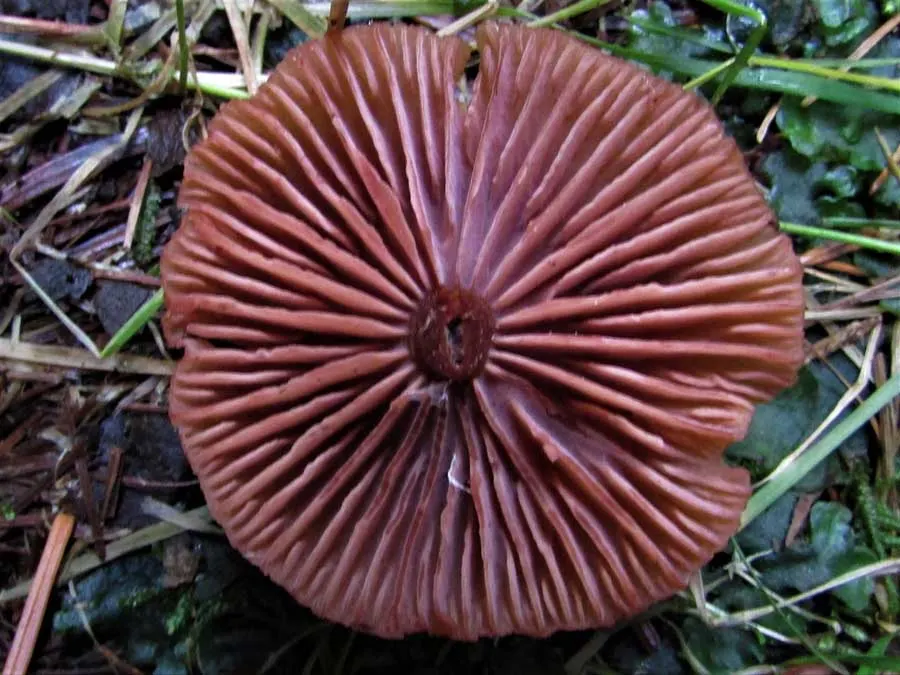
Gills
Gills red/orange/salmon pink/brown. Widely spaced, broad and irregular with shorter gills in between. The gills have a smooth notch just before reaching the stem or become shallow before reaching the stem (adnate, emarginate).
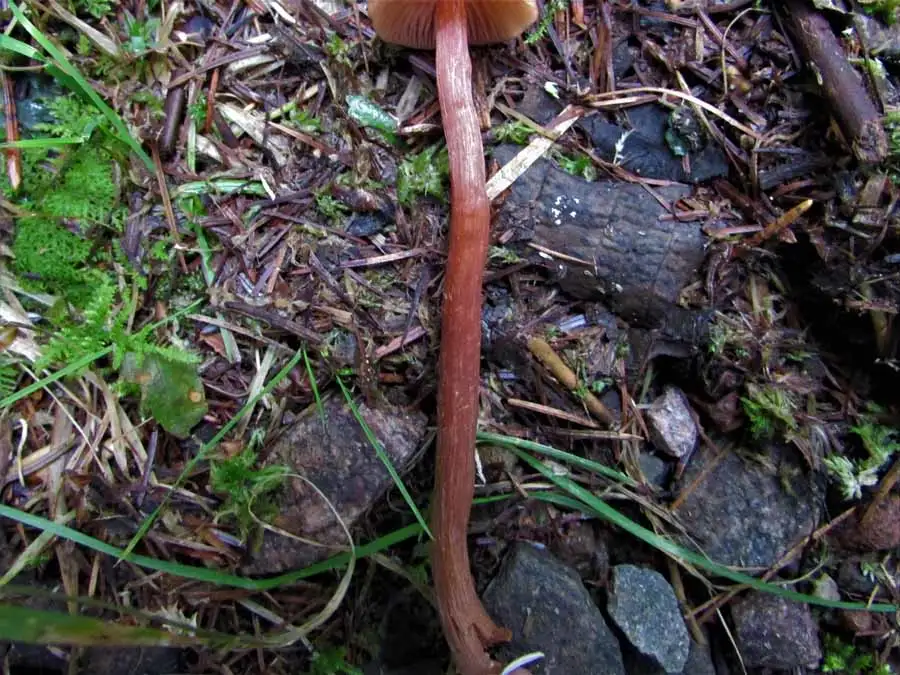
Stem
2-9 cm long, 0.2-0.8 cm diameter. Red/orange/salmon pink/brown. Fibrous, twisted, tough and quite often hollow.

Flesh
Red/brown to pale.

Habitat
Mixed wood and heathland, parks and paths. Usually in large numbers when found.
Possible Confusion
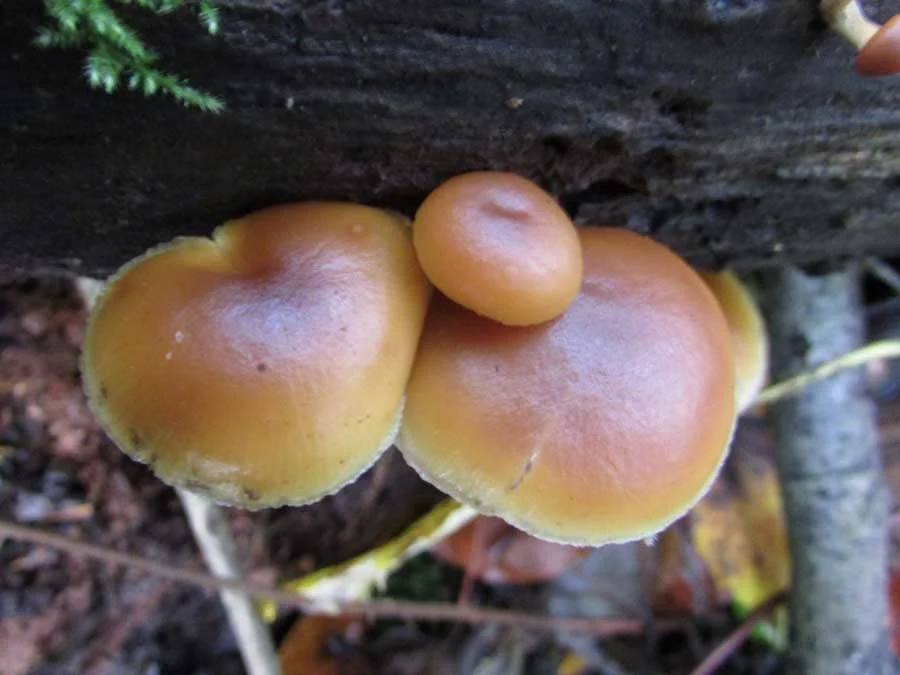
A few species of small mushrooms look similar so be sure of the identity before consuming. The Funeral Bell, Galerina marginata, pictured, is the most dangerous look-a-like but grows on wood and has a ring on the stem.
Other Facts
The generic name Laccaria translates to ‘lacquer’ (shiny paint), and the specific epithet laccata means varnished or coated with lacquer. That’s what I call toadstool tautology, or to put it another way… on second thoughts perhaps not, as to do so would be tautologous! The Deceiver Laccaria laccata is an edible mushroom, and although perhaps not one of Mother Nature’s finest offerings the caps are very good when fried, tasting rather like shop-bought button mushrooms (Agaricus bisporus). Deceivers are also fine when used to make mushroom soup. The tough fibrous stems are best discarded.