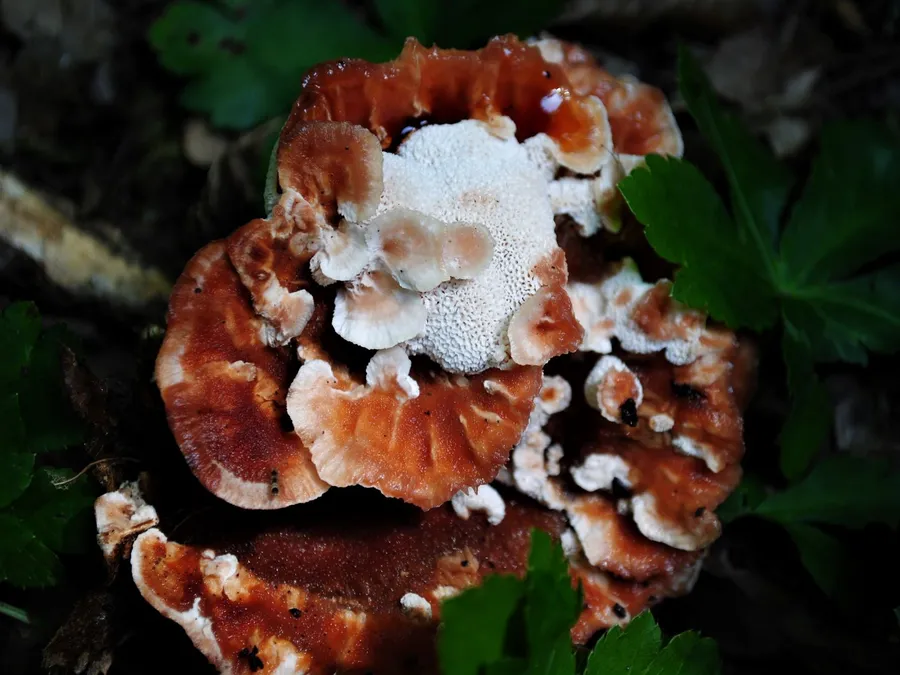
Trooping Funnel
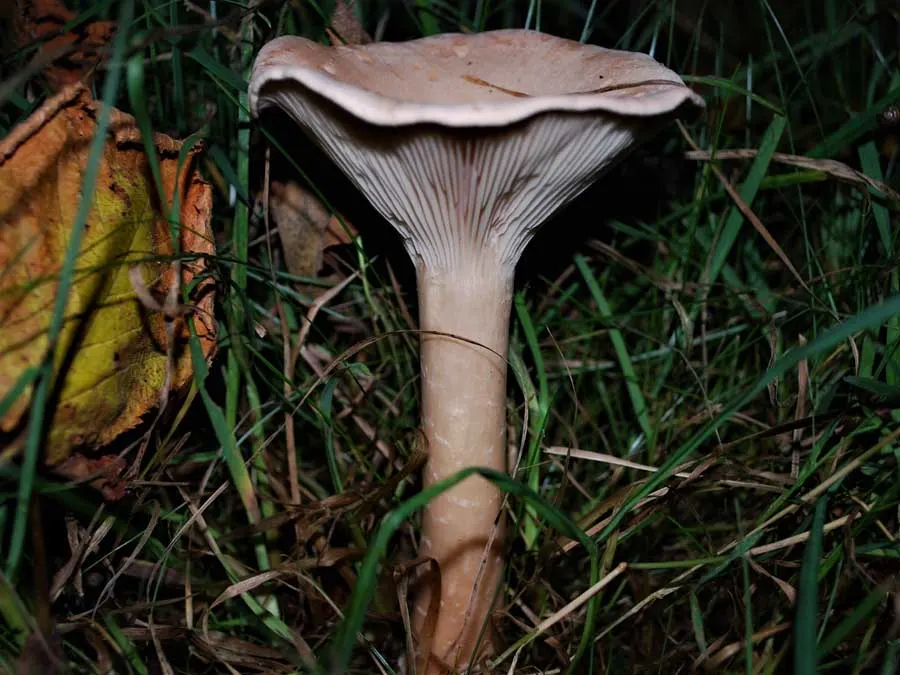


Best fried when young and used in soups and stews when more mature. One fairy ring in France measured half a mile across and is estimated to be 800 years old.
Scientific Name – Clitocybe / Infundibulicybe geotropa



Common Names:
Trooping Funnel (EN), Monk’s Head (US), Twmffat / Twndish Cylchol (CY), Lejkówka Okazała (PL), Óriás Tölcsérgomba (HU)
Please note that each and every mushroom you come across may vary in appearance to these photos.
Cap
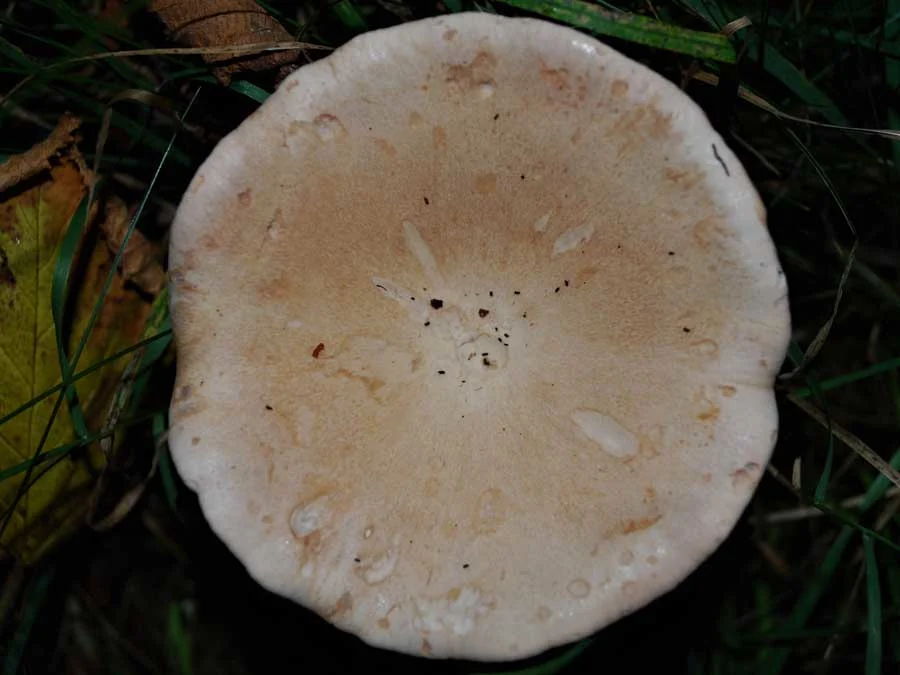
10-15 cm. Convex with in-turned edge and obvious umbo becoming flattened then funnel-shaped but keeping an in-turned edge. Buff/yellow to having a salmon pink tinge.
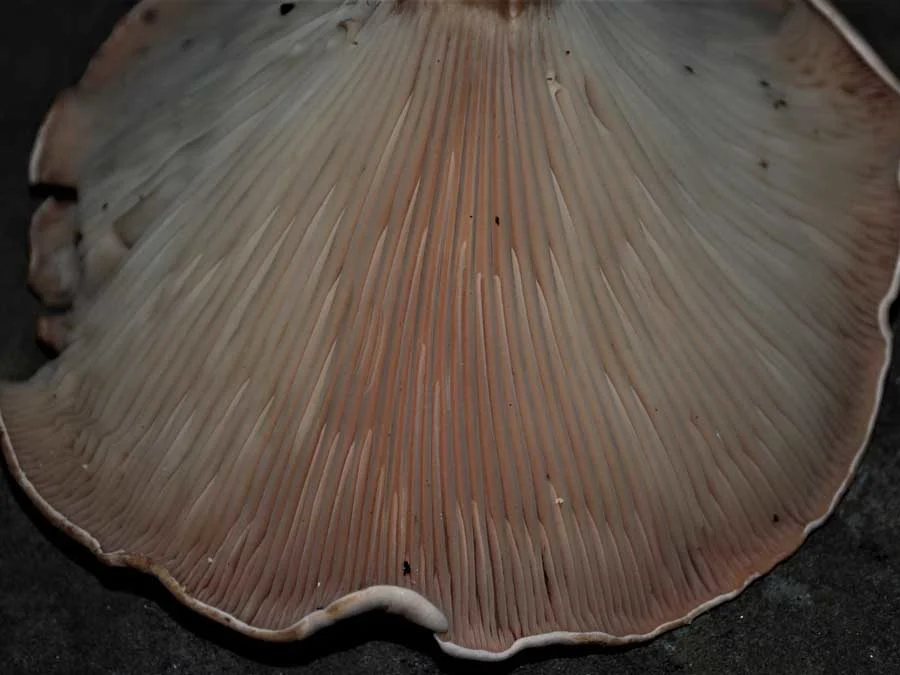
Gills
Gills pale buff/yellow sometimes with a salmon pink tinge. Running down the stem (decurrent). Crowded.
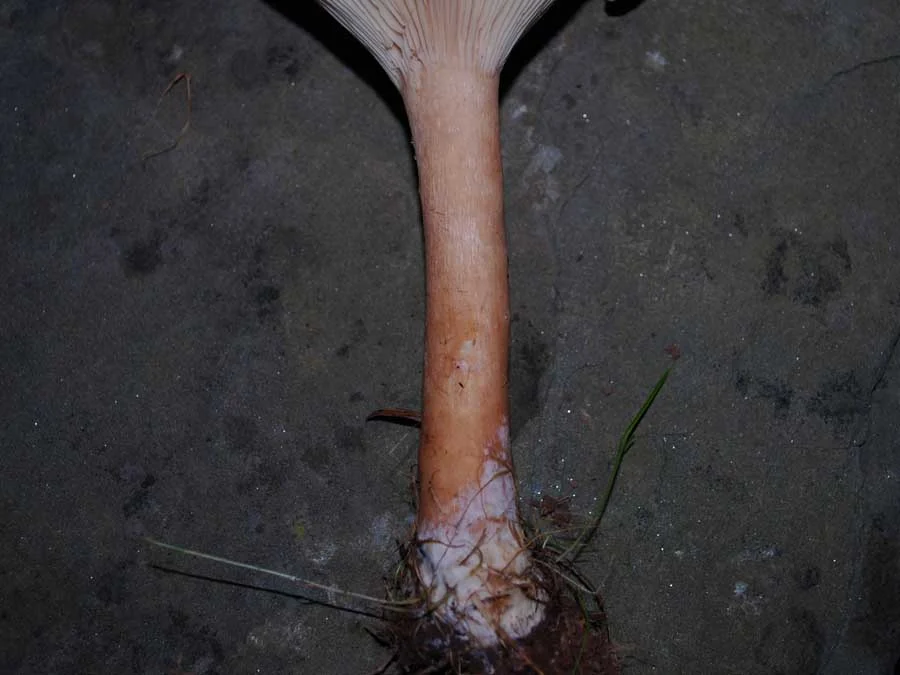
Stem
16-20 cm long, 2-3 cm diameter. Swollen and a bit woolly at the base. Pale buff/yellow sometimes with a tinge of salmon pink. The stem is very tough and fibrous and usually requires a knife to harvest them. When cooking the stem cut it into discs.

Flesh
White and firm.

Habitat
Mixed woodland, especially clearings and roadsides. Mainly grows in troops or rings but can be found individually.
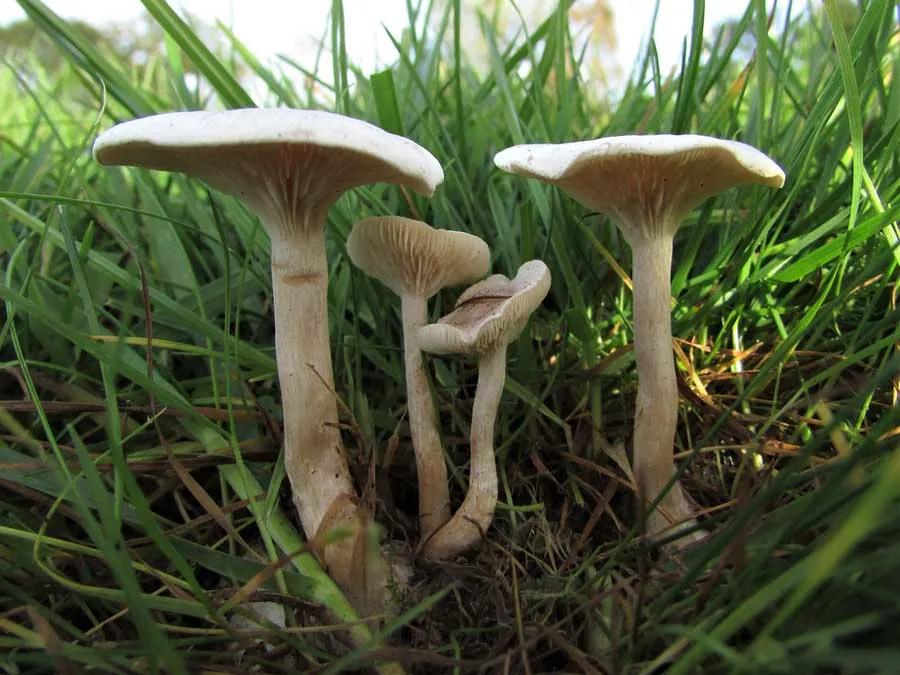
Possible Confusion
Potentially deadly Clitocybe rivulosa and Clitocybe dealbatta, pictured, although these mushrooms do not get any where near as big as the Trouping Funnel, so when identifying these mushrooms size matters!
Livid pinkgill (Entoloma sinuatum) is a bit similar but has notched gills and a mealy smell.
Melanoleuca grammopodia again similar but with a pale brown cap and musty smell. If you stick to large specimens, with some being 20cm or more, it would be difficult to confuse this mushroom with any other.

Spore Print
White. Subglobose. You should scrape your spores into a small pile to get an accurate spore colour.
Taste / Smell
Mushroomy. Best eaten young although the larger fungi have a really strong taste and are great used in soups and stews. Should be cooked before consumption.
Edibility
Only young mushrooms are recommended for eating, as older ones lose their pleasant taste, and the flesh becomes leathery in consistency. The stipes of all aged specimens are generally discarded. The fungus is popular in northern Italy, where it is roasted or cooked in stews and frittatas, or preserved in oil.