Winter Chanterelle
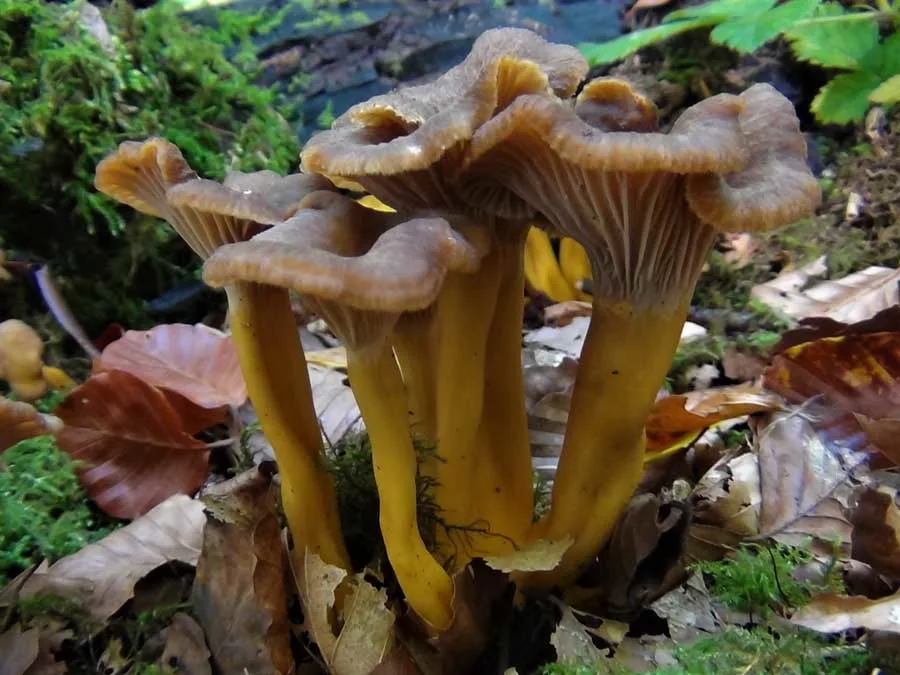


Occasional but can be found in great numbers towards the end of the season when lucky enough to find them.
Scientific Name – Craterellus tubaeformis
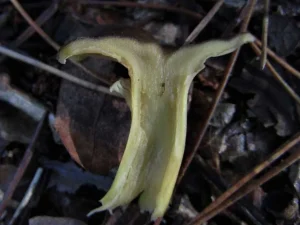
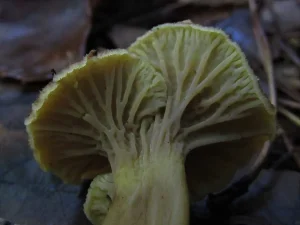
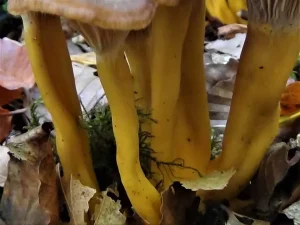
Common Names:
Trumpet Chanterelle (EN), Winter Chanterelle (US), Yellow Foot (US), Siantrel Cornffurf (CY), Pieprznik Trąbkowy (PL), Tölcséres Rókagomba (HU)
Please note that each and every mushroom you come across may vary in appearance to these photos.

Cap
3-5 cm. Convex with a depression in the centre when young becoming funnel-shaped with irregular edges. A hole in the centre can run right through to the hollow stem. Dark yellow/brown to orange/yellow.
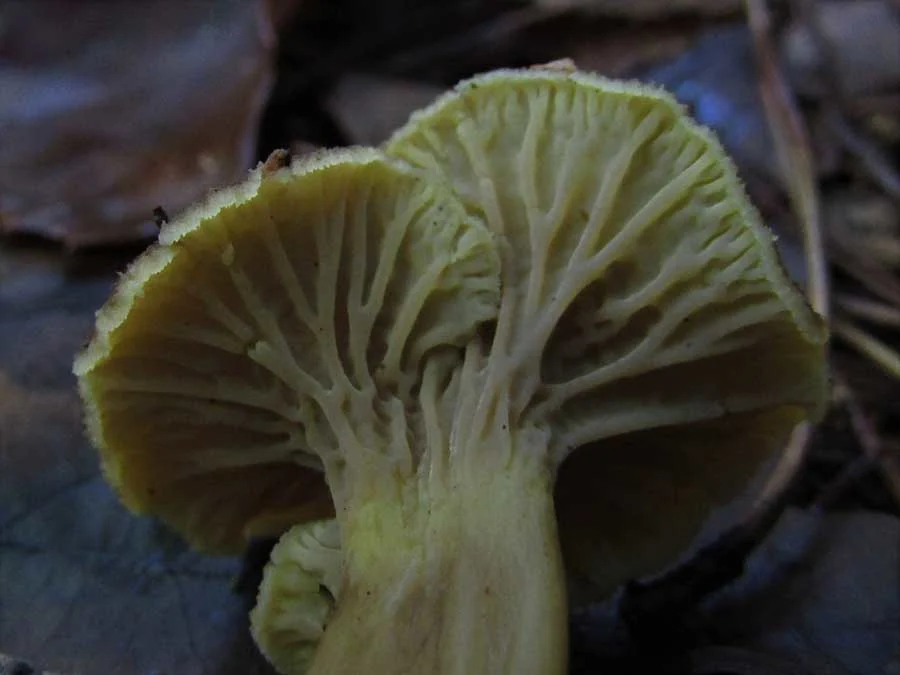
Gills
Pale yellow/brown. Not crowded, irregularly branching and running down the stem, decurrent. These are not true gills but folds.

Stem
3-6 cm long, 0.4-1.5 cm diameter. Yellow, cylindrical to irregular and hollow. Can have a vertical depression making the stem look like a pair of yellow legs. The stem generally tapers towards the base.
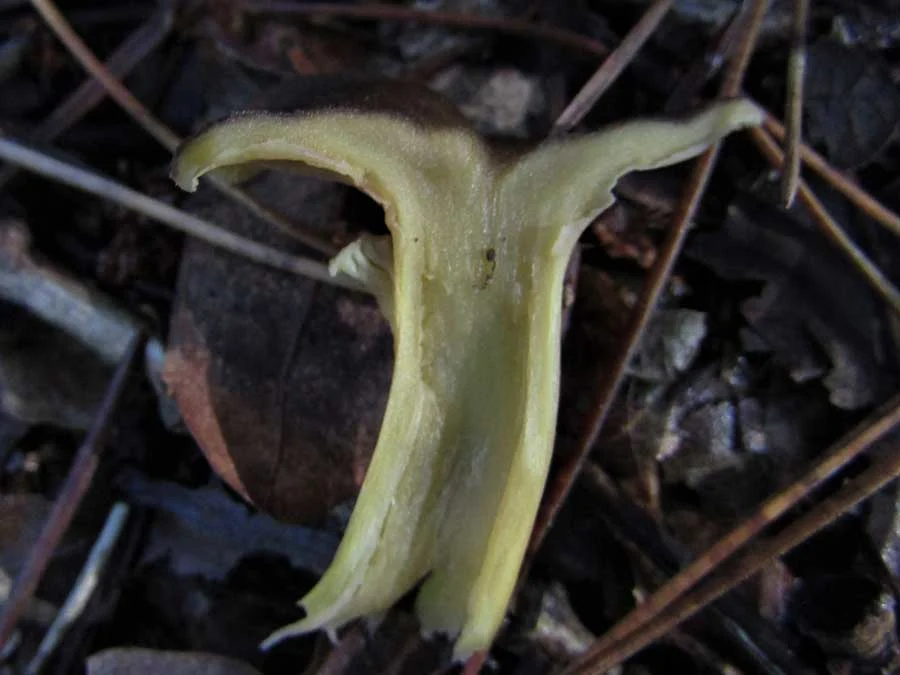
Flesh
Yellow/brown.
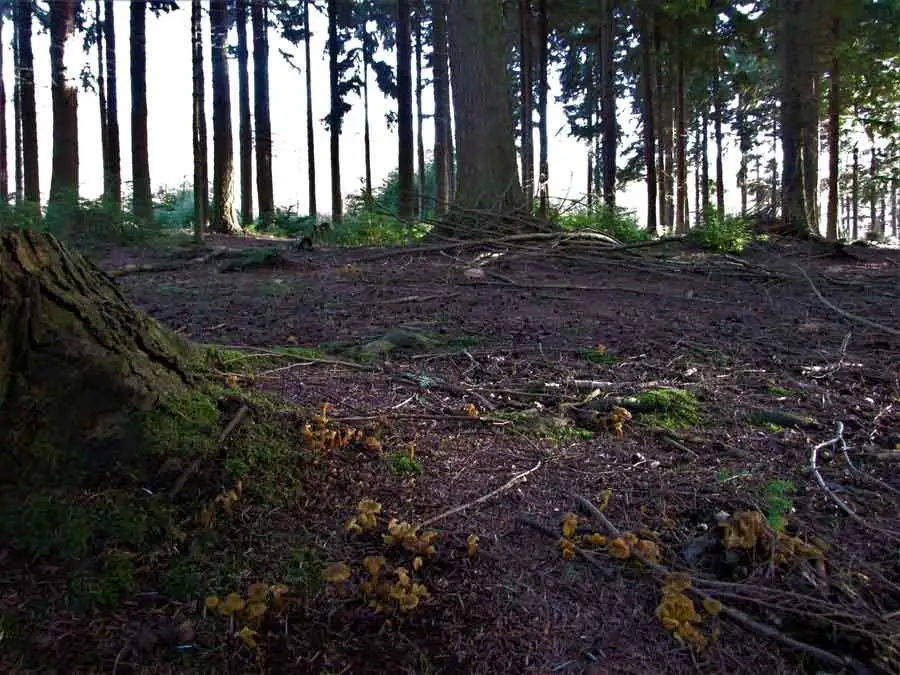
Habitat
Mixed woodland and coniferous forest on moss or rotting wood. Found more in mossy Beech woods.
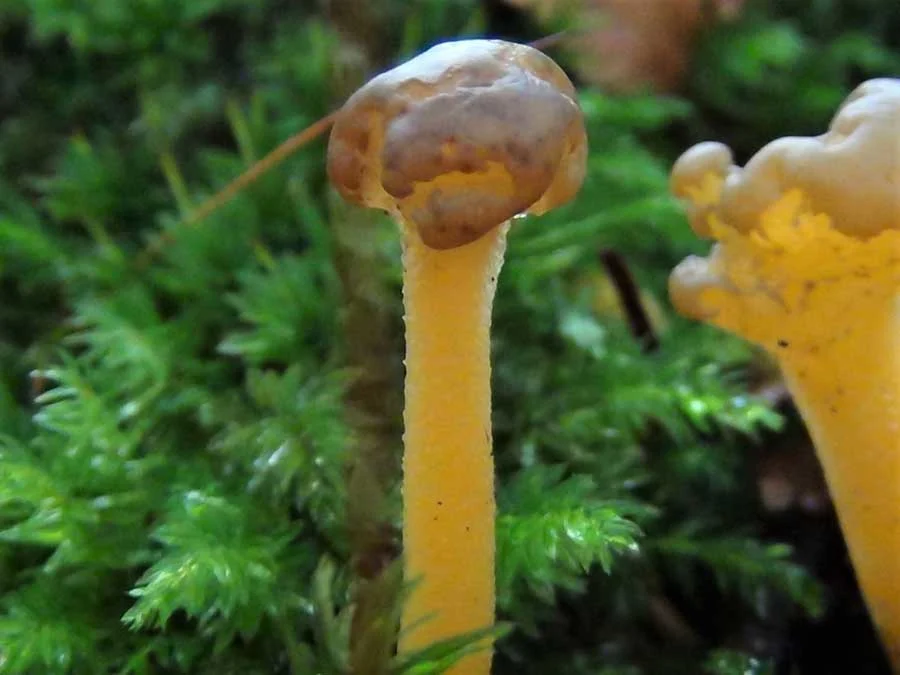
Possible Confusion
Other Chanterelles but these are edible.
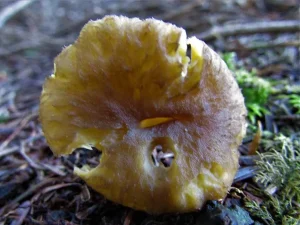
The Jelly Baby (Leotia lubrica), pictured, looks similar but does not have gills and has a bulbous cap rather than a slight funnel shape. This mushroom is considered poisonous or inedible in some guides, edible in others, best avoided.
Taste / Smell
Excellent, stronger but less sweet than Chanterelle (Cantharellus cibarius).
Other Facts
Molecular phylogenetics has shown that C. tubaeformis deserves its reclassification from Cantharellus to Craterellus. Additionally, it appears that there are two distinct genetic populations that have traditionally been called tubaeformis: one in Europe and eastern North America, and another in western North America. If these two groups are defined as separate species, the “eastern” yellowfoot would retain the scientific epithet tubaeformis due to the origin of the type specimens in Sweden. In 2017, scientists from the Oregon Biodiversity Information Center suggested the classification Craterellus neotubaeformis for the variety found in western North America, but had “still not managed to write the paper”.