Aniseed Funnel
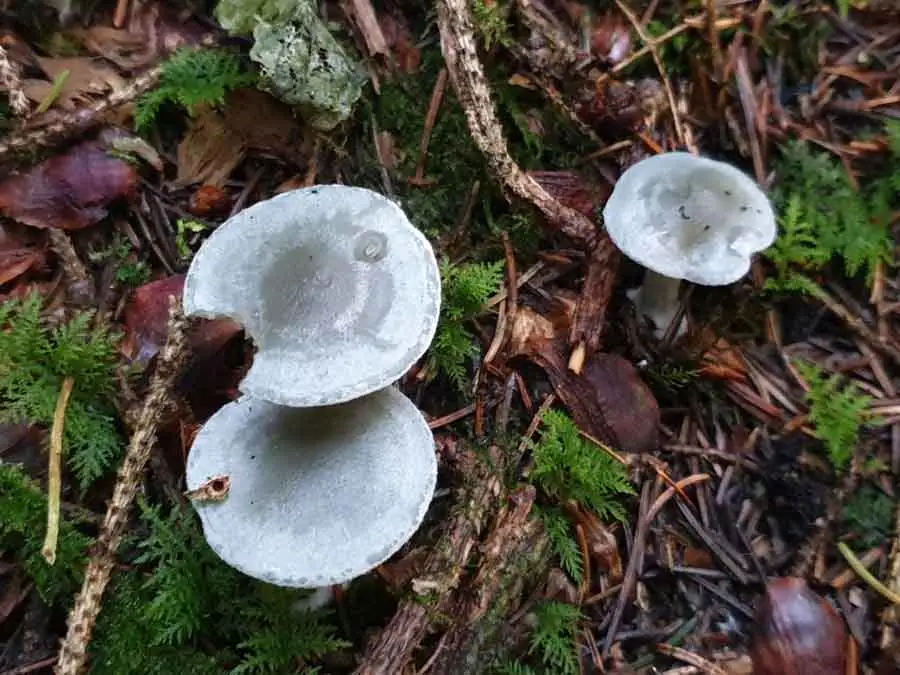


Clitocybe odora, commonly known as the blue green anise mushroom, or aniseed toadstool, is a blue-green mushroom that smells strongly like anise. It grows near deciduous and coniferous trees, in small groups alongside tree roots. This mushroom is edible but may resemble poisonous species.
Scientific Name – Clitocybe odora


Common Names:
Aniseed Funnel (EN), Aniseed Toadstool, Twmffat / Twndish Anis (CY), Lejkówka Zielonawa (PL), Zöld Ánizsgomba (HU)
Please note that each and every mushroom you come across may vary in appearance to these photos.
Cap
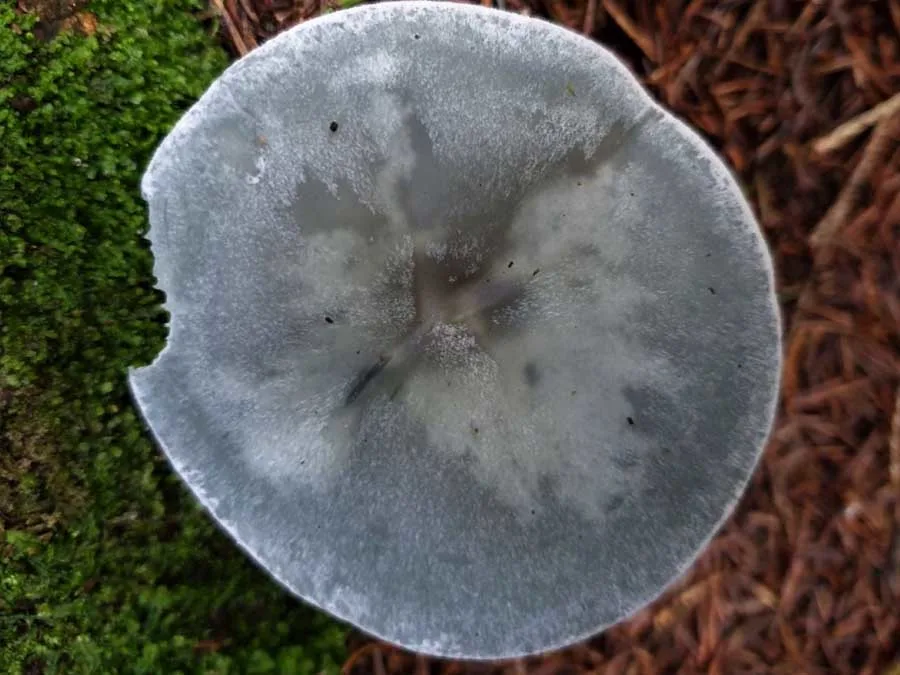
5-7 cm. Blue-green, greyish or flushed greenish. Convex at first with a low, broad umbo and in-rolled margin. Later expanding and becoming irregular and wavy at the margin and can become shallowly funnel shaped.
Gills
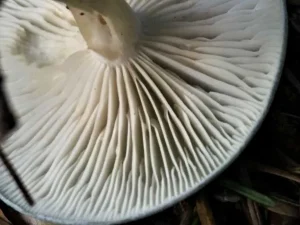
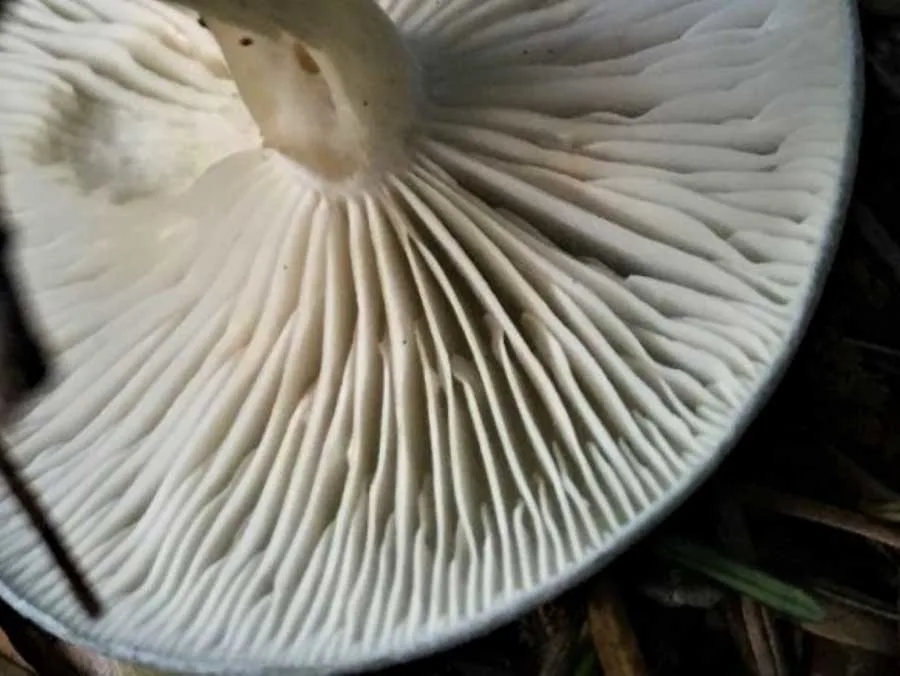
Slightly running down the stem (decurrent), crowded, the edge of the gills is smooth. Whitish, tinged with cap colour when young, becoming grey-green with age.
Stem
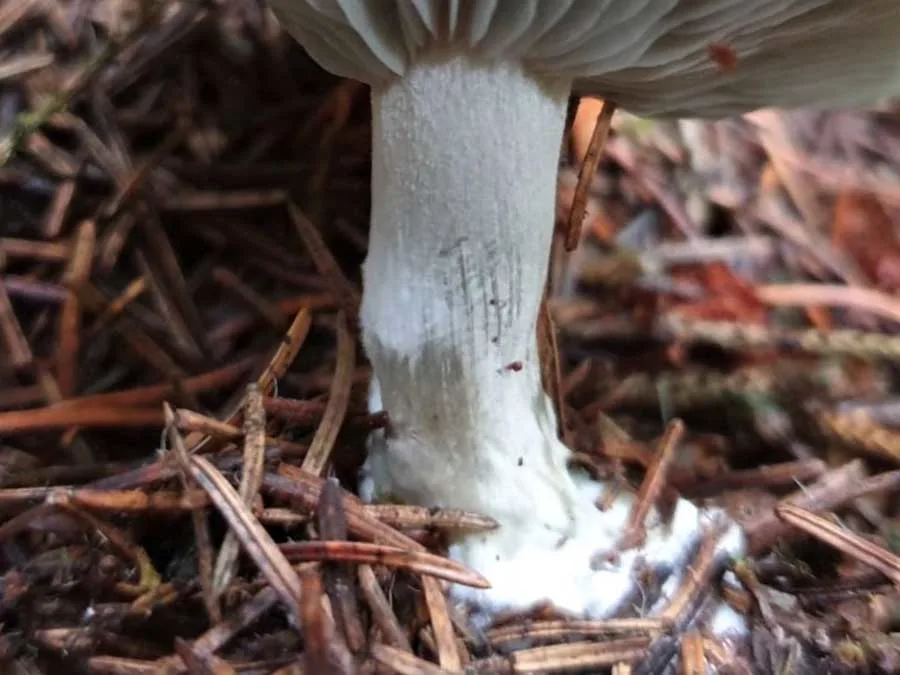
4-7cm long, 0.5-1 cm diameter. Cylindrical, sometimes curved. Flushed with cap colour, the base is covered in fine white down.

Flesh
Thin and soft in cap, fibrous and solid in stem, can be hollow. Whitish to pale tan.

Habitat
Saprotrophic, growing on soil among leaf litter. Often under brambles and bushes in woodland (preferably under Beech, sometimes under different hardwoods, occasionally under conifers), parkland or heathland. Grows solitarily or in groups.

Possible Confusion
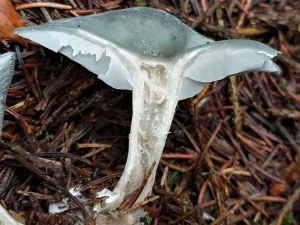
Fragrant Funnel (Clitocybe fragrans), pictured, has a rather similar aniseed smell, but it grows in a different habitat, it seems to prefer grass, also its cap changes colour according to its water content (hygrophanous). It can be white to off white to tan. Avoid this confusion, because Fragrant Funnel is toxic, it contains Muscarine!
Verdigris Roundhead (Stropharia aeruginosa) has a dark spore print and doesn’t have aniseed smell.
Edibility
The caps can be dried and used as a condiment, or used fresh for flavouring. Mushroom hunters are advised to pick mature specimens, as the younger ones can be confused with several similar poisonous ones that grow with this mushroom. Every part of the mushroom should be examined before collecting for the table. Also, the stem and the cut cap should be checked to see if there are any fly larvae. Some guides recommend against eating the species.