Bitter Beech Bolete


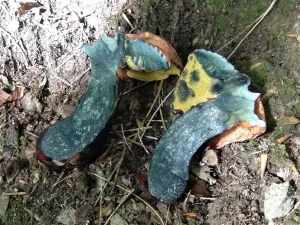

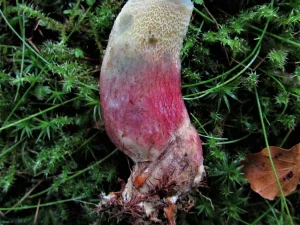
Please note that each and every mushroom you come across may vary in appearance to these photos.

Cap
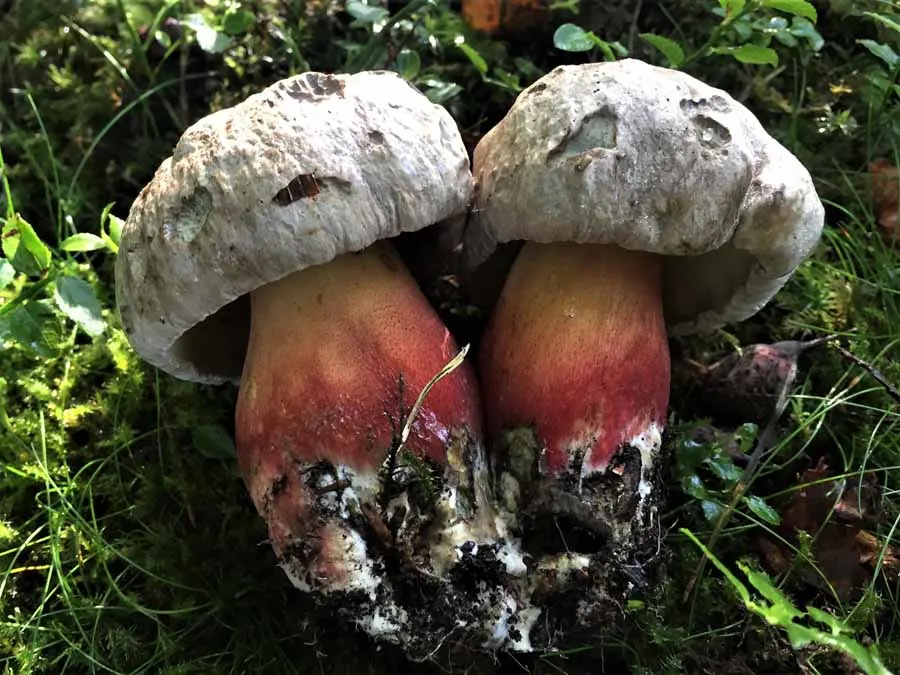
7-10 cm. Cloudy grey with some tan hints. Starting a bit downy but becoming smooth with age. Can crack towards the centre.

Pores
Lemon yellow, tight, sponge like pores which bruise a pale blueish green.
Stem
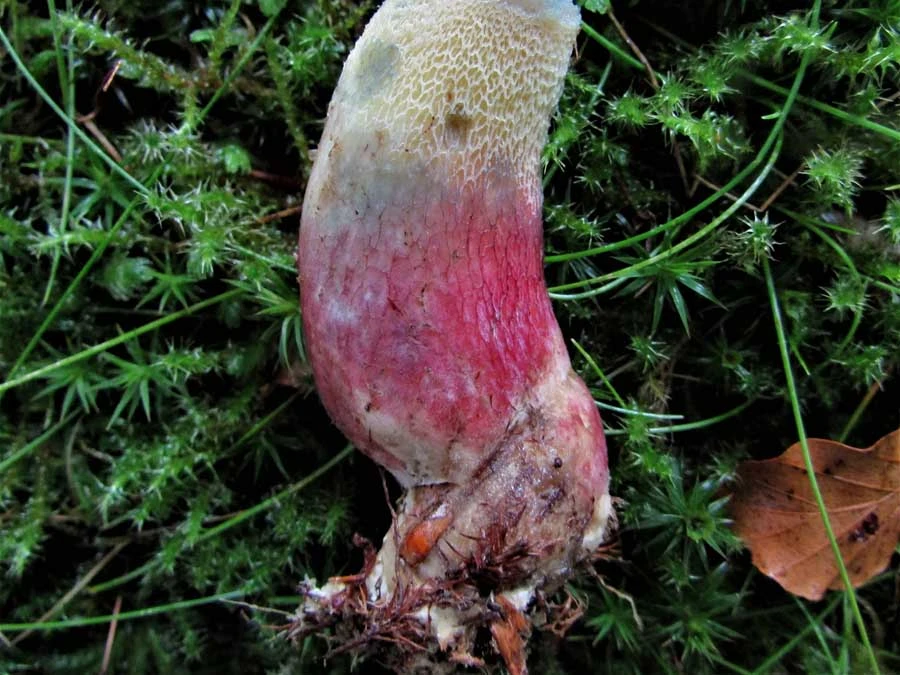
7-10cm long, 3-4.5 cm diameter. Lemon yellow at the top going into red and finally brown at the bottom, this is covered in a light coloured reticulation. The stem can vary from swollen to slim and has traces of ‘roots’ when pulled up.
Flesh
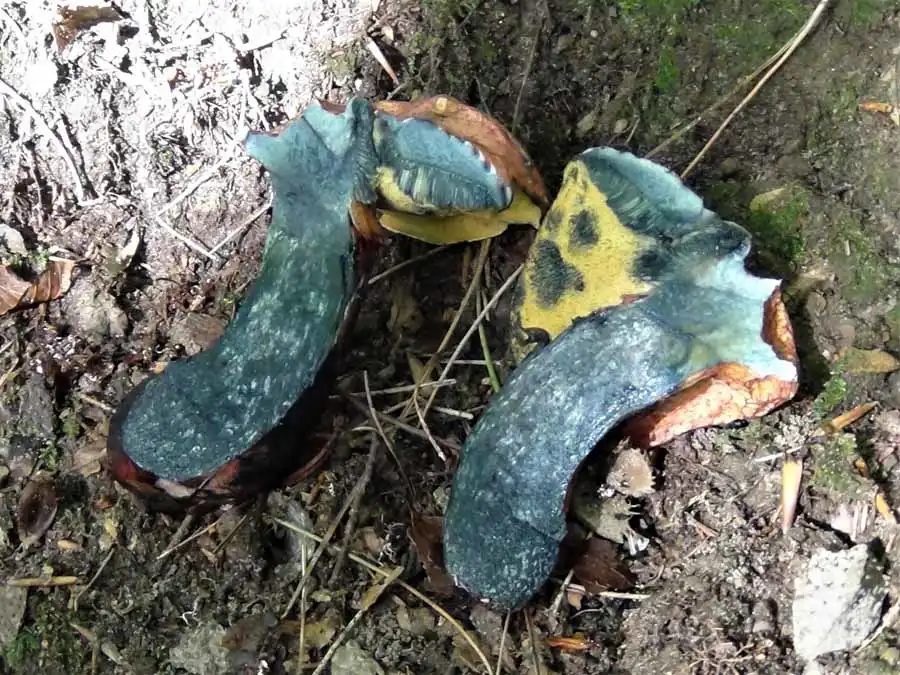
Pale yellow but turning immediately off white on cutting and changing to blue after a short time.

Habitat
Beech and oak but will grow with other deciduous trees, sometimes conifers.

Possible Confusion
Other Boletes, particularly the Rooting Bolete (Caloboletus radicans), pictured.
Other Facts
Caloboletus calopus, commonly known as the bitter bolete, bitter beech bolete or scarlet-stemmed bolete, is a species of fungus in the bolete family. Christiaan Persoon first described Boletus calopus in 1801. Modern molecular phylogenetics showed that it was only distantly related to the type species of Boletus and required placement in a new genus; Caloboletus was erected in 2014, with C. calopus designated as the type species.
The stout fruit bodies are attractively coloured, with a beige to olive cap up to 15 cm (6 in) across, yellow pores, and a reddish stipe up to 15 cm (6 in) long and 5 cm (2 in) wide. The pale yellow flesh stains blue when broken or bruised. Its red stipe distinguishes it from Boletus edulis.
Appearing in coniferous and deciduous woodland in summer and autumn, the species is found in Eurasia and North America. Although not typically considered edible due to an intensely bitter taste that does not disappear with cooking, there are reports of it being consumed in eastern Europe.