Blackening Polypore


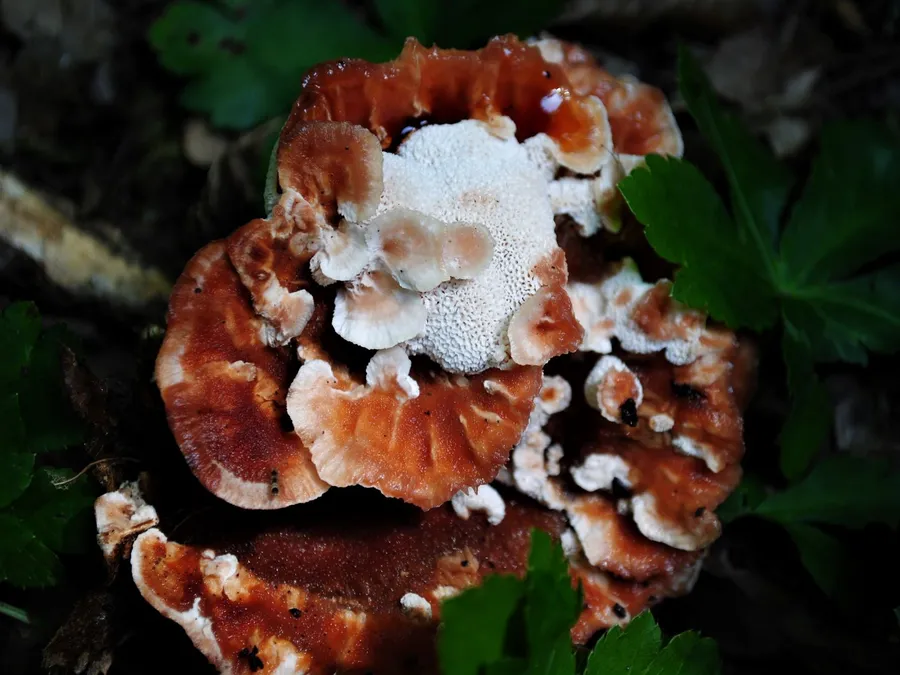
The blackening polypore (Meripilus sumstinei or M. giganteus), also known as the giant polypore, is a large, edible bracket fungus found in clusters at the base of trees. It is characterized by white-to-blonde fronds that turn black instantly when bruised or handled. It is popular for its deep flavor and is considered a good beginner mushroom.
Scientific Name – Meripilus giganteus
Common Names:
Giant Polypore (EN), Blackening Polypore, Ysgwydd Fawr (CY), Wachlarzowiec Olbrzymi (PL), Óriás Bokrosgomba (HU)
Please note that each and every mushroom you come across may vary in appearance to these photos.
Fruiting Body
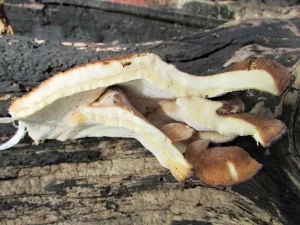
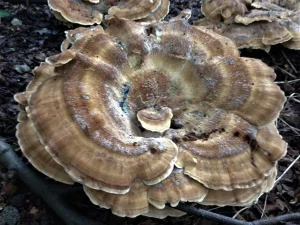
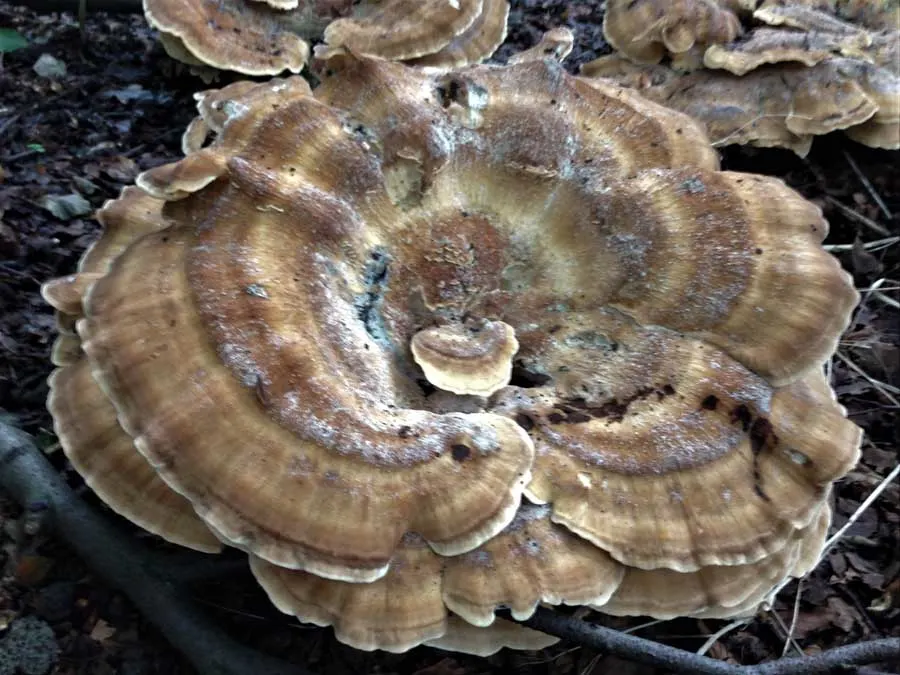
This mushroom grows in large rosette of overlapping flat brackets. The cap is radially coloured light and darker brown and is covered in very fine brown scales.
The cap can vary in colour and shape depending where and when it is growing making identification occasionally difficult.
Pores
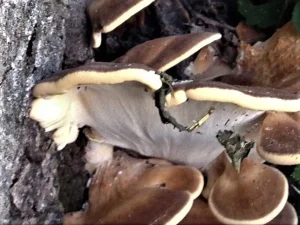
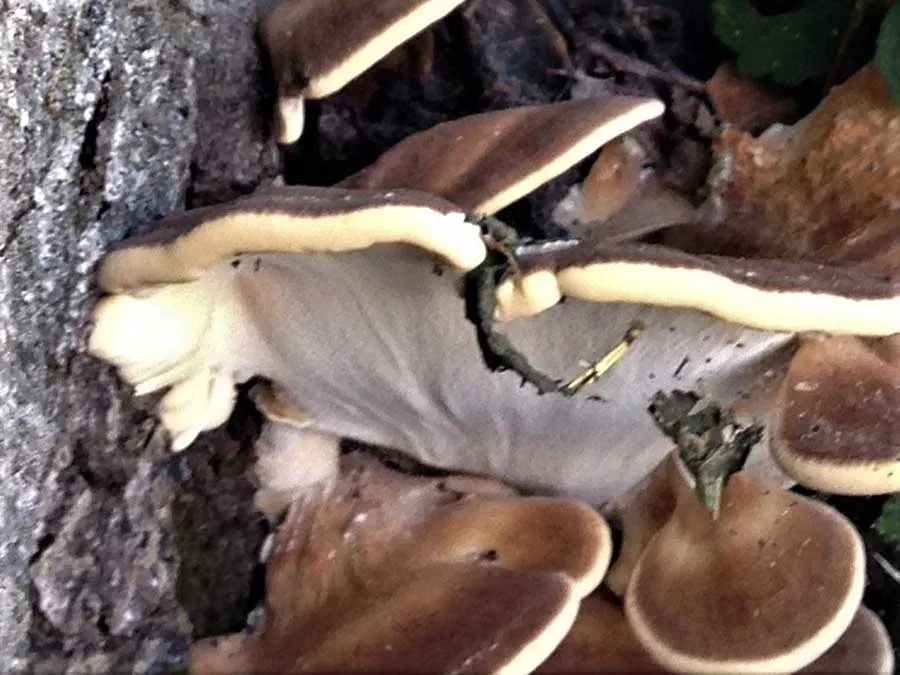
Tight off white pores that bruise blackish.

Flesh
White and soft but fibrous.
Habitat
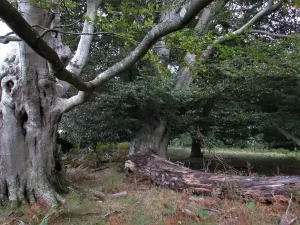
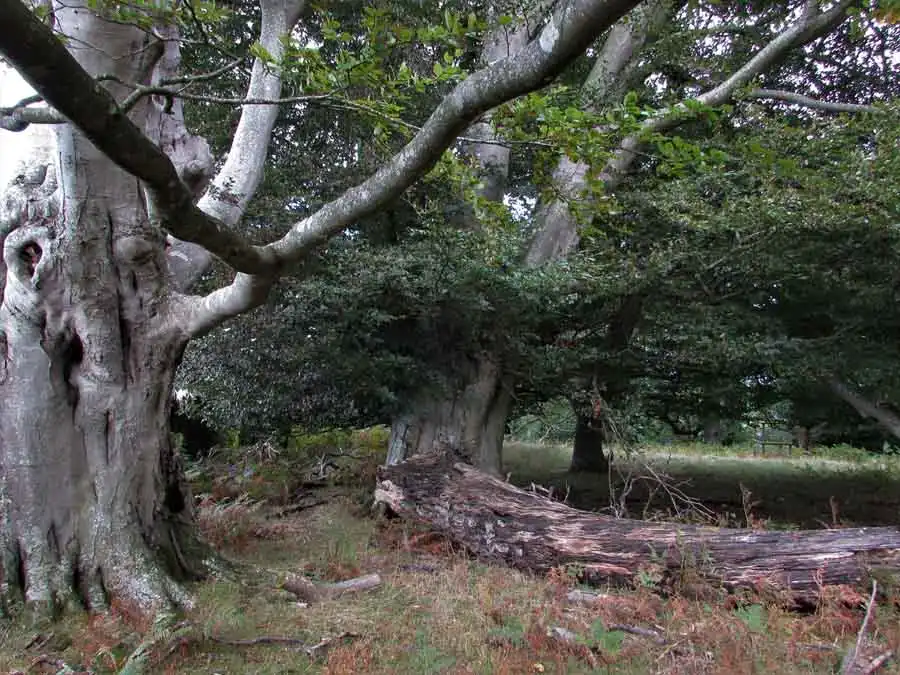
Common throughout most of Britain and Ireland, the Giant Polypore is more scarce in northern Scotland. This species occurs in most of mainland Europe, while a very similar fungus, Meripilus sumstinei, is found in North America.
One of the difficulties in identifying this species is its variability, not only in colour and edge thickness during development (the edges are blunt and rounded when young, becoming much thinner and sharper as the fruitbodies mature) but they also look very different when growing on buried roots; then they can form beautiful, symmetrical rosettes.
The cabbage-like form of the rosette shown above is very different from the more common bracket form. There is no sign of the substrate in this picture, but just a few cm below the ivy-covered soil surface lie the roots of an old Beech tree. The tree itself had no brackets on its lower trunk in the year when this picture was taken.
The pore surface of Meripilus giganteus quickly stains dark brown or black when it is bruised, and some people refer to this fungus by an alternative common name the Black-staining Polypore.
Possible Confusion
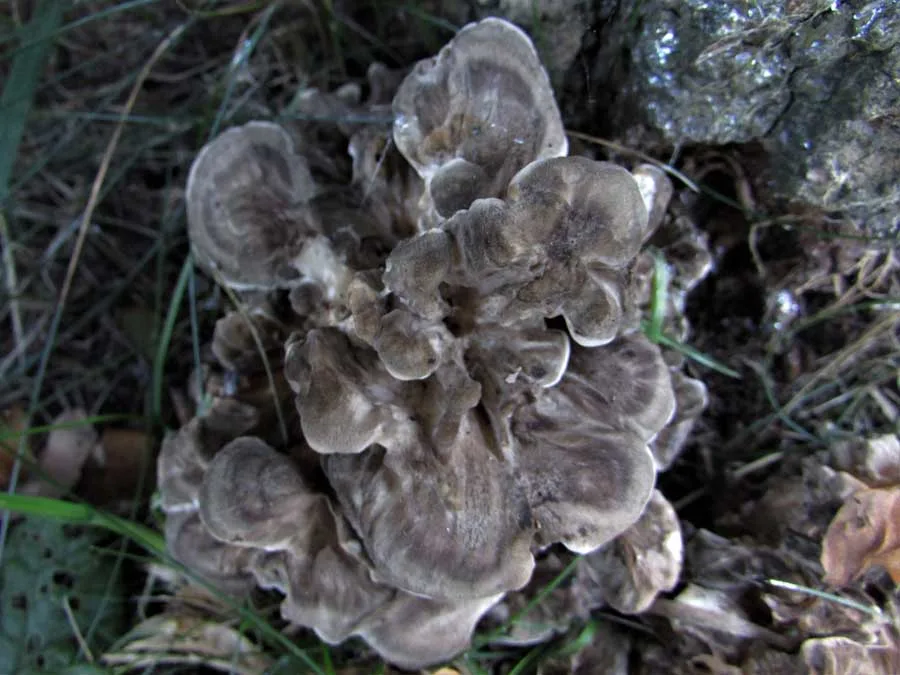
Hen of the Woods (Grifola frondosa), pictured, which is edible but does not bruise black, has more of a grey colour and is usually more frondose.
Black-staining Polypore (Meripilus sumstinei) looks rather identical. It is also called Giant Polypore, but it is a North American species which is not native to Europe.
Other Facts
If cooked very slowly, young specimens are reportedly edible; however, they have been known to cause stomach upsets in some people and so are probably best avoided altogether. A very similar species, Meripilus sumstinei (Murrill) M.J. Larsen & Lombard, occurs in North America and is commonly referred to as the Blackening Polypore or the Black-staining Polypore. The fine rosette of Meripilus sumstinei shown above was photographed by Al Gratrix, to whom we are grateful for permission to use this picture. (Note the intense black bruising.) Like its European cousin, Meripilus sumstinei is a weak parasite that becomes saprobic once its host tree dies, and so the relatively short-lived rosettes and brackets can appear on the same dead stump and root system for several years after the tree has died.