Bearded Milkcap


The Bearded Milkcap, scientifically known as Lactarius pubescens, is a medium-sized mushroom with a convex cap that becomes depressed in the middle. It has a creamy white to pinkish color, often with slightly darker areas and without concentric zones. The gills are slightly decurrent, crowded, and whitish with a slight salmon tinge, darkening with age. The milk produced is white and hot to the taste, and unchanging in color. This species is associated with birch trees and is found in sandy soil. It is important to note that the Bearded Milkcap is toxic and should not be consumed raw, as it can cause blistering on the skin. Cooking destroys the toxins, making it safe to eat after proper preparation.
Scientific Name – Lactarius pubescens


Common Names:
Bearded Milkcap (EN), Cap Llaeth Barfog (CY), Mleczaj Omszony (PL), Fehéres Szőrgomba (HU)
Please note that each and every mushroom you come across may vary in appearance to these photos.

Cap
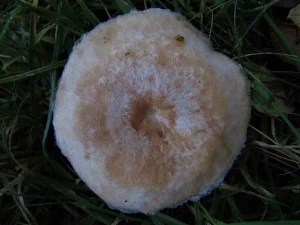
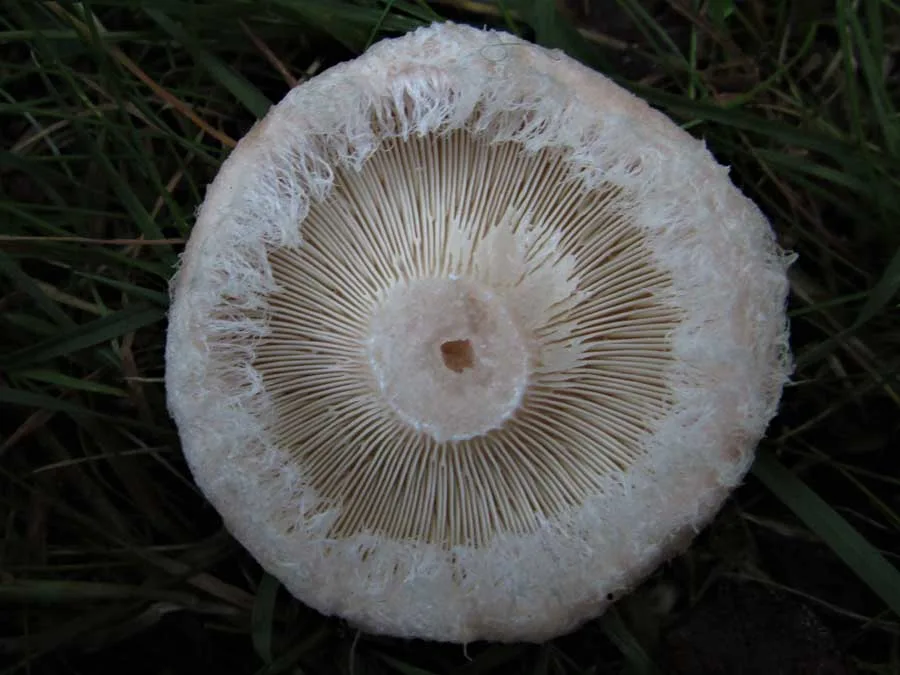
Convex becoming depressed in the middle and having ‘woolly’ in-turned edges. White pale salmon/yellow in just about visible concentric rings.
Gills
Gills white/pale salmon slightly running down stem. Crowded.

Milk
The gills exude milk which is white and hot to the taste and unchanging in colour.

Stem
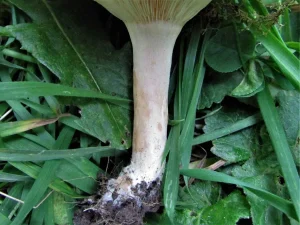
White to pale yellow/pink tapering slightly towards the base.

Flesh
White/off-white.
Habitat
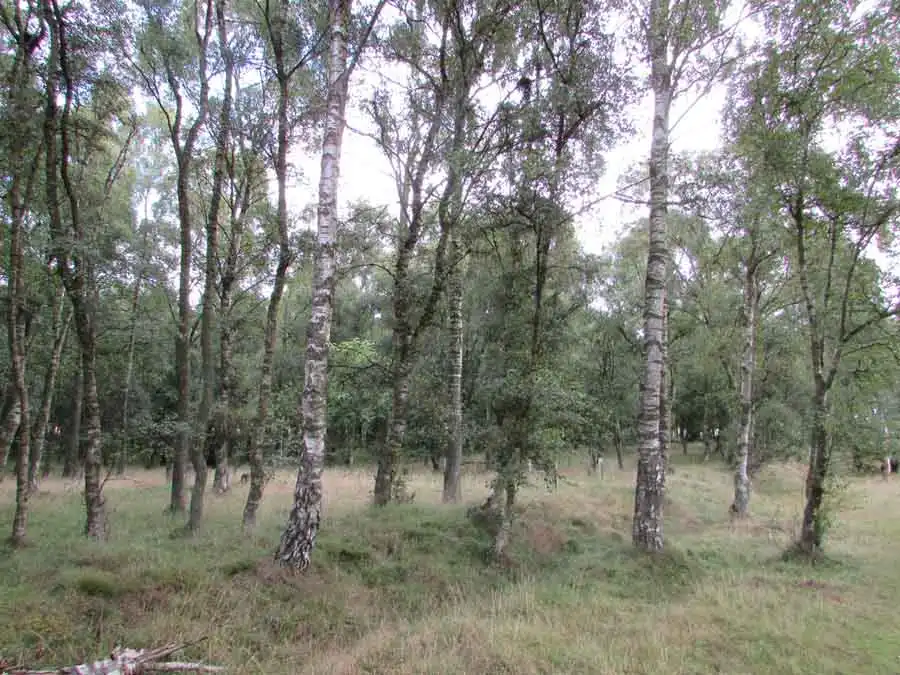
Uncommon but widespread in Britain and Ireland, the Bearded Milkcap is also found (mainly in damp grassland) throughout much of mainland Europe and in many parts of North America. Always associated with birch trees, this is a mushroom that is rarely seen, but where it does occur there are sometimes a dozen or more in a group. Those shown above were growing beneath a Silver Birch in our West Wales village garden; below are Bearded Milkcaps seen in central Scotland.
Possible Confusion
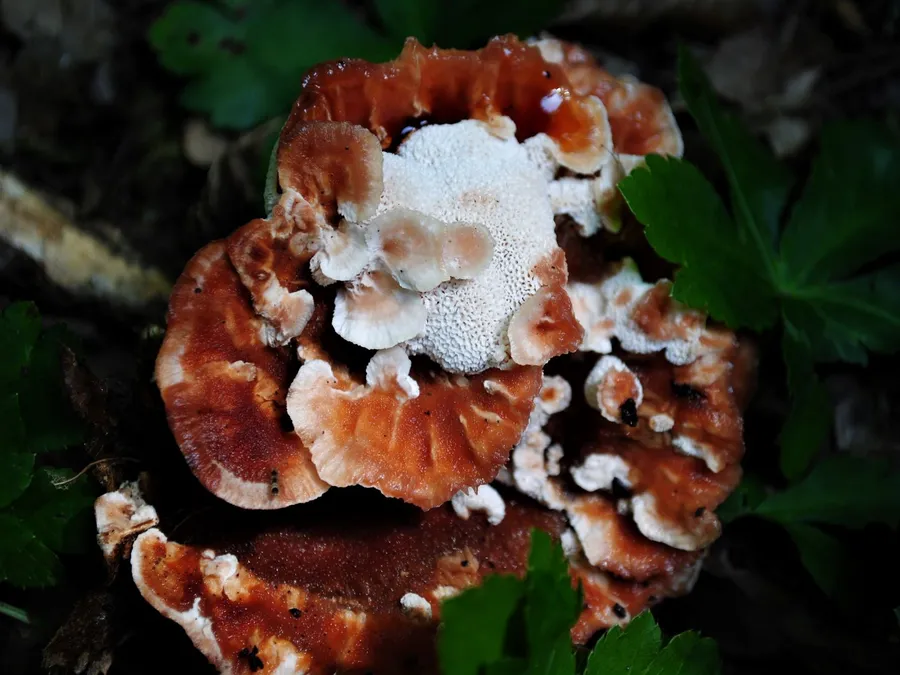
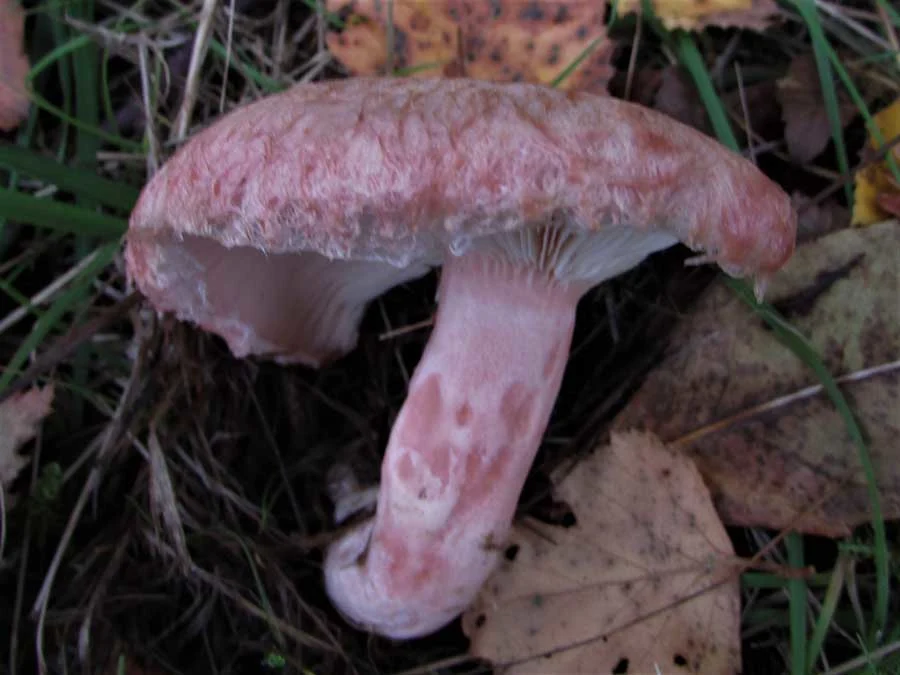
The Woolly Milkcap (Lactarius torminosus), is similar but darker and has a more salmon to red colour, pictured.
Other Facts
Although it is unlikely to cause death or long-term illness, this poisonous species, which looks like a smaller, pallid and rather badly sheared version of the equally toxic Woolly Milkcap Lactarius torminosus, should not be gathered to eat. The generic name Lactarius means producing milk (lactating) – a reference to the milky latex that is exuded from the gills of milkcap fungi when they are cut or torn. The specific epithet pubescens comes from Latin and refers to the fine downy hairs that fringe the caps of these mushrooms.