Weeping Widow


Unlike the name suggests the Weeping Widow is not a poisonous mushroom but has a bitter taste making it rather inedible.
The ‘weeping’ seems to refer to the droplets of water, usually blackened by the spores, that drip from the edges of the cap.
Scientific Name – Lacrymaria lacrymabunda

Common Names:
Weeping Widow (EN), Dagrau’r Weddw (CY), Kruchawica Aksamitna (PL), Könnyező Szálkásgomba (HU)
Please note that each and every mushroom you come across may vary in appearance to these photos.

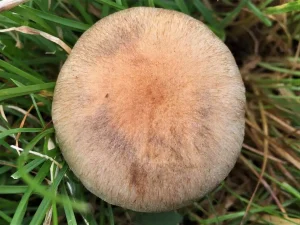
Cap
4-12 cm. At first bell shaped then flattening out but retaining an umbo. Tan-ochre with yellow and red-brown hints. The cap has a fibrous-wooly appearance with the fibres running from the centre of the cap to the edges where they can hang and give the edge of the cap a woolly fringe that can be stained black by the spores and can ‘weep’ droplets of water.

Gills
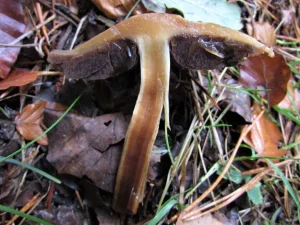
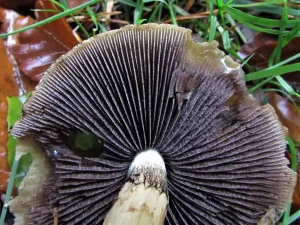
Initially covered in a cobweb like veil the gills start yellow-brown then turn dark brown-purple with a light edge turning black with the release of spores. Mainly joined to the stem or rising and then running down the stem slightly (adnate- sinuate). Quite crowded.
Stem
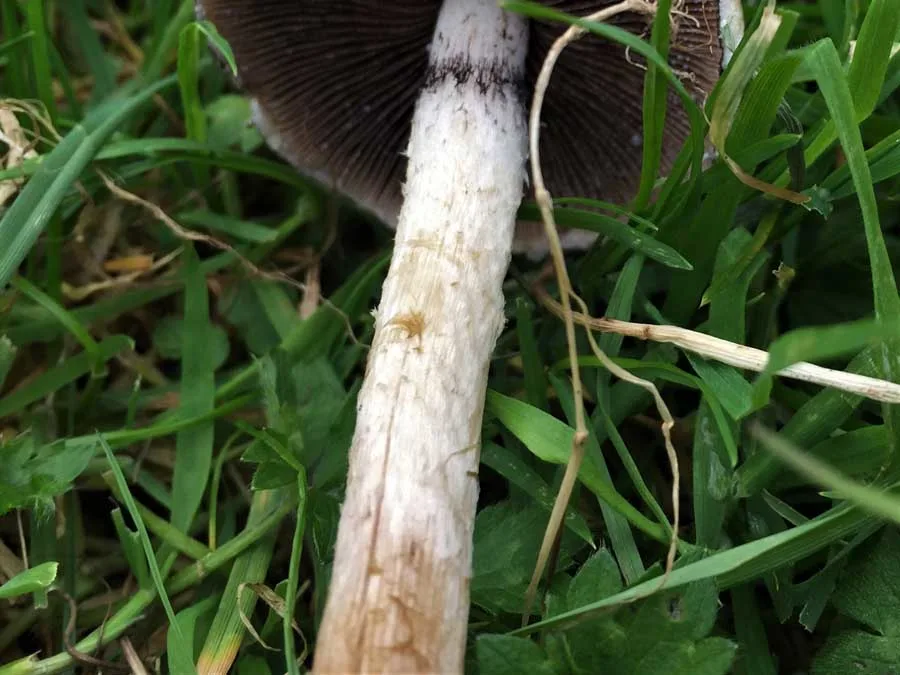
5-12 cm long, 0.5-1.5 cm diameter. Shaggy with small scales. White/off white with a dark/black ring zone near the top.
Skirt
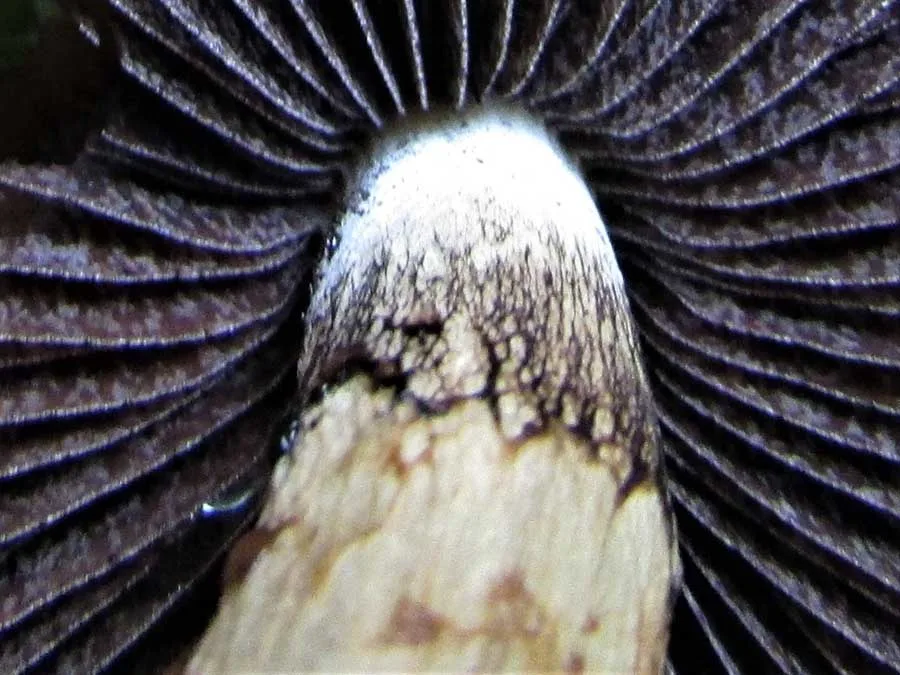
Has ring zone where the veil breaks away rather than a skirt. This can become blackened by the spores.

Flesh
Cream-brown.

Habitat
Mainly in grassland, grass verges or woodland glades.
Possible Confusion
A distinctive mushroom.
Other Facts
The generic name Lacrymaria means producing tears (crying), as fungi in this group do. The specific epithet lacrymabunda underlines that trend by indicating that the Weeping Widow produces an abundance of tears. The Weeping Widow Lacrymaria lacrymabunda is reported to be an edible mushroom; however, unless they are cooked and eaten soon after they have been gathered any meal made from these fungi is likely to end up a black soggy mess. A crying shame!