Chanterelle


This very tasty mushroom can be found in small groups in woodland, more often with beech or birch. A delight to come across, but be careful of other foragers as they can be quite territorial over their Chanterelle patches!
Scientific Name – Cantharellus cibarius


Common Names:
Chanterelle (EN), Girolle (F), Siantrel (CY), Pieprznik Jadalny (PL), Sárga Rókagomba (HU)
Please note that each and every mushroom you come across may vary in appearance to these photos.

Cap
3-8 cm. Flattened at first with irregular margin becoming depressed towards the centre. Often undulating all round the edges, later turning up to form a loose trumpet. Yellow with white flesh.

Gills
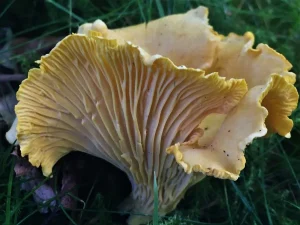
Does not have true bladed gills but forked, slightly rounded folds that look like gills. These run part way down the stem (decurrent).
Stem
3-8 cm long, 0.5-1.5 cm diameter. Solid, tapering towards the base. Yellow with white flesh on cutting.
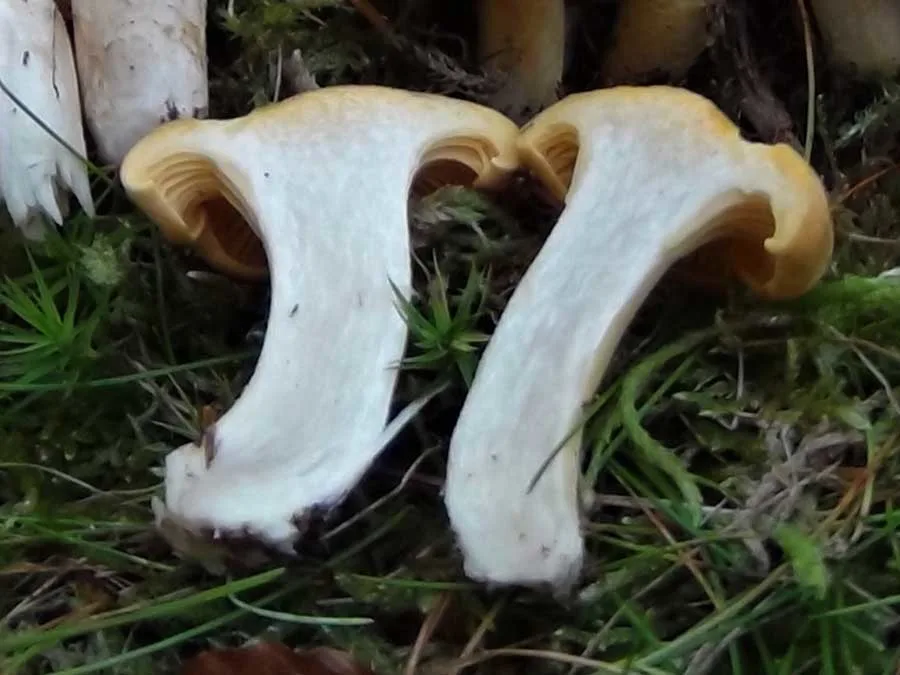
Flesh
The Chanterelle has white flesh.
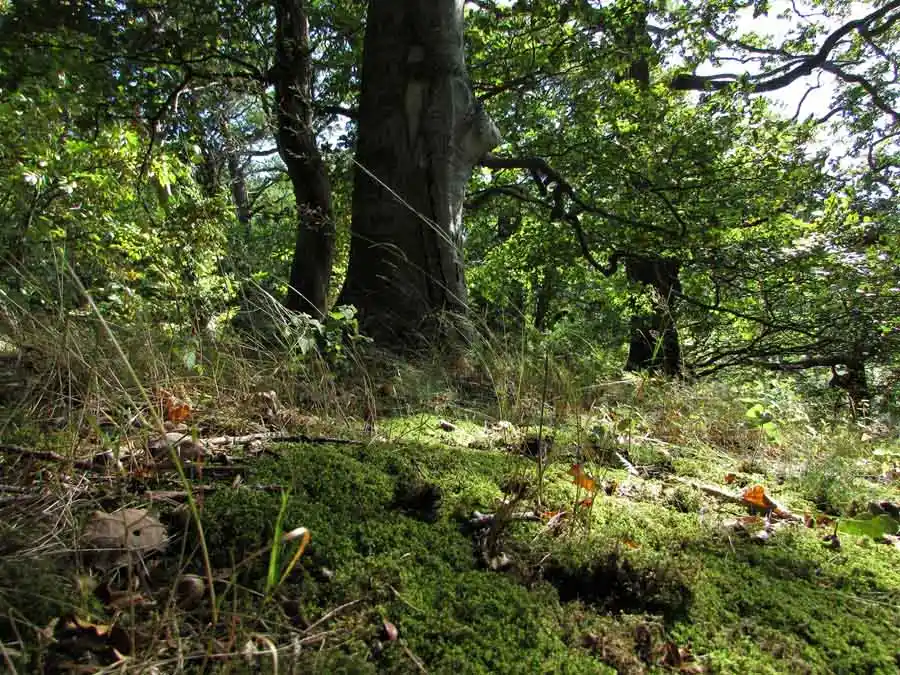
Habitat
All types of woodland but mainly with beech in England and birch in Scotland and usually growing in moss.

Possible Confusion
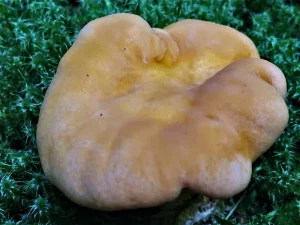
The False Chanterelle (Hygrophoropsis aurantiaca), pictured, looks similar but is more orangey yellow, when cut in half it does not have the white flesh of the true Chanterelle but is concolorous with the cap, and its gills are more crowded. Said to be edible but poor in older books, it can apparently cause food poisoning symptoms and even hallucinations for some people so it’s better avoided.
The poisonous Jack O’Lantern (Omphalotus illudens), is a very rare mushroom in Britain, it grows on deciduous wood, it has true gills and is darker orange in colour.
It could be confused with other members of the Chanterelle family which are all good edibles. The Amethyst Chanterelle (Cantharellus amethysteus) is similar but has purple scales on the cap, and the stem and flesh bruise brown, it is rare in Britain and shouldn’t be picked unless abundant.
Taste / Smell
Excellent, sweet. Chanterelles smell fruity, quite like apricots.
Culinary
Though records of chanterelles being eaten date back to the 16th century, they first gained widespread recognition as a culinary delicacy with the spreading influence of French cuisine in the 18th century, when they began appearing in palace kitchens. For many years, they remained notable for being served at the tables of nobility. Nowadays, the usage of chanterelles in the kitchen is common throughout Europe and North America. In 1836, the Swedish mycologist Elias Fries considered the chanterelle “as one of the most important and best edible mushrooms.”
Chanterelles as a group are generally described as being rich in flavor, with a distinctive taste and aroma difficult to characterize. Some species have a fruity odor, others a more woody, earthy fragrance, and still others can even be considered spicy. The golden chanterelle is perhaps the most sought-after and flavorful chanterelle, and many chefs consider it on the same short list of gourmet fungi as truffles and morels. It therefore tends to command a high price in both restaurants and specialty stores.
There are many ways to cook chanterelles. Most of the flavorful compounds in chanterelles are fat-soluble, making them good mushrooms to sauté in butter, oil or cream. They also contain smaller amounts of water- and alcohol-soluble flavorings, which lend the mushrooms well to recipes involving wine or other cooking alcohols. Many popular methods of cooking chanterelles include them in sautés, soufflés, cream sauces, and soups. They are not typically eaten raw, as their rich and complex flavor is best released when cooked.
Chanterelles are also well-suited for drying, and tend to maintain their aroma and consistency quite well. Some chefs profess that reconstituted chanterelles are actually superior in flavor to fresh ones, though they lose in texture whatever they gain in flavor by becoming more chewy after being preserved by drying. Dried chanterelles can also be crushed into flour and used in seasoning in soups or sauces. Chanterelles are also suitable for freezing, though older frozen chanterelles can often develop a slightly bitter taste after thawing.
One mushroom guide asserts, “Chanterelles are often dirty, and when washed they soak up water like a sponge…[try] dry-sauteeing…it concentrates their flavor while allowing you to wash them.”