Brown Parasol
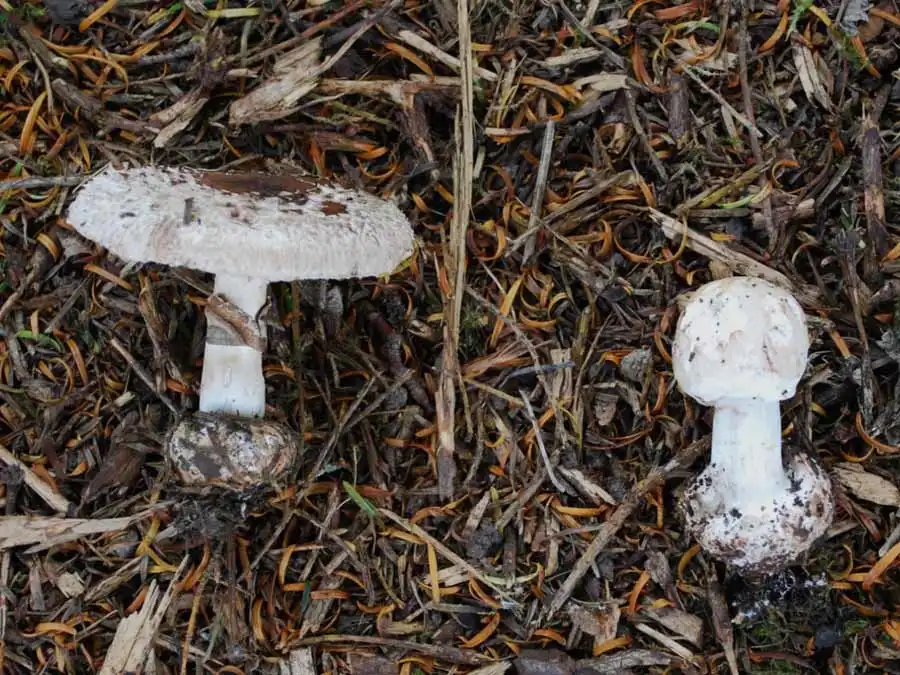


One of the large parasol-lookalikes, a controversial member of the ‘shaggy parasols’. Its edibility ranking is not conclusive, so it is worth knowing its ID features to avoid any troubles.
Scientific Name – Chlorophyllum brunneum
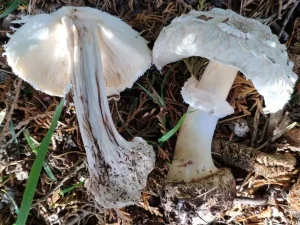
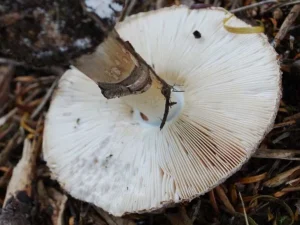
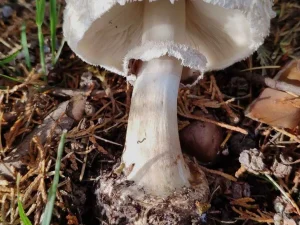
Common Names:
Brown Parasol, Czubajnik Ogrodowy (PL), Kerti Őzlábgomba (HU)
Please note that each and every mushroom you come across may vary in appearance to these photos.
Cap
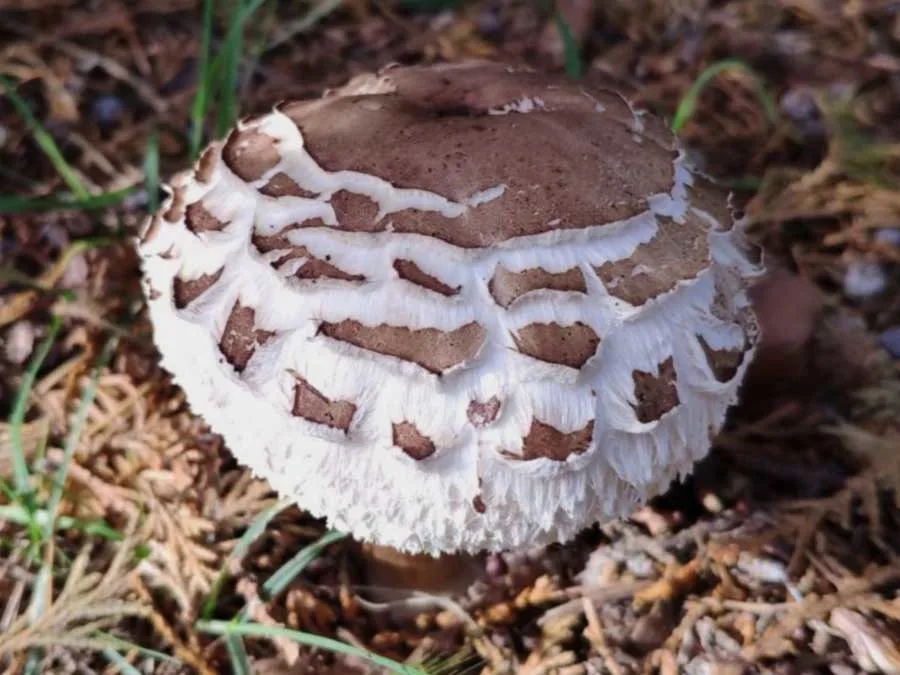
10–18 cm across. Hemispherical, then convex to flattened with a broad, pronounced umbo or a central depression. The skin is dark ochre-brown at first, then cracks up and becomes scaly, making the pale, almost white, fluffy flesh visible. The central umbo remains complete. Margin is often floccose.
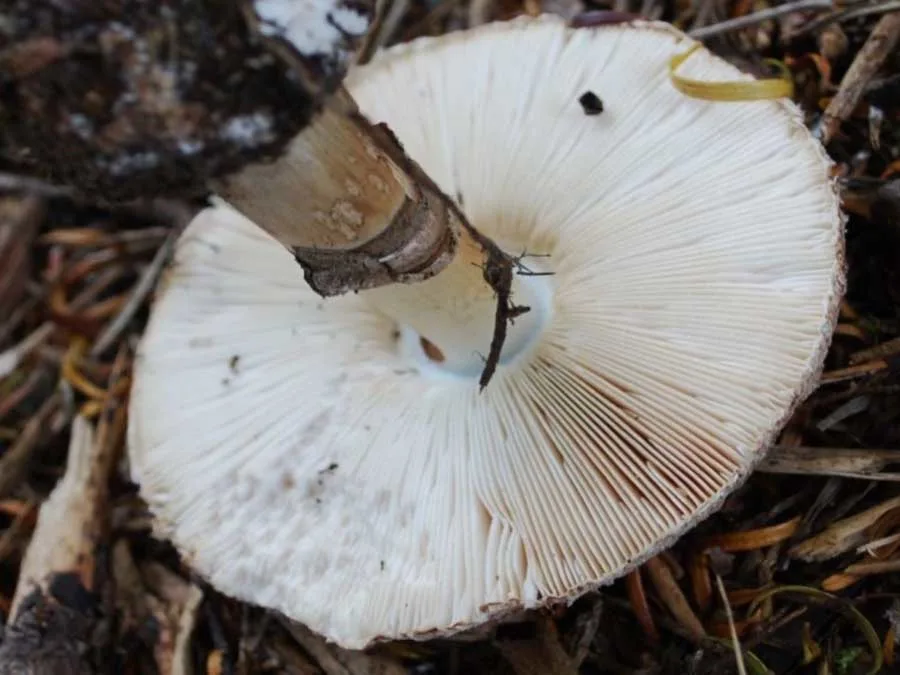
Gills
Crowded and free of the stem. White at first, spotted reddish brown with age. The edge is darker, somewhat brownish and slightly eroded.
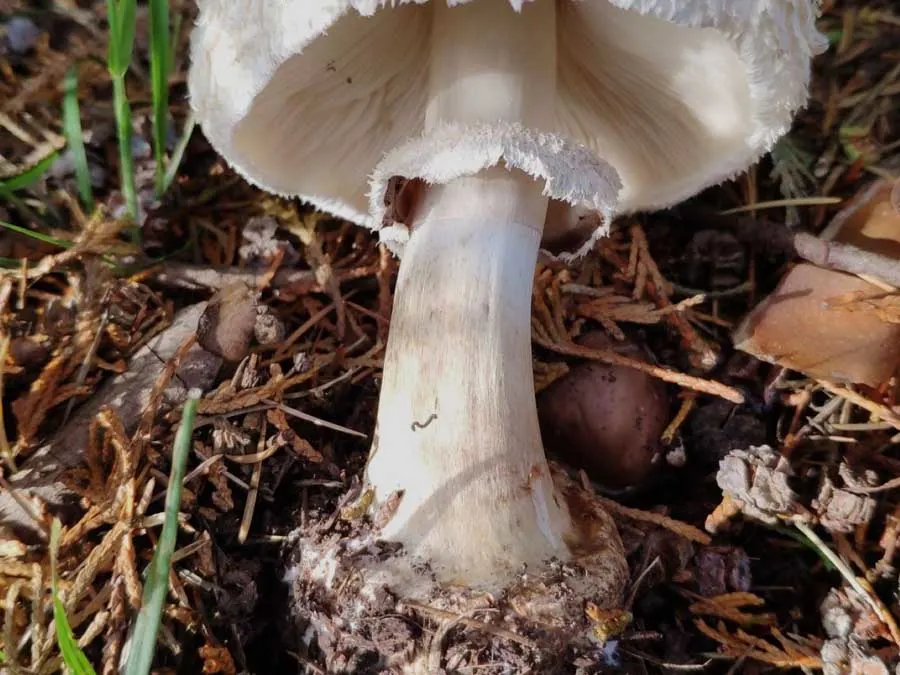
Stem
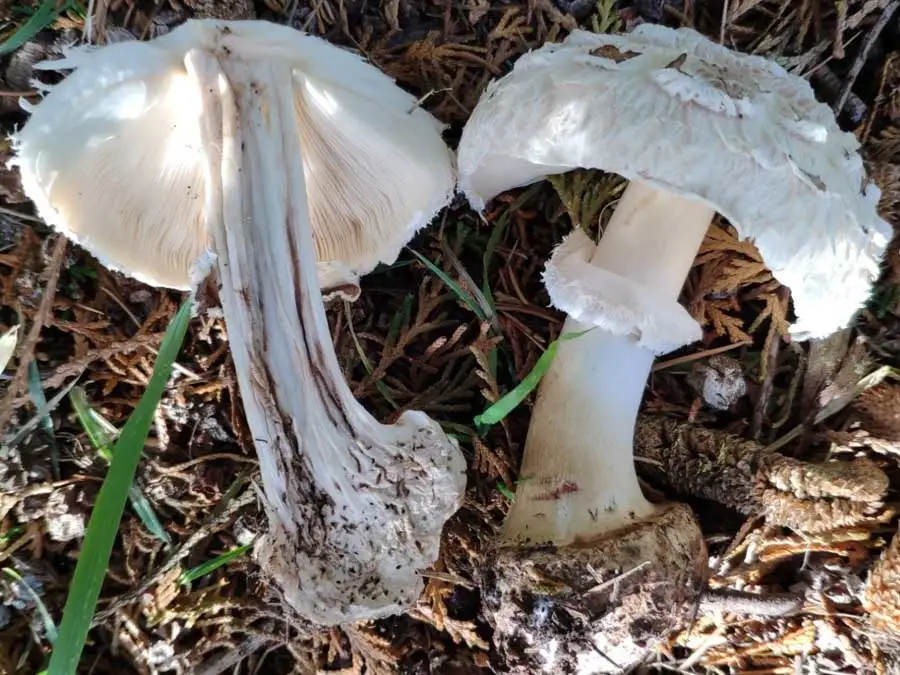
5–20 cm long, 1–2.5 cm diameter. White to cream, smooth, browning with age. Cylindrical, more or less straight with a large, marginate bulb at the base, which could be up to 5 cm wide.
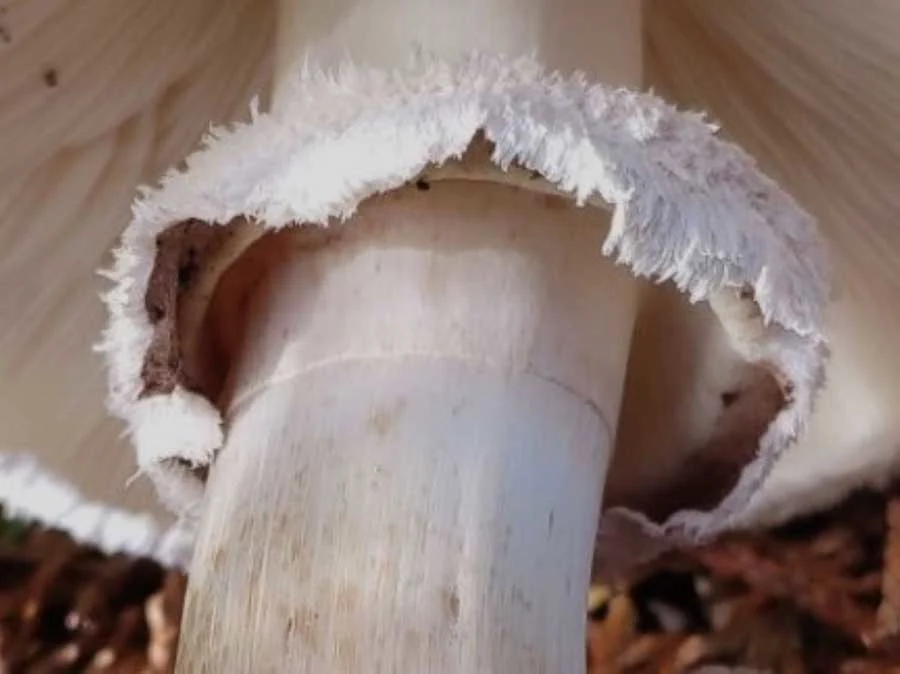
Skirt
Has a single layered skirt, which is brown on the underside. You can move it up and down on the stem.
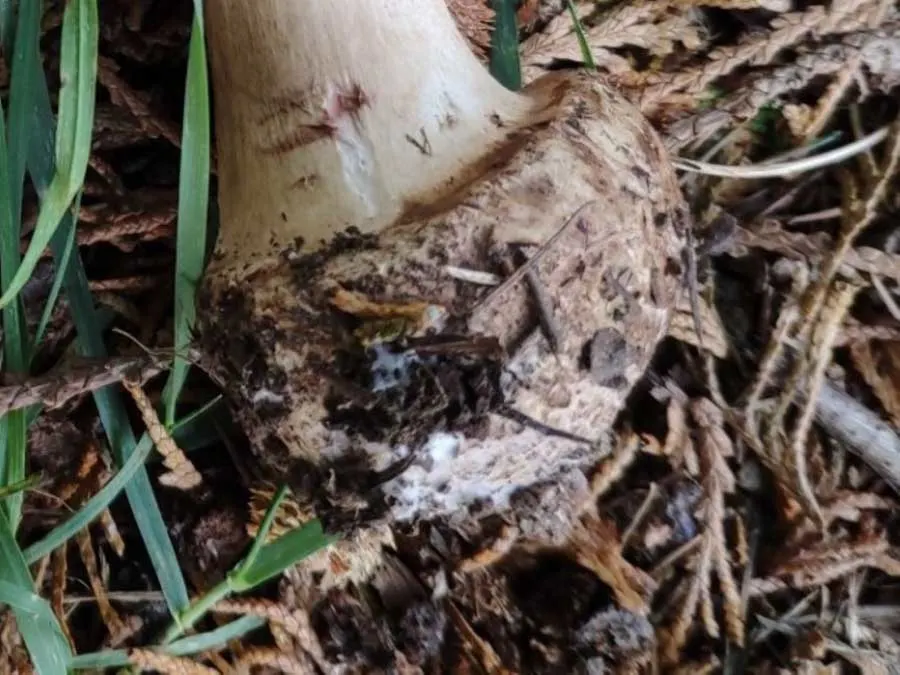
Volva
Has a large marginate, almost volva like bulbous base. This is a good ID for helping to separate the Brown Parasol from the Shaggy Parasol.
Flesh
Thick, soft and white in the cap, bruising orangish- to reddish-brown when exposed to air.
Habitat
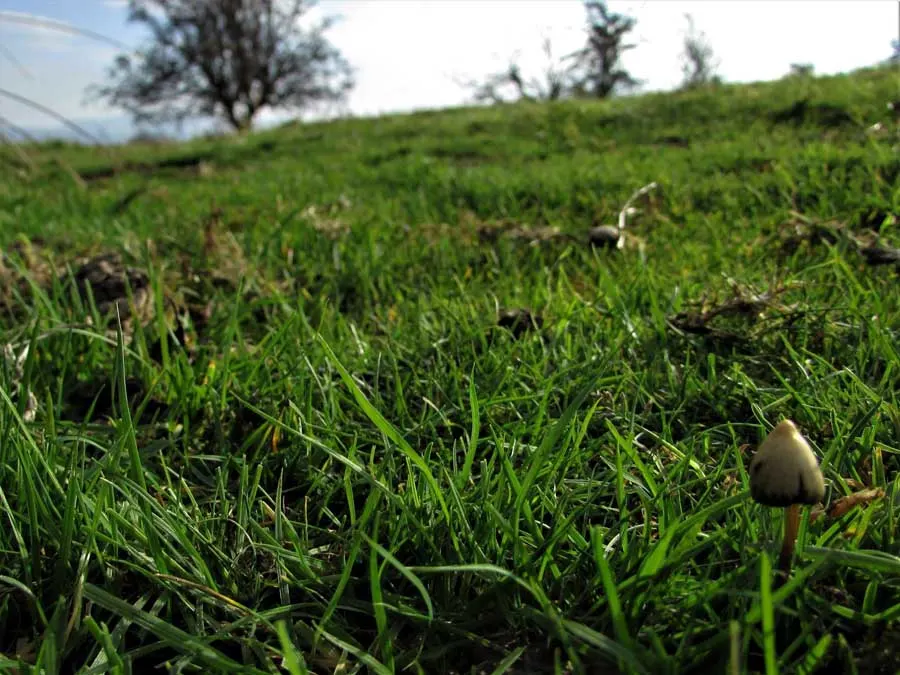
Fruiting solitarily or in smaller groups. Grows on disturbed, nitrogen-rich soil, such as compost heaps, gardens, parklands; or on woodchip/mulch amongst shrubs and various trees. Rarely, but it can be found in mixed forests too. Saprotrophic.
Possible Confusion
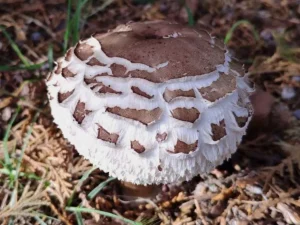
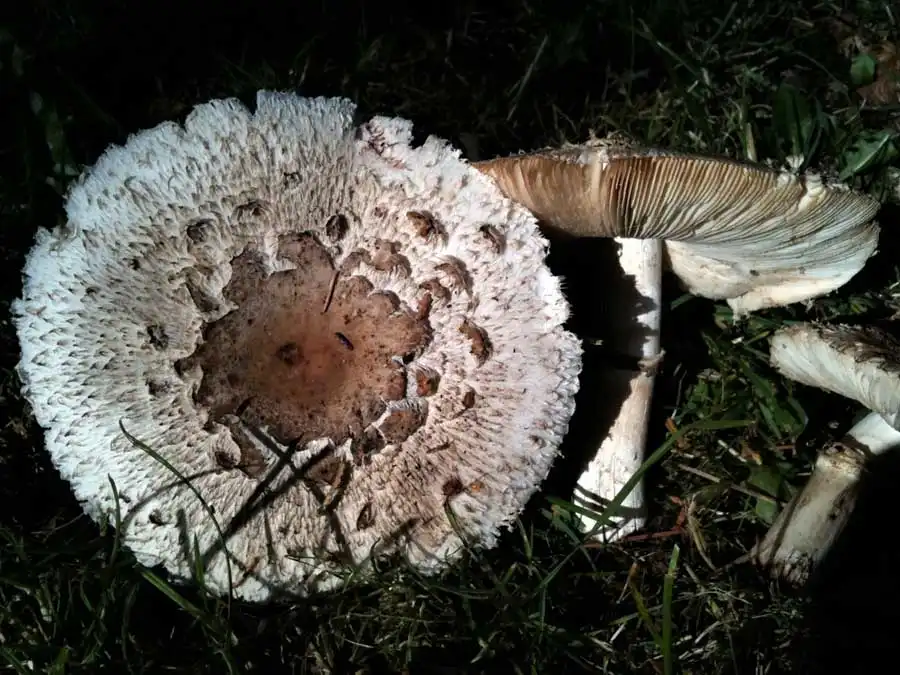
It can be confused with other members of the genus Chlorophyllum, especially the Shaggy Parasol (Chlorophyllum rhacodes), pictured. The large, marginate, bulbous base of the Brown Parasol can help separate the two.
Other Facts
We have four different Chlorophyllum species in the UK. The more or less edible Shaggy Parasol (Chlorophyllum rhacodes) and Conifer Parasol (Chlorophyllum olivieri), also the Brown Parasol (Chlorophyllum brunneum) with questionable edibility and the toxic False Parasol (Chlorophyllum molybdites), the latter is probably more well-known by its US name: the Vomiter.
The debate about the edibility of Brown Parasol is still unsettled. Andy Overall lists it as ‘Not Edible’ and in some European countries the species is listed ‘Toxic’, based on actual mushroom poisoning cases, so we list it as toxic (as we always follow the ‘better safe than sorry’ philosophy).