Amethyst Chanterelle
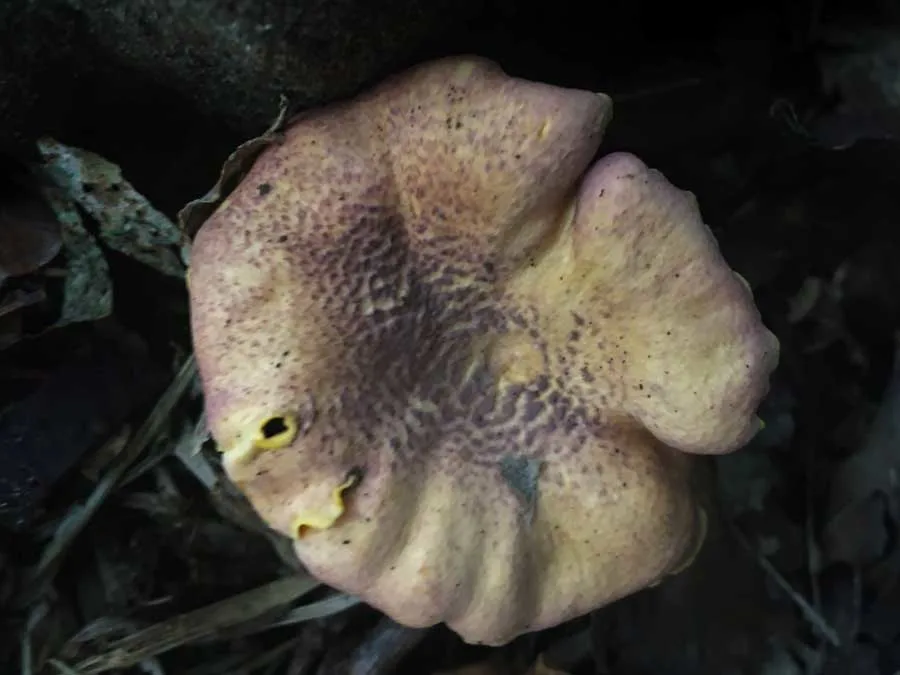


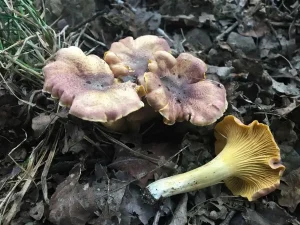
One of the less common members of the edible Chanterelle family. It was considered a variety of the common chanterelle but is now regarded as a separate species. Just as tasty and sought after, it may be more common than is recorded but overlooked by people thinking it is the common form. Usually in groups. Only to be picked if abundant.
Scientific Name – Cantharellus amethysteus


Common Names:
Amethyst Chanterelle (EN), Pieprznik Ametystowy (PL), Ibolyás Rókagomba (HU)
Please note that each and every mushroom you come across may vary in appearance to these photos.
Cap
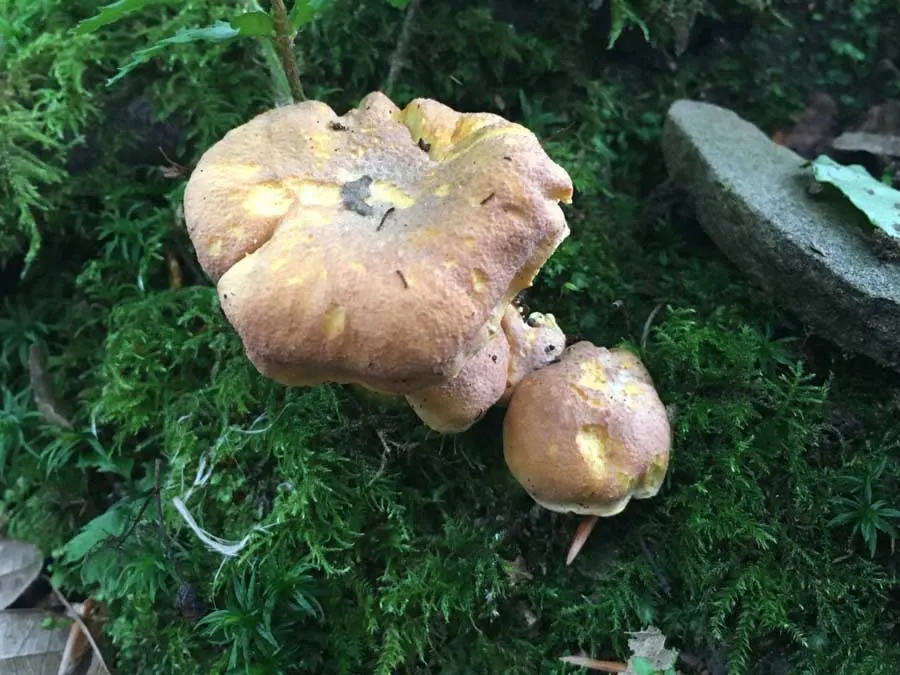
3-8 cm. Flattened at first with irregular margin becoming depressed towards the centre. Often undulating all round the edges, less inclined to become funnel shaped than the common chanterelle. Yellow but with a complete or patchy coating (sometimes more towards the edge, sometimes more towards the centre) of tiny purplish scales that fade with age.

Gills
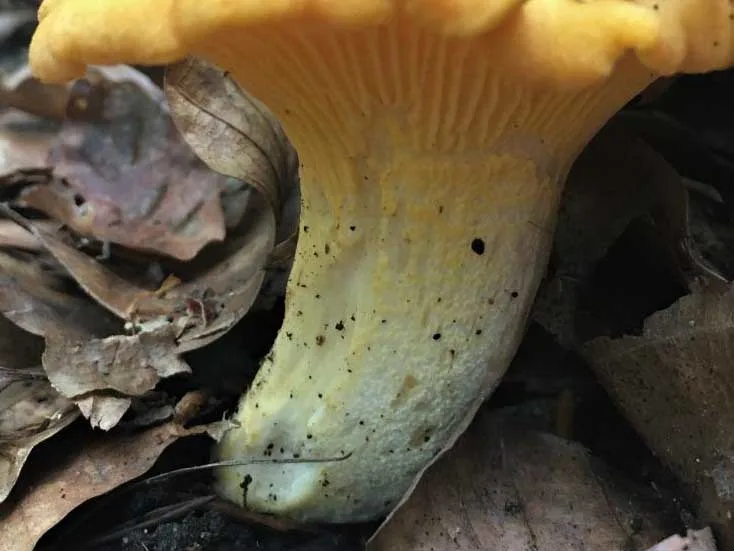
Does not have true bladed gills but forked, slightly rounded folds that look like gills. These run part way down the stem (decurrent). Tend to be paler than the cap.
Stem
3-8 cm long, 0.5-1.5 cm diameter. Solid, often paler than the cap, yellow or pale yellow, tapering towards the base. It can be hard to determine where the ‘gills’ end and the stem begins.
Flesh
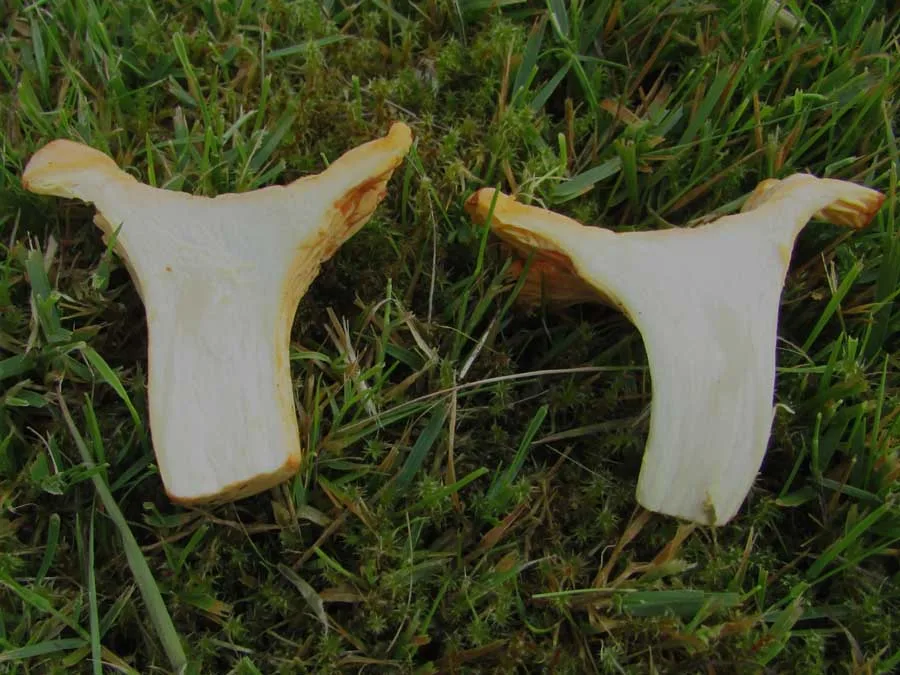
White becoming yellow or brownish with age.
Habitat
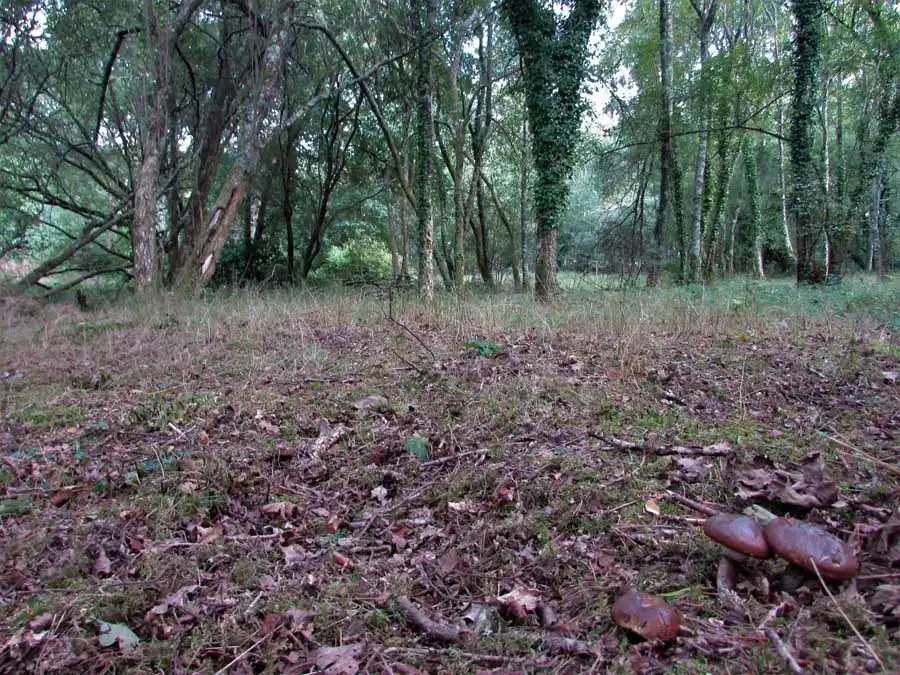
Mostly on clay soils with Oak, Beech or Birch, occasionally with Pine.

Possible Confusion
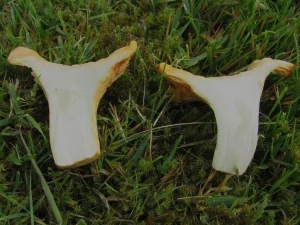
The False Chanterelle (Hygrophoropsis aurantiaca), pictured, looks similar but is more orangey yellow, when cut in half it does not have the white flesh of the true Chanterelle but is concolorous with the cap, and its gills are more crowded. Said to be edible but poor in older books, it can apparently cause food poisoning symptoms and even hallucinations for some people so it’s better avoided.
The poisonous Jack O’Lantern (Omphalotus illudens), is a very rare mushroom in Britain, it grows on deciduous wood, it has true gills and is bigger and darker orange in colour.
Chanterelle (Cantharellus cibarius), is a much more yellow colour. It is normally larger and prefers more acidic soil. It has broader mycorrhizal partner range, prefers Beech, Birch, Oak, Spruce and Pine. Its fruity smell is similar to apricot.
Frosted Chanterelle (Cantherellus pallens), is similar but larger and has a pale yellow cap with a dusting of white, particularly near the middle.
Pale Chanterelle (Cantharellus ferruginascens), looks rather similar to the Frosted Chanterelle, however there is no whitish dust-like cover at centre of its cap. It is one of the rarest amongst the Chanterelles in the UK.
Other Facts
Chanterelles of various kinds are world famous not only because they are so good to eat but also because of their appearance in so many countries. In Europe they occur from Scandinavia to the Mediterranean. This amethyst-coloured chanterelle seems to be rather more common in southern Europe, although it is reported from countries as far north as Sweden and Norway. In the south of France these mushrooms can be gathered until Christmas unless the winter is particularly harsh, while in the Algarve region of Portugal they don’t really get going until late November and we have been able to find them right through the winter until the weather gets too hot for fungi at the end of March. A similar chanterelle is found in parts of North America, but it is unclear whether this is co-specific with Cantharellus amethysteus found in Europe.