Velvet Bolete
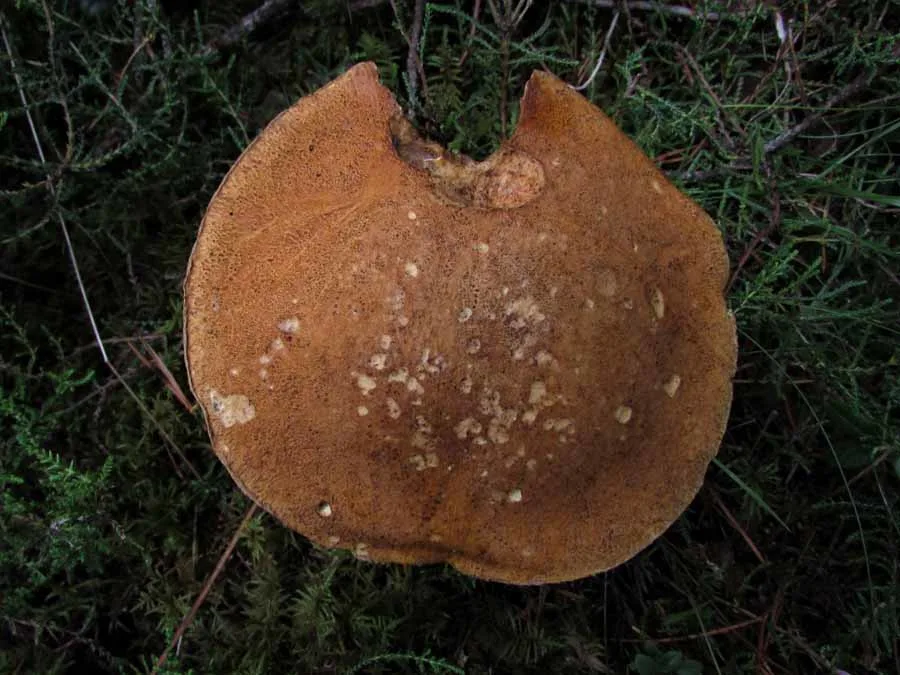


Suillus variegatus, commonly called the velvet bolete or variegated bolete, is a species of edible mushroom in the genus Suillus. Like all bolete-like species it has tubes, and pores, instead of gills under its cap. The mushroom forms a mycorrhizal relationship with pine and occurs in North America and Eurasia.
Scientific Name – Boletus / Suillus variegatus

Common Names:
Velvet Bolete, Boled Melfed (CY), Maślak Pstry (PL), Tarka Tinóru (HU)
Please note that each and every mushroom you come across may vary in appearance to these photos.
Cap
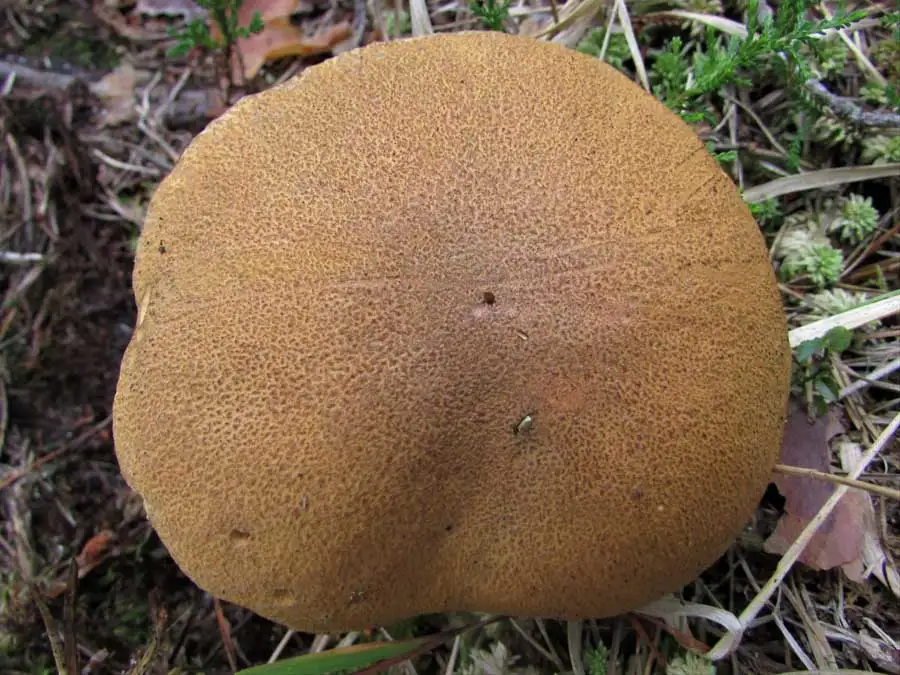
6-10 cm. Brown, yellow to orange brown with fine velvety scales, usually dry unless found in wet weather.

Pores
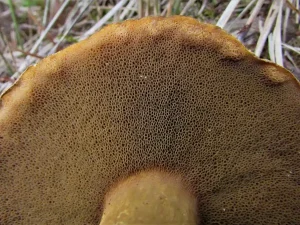
Mustard coloured but the ends on the outside are a darker orange/brown. Can blue where handled.

Stem
6-10 cm long, 1.5-2 cm diameter. Concolorous with the cap but usually slightly lighter, cylindrical but sometimes with a slightly swollen base.
Flesh
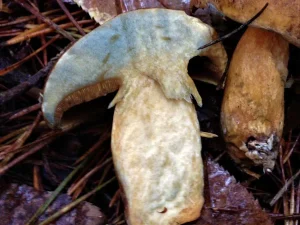
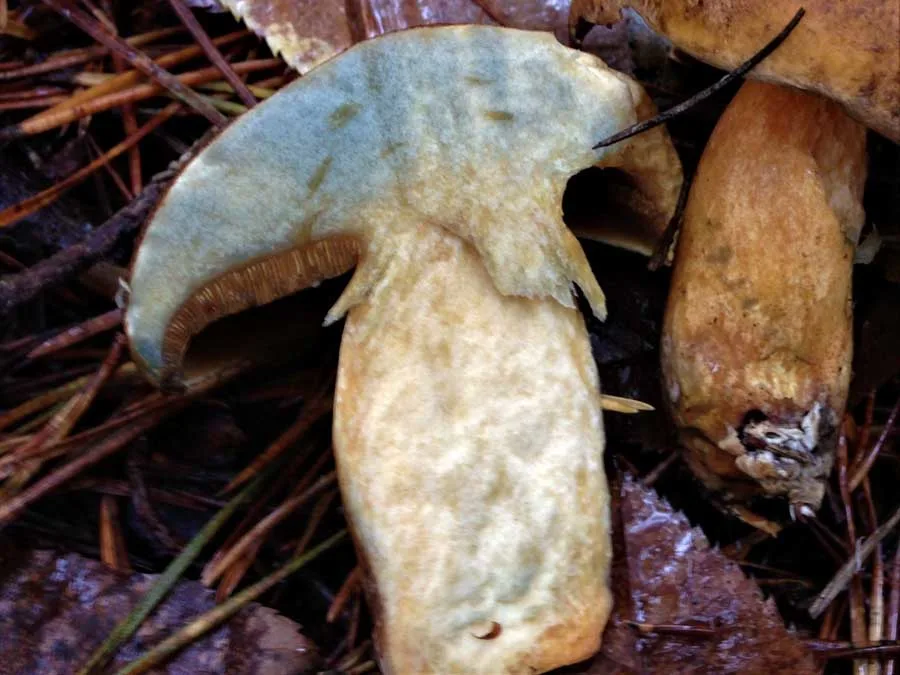
Yellowish bruising blue in the cap.
Habitat
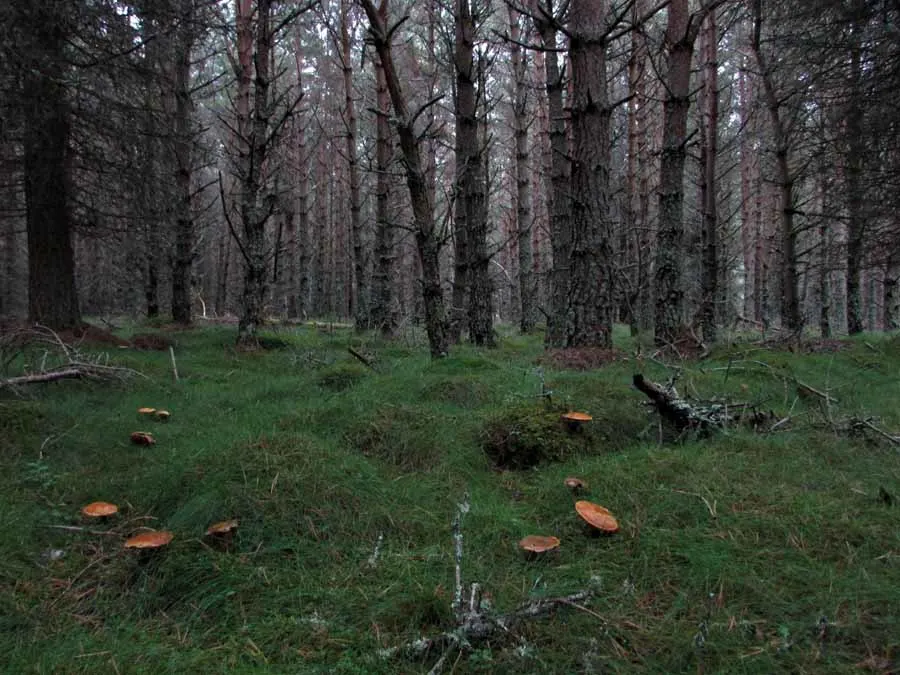
Grows in coniferous woodland (on acidic heathlands, moorlands or plantations), mycorrhizal with Pines, particularly Scots Pine.

Possible Confusion
Larch Bolete (Suillus grevillei), pictured, looks similar and grows in a similar habitat but it has a ring zone on the stem that is absent on the Velvet Bolete.
Other Facts
In March 2025 the IUCN (International Union for Conservation of Nature) added 1000 fungal species to the IUCN Red List of Threatened Species. The IUCN (Global) Conservation Status of Velvet Bolete (Suillus variegatus) is: LC – Least Concern, with stable population. Suillus variegatus is edible, but is said to smell unpleasant, with a somewhat metallic taste. It was one of the most productive edible wild mushroom species in Finland in the 1970s.