Chestnut Bolete
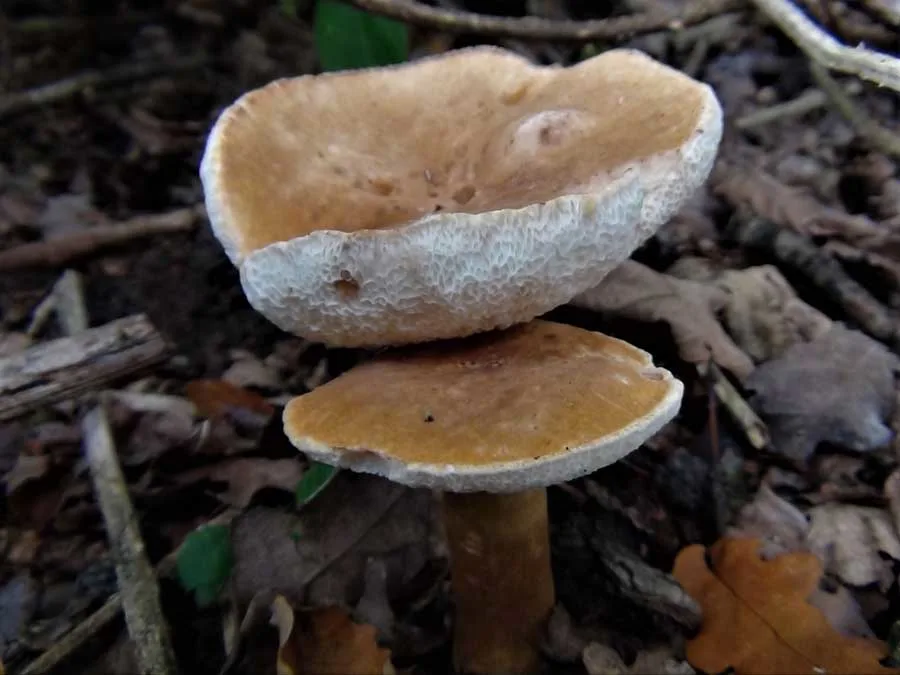


This is a great mushroom to find because if you look around nearby, there will usually be many more underfoot.
The Chestnut Bolete is distinguished from true Boletes by its pale yellow spore print and the hollow stem.
Scientific Name – Boletus / Gyroporus castaneus


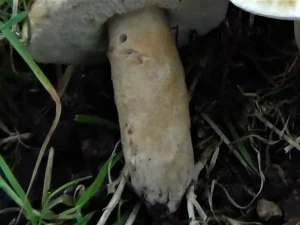
Common Names:
Chestnut Bolete (EN), Boled Castan (CY), Piaskowiec Kasztanowaty (PL), Gesztenyebarna Üregestinóru (HU)
Please note that each and every mushroom you come across may vary in appearance to these photos.
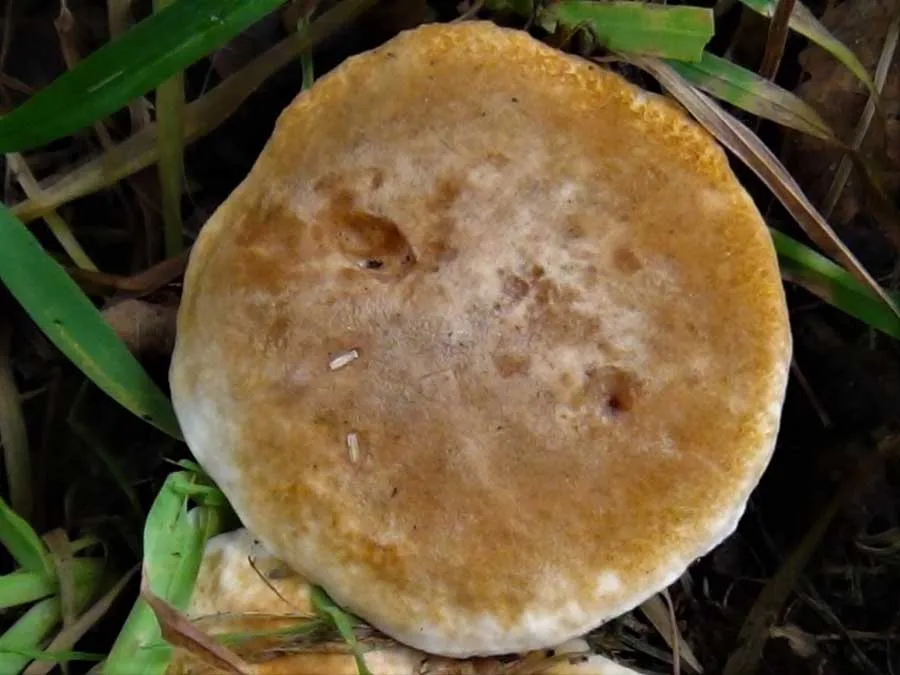
Cap
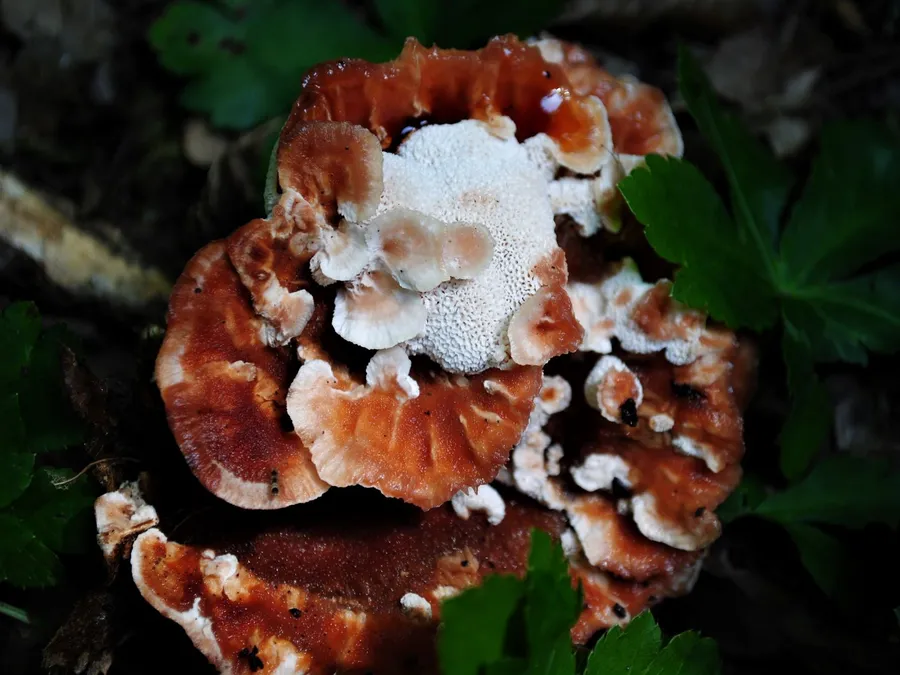
3-8 cm. Pale orange to tawny to darker brown coloured starting convex but soon flattening out. Downy when young becoming smooth. When the mushroom becomes old it usually discolours white from the attack of a mould, the Boletus Eater (Hypomyces chrysospermus).

Pores
White pores that discolour to off-white/pale yellow with age and bruise pale grey.
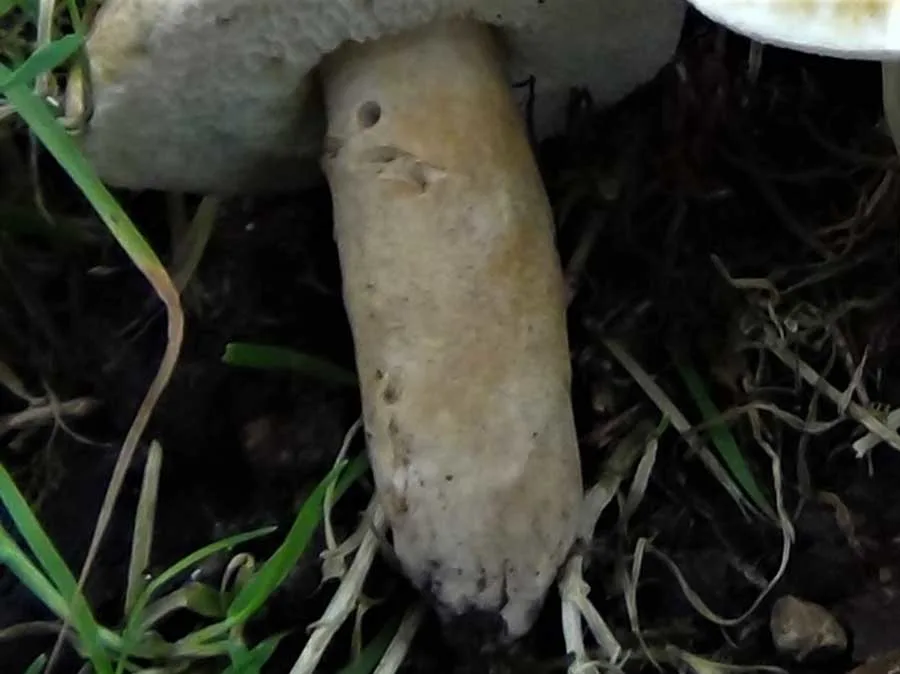
Stem
3-8 cm long, 1-2.5 cm diameter. Off-white to pale orange to chestnut coloured with white flesh. The stem becomes hollow in most specimens.
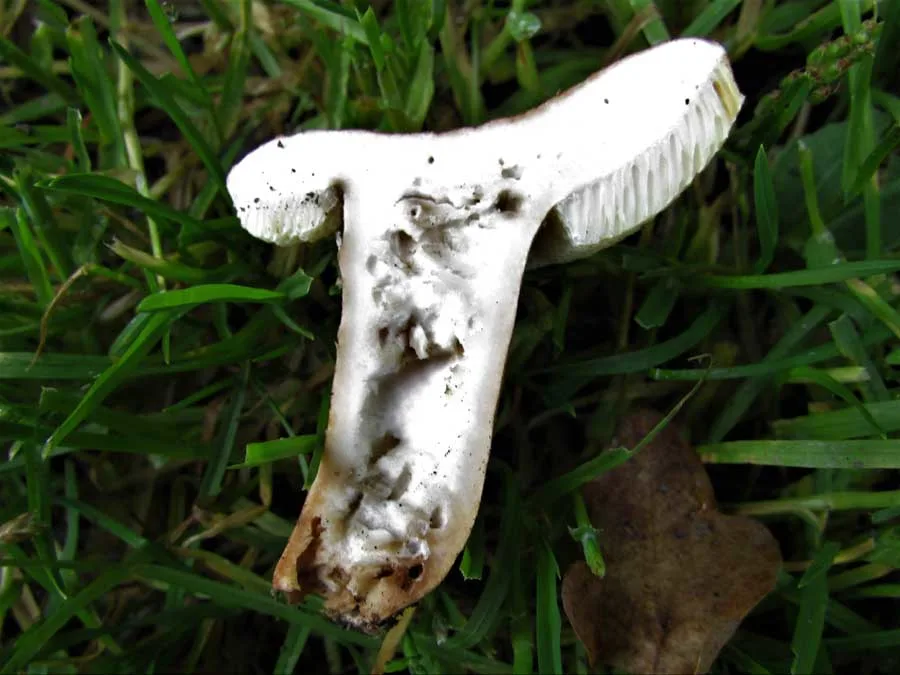
Flesh
White and unchanging when exposed to air, very occasionally with a pink flush.

Habitat
Usually with oaks or sweet chestnut but will grow with other hardwoods in woods, gardens, parks and verges.
Possible Confusion
It can be easily distinguished from other boletes by its white pores, brittle flesh and hollow stem, therefore it’s an easy one for British foragers to identify.
Be aware that it must be strictly avoided when in Portugal, Spain and France. The related Gyroporus ammophilus that is found in these countries is almost identical looking and very poisonous.
Also lookout for the rare Cornflower Bolete (Gyroporus cyanescens), a related and similar mushroom that turns vividly blue wherever it is touched. As it’s rare it’s best to avoid picking it.
Spore Print
Pale straw coloured. Ellipsoid.
Other Facts
The mushroom is found occasionally in Britain and throughout continental Europe, as well as eastern North America, but it is rare in western North America. It grows in small groups, or singly, in an ectomycorrhizal relationship with oaks (Quercus). It prefers acid and sandy soils, and fruits from summer to autumn. In New Zealand, it is found in association with Leptospermum. In Asia, it has been recorded from Taiwan.