Giant Funnel


A large chunky mushroom which can be found in fairly large numbers and is edible to most but can cause gastric upsets in some. This doesn’t really matter as the mushrooms are usually infested with maggots, even when young, making them more maggot than flesh.
Scientific Name – Aspropaxillus giganteus


Common Names:
Giant Funnel, Twmffat / Twndish Enfawr (CY), Białokrowiak Okazały (PL), Hatalmas Tölcsérgomba (HU)
Please note that each and every mushroom you come across may vary in appearance to these photos.
Cap
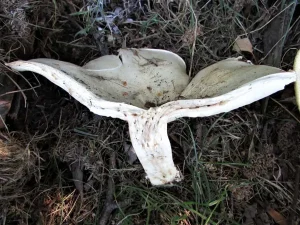
10–40 cm. The cap starts ivory white and convex but soon flattens out with a downward turned edge before becoming funnel shaped and turning a tan/off white colour. This mushroom can be very varied in size with the cap measuring from ten to forty five cm across with the larger specimens being rarer.

Gills
The gills are decurrent (running down the stem) and forked. White and crowded becoming off white with age.
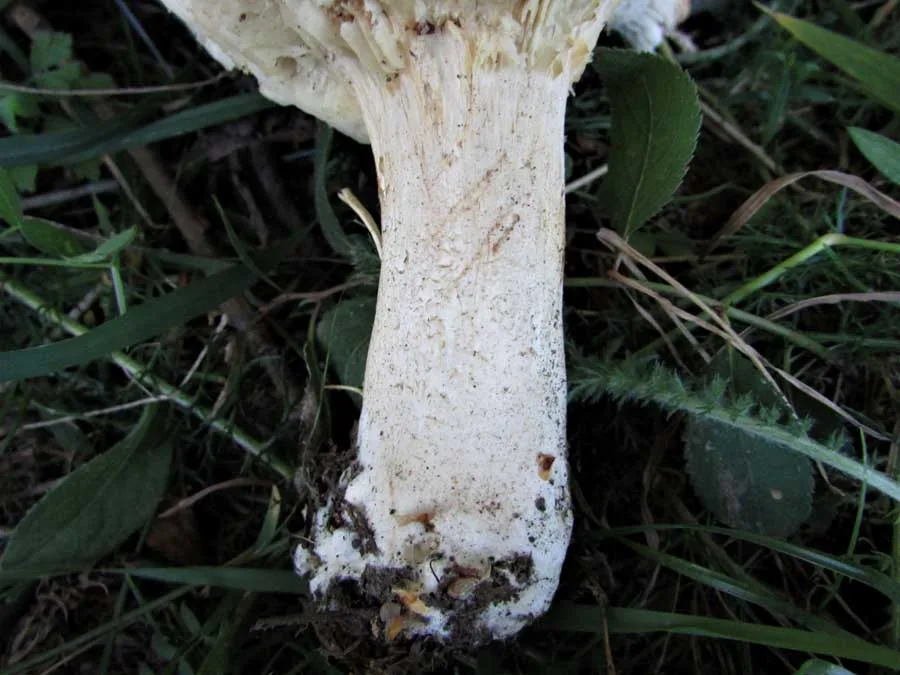
Stem
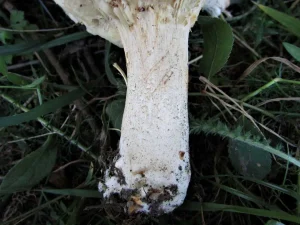
4–8 cm long, 2.5-4 cm diameter. Thick, can be up to 5cm. White with vertical ‘fibres’ which can discolour to tan.
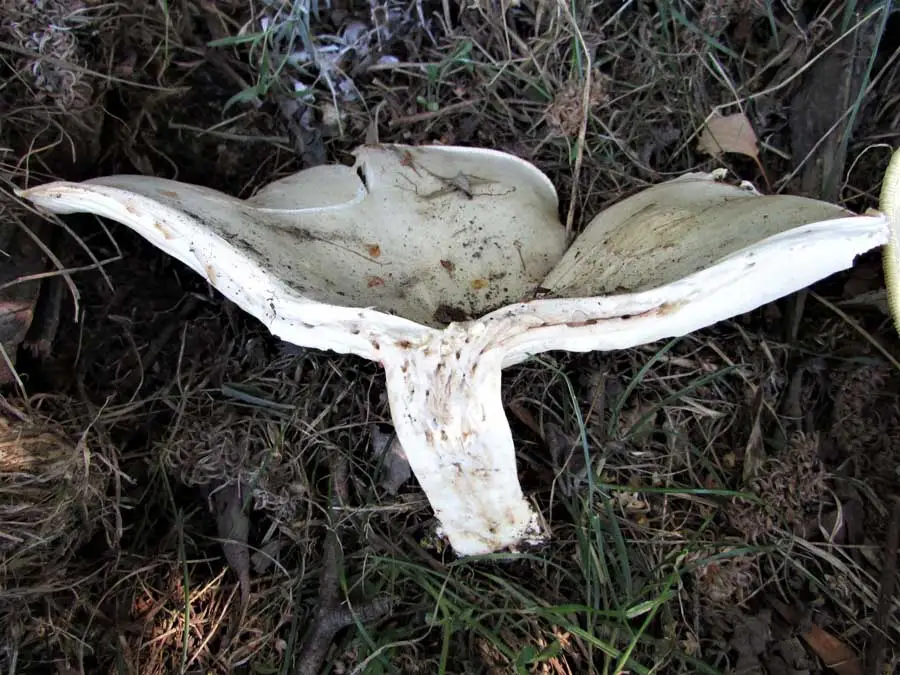
Flesh
White, fairly tough and usually full of maggots.

Habitat
Open woodland and hedgerows, grassland and beside country lanes.

Possible Confusion
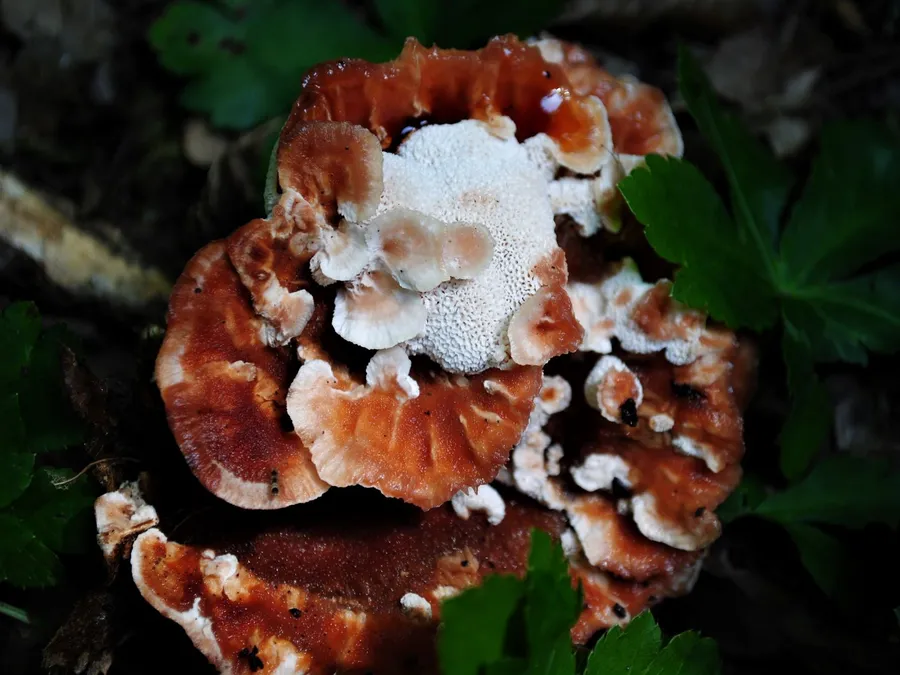
The Fleecy Milkcap, pictured, can look very similar but produces latex from the gills and flesh, unlike the Giant Funnel.
The Trooping Funnel can look similar but has a much longer stem, an umbo in the middle of the cap, is more tan coloured and does not produce latex.
Some members of genus Clitocybe can look like the Giant Funnel but the clue is in the name, the cap can be up to forty+ cm in diameter with a short, thick stem distinguishing it from most of the Clitocyboid species.
Other Facts
The species is nonpoisonous but reportedly poor in flavor. Although one source claims that it is a “choice edible when young”, another source warns of the possibility of stomach cramps and diarrhea. Burrows suggests preparing specimens by cutting them up and boiling the pieces, and disposing of the water; then they may be used in dishes such as stews and casseroles. Because of its large size, one specimen can be enough to be consumed by several individuals. The odor has been said to be farinaceous or similar to fish meal; the taste and smell of the mushroom have also been alternately characterized as “mild and pleasant” or “truly disgusting”. The species is also a favorite food for species of the fruit fly genus Drosophila.