Honey Fungus
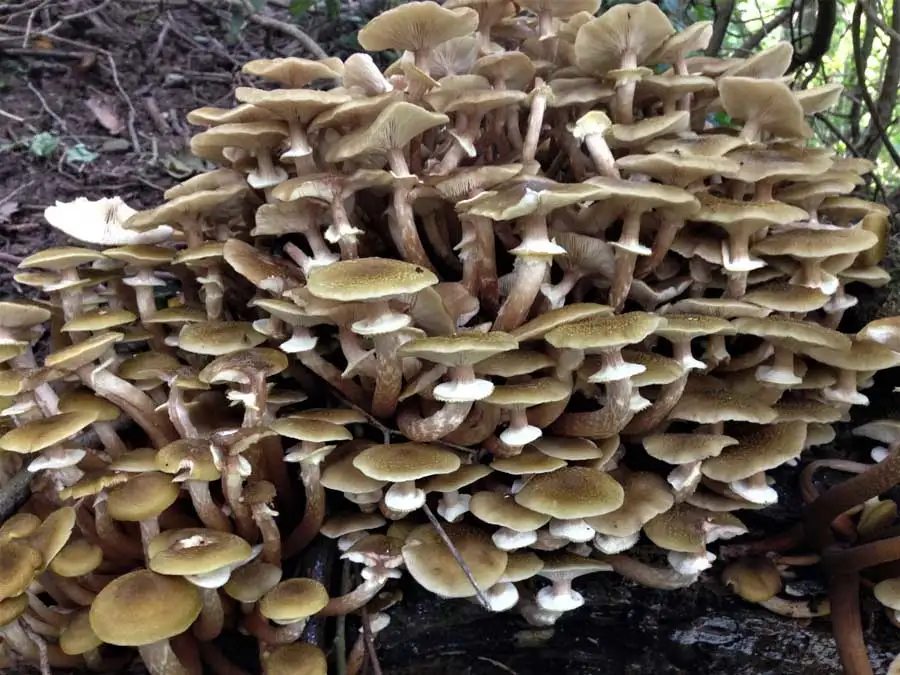


Honey fungus is a white-rot fungus, which is a pathogenic organism that affects trees, shrubs, woody climbers and rarely, woody herbaceous perennial plants. This tasty and very common mushroom can give a small amount of people gastric upsets so should be tried in small amounts the first time it is eaten. It should always be cooked before consumption.
Scientific Name – Armillaria mellea



Common Names:
Honey Fungus (EN), Bootlace Fungus, Ffwng Melog (CY), Opieńka Miodowa Właściwa (PL), Gyűrűs Tuskógomba (HU))
Please note that each and every mushroom you come across may vary in appearance to these photos.

Cap
5-12 cm. Conical when young, then convex, then flattening and even having upturned edges. Honey coloured, ochre or brown with a darker slight umbo and sometimes concentric circles of darker scales.
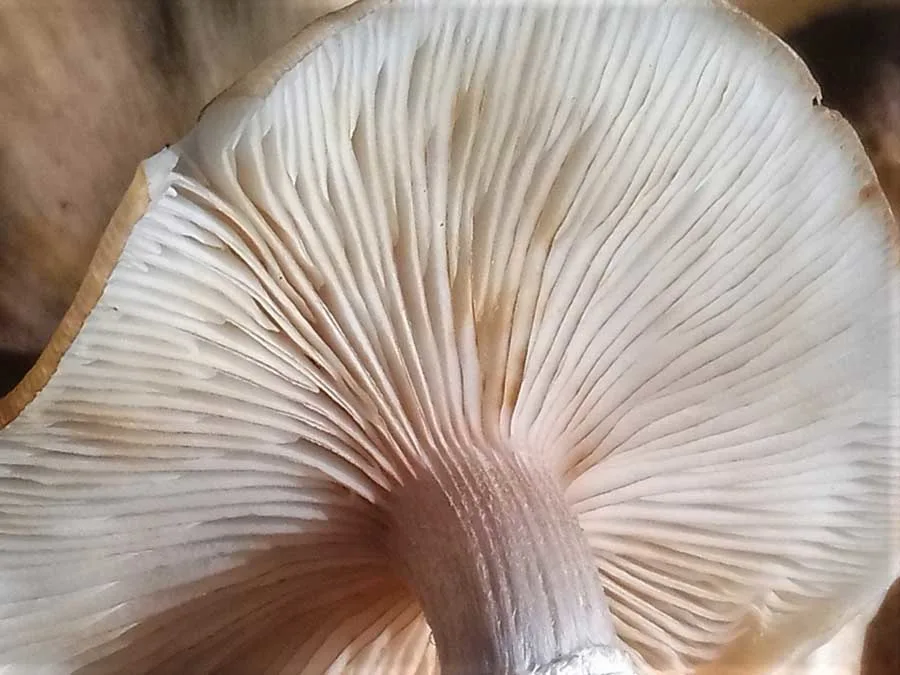
Gills
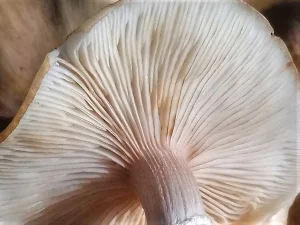
Crowded. Adnate to slightly decurrent. Gills start white turning yellow to brown and often darker.

Stem
8-14 cm long, 0.5-1.5 cm diameter. The chunky Honey fungus has a fairly thick, scaly, white to yellow brown stem which is usually bulbous at the base. The slender fungus is thinner, generally smoother and tapers towards the base and can be white to yellow to red/brown.

Skirt
Superior. The ring is usually very high on the stem and can appear as a double ring with chrome yellow edges.

Flesh
White.
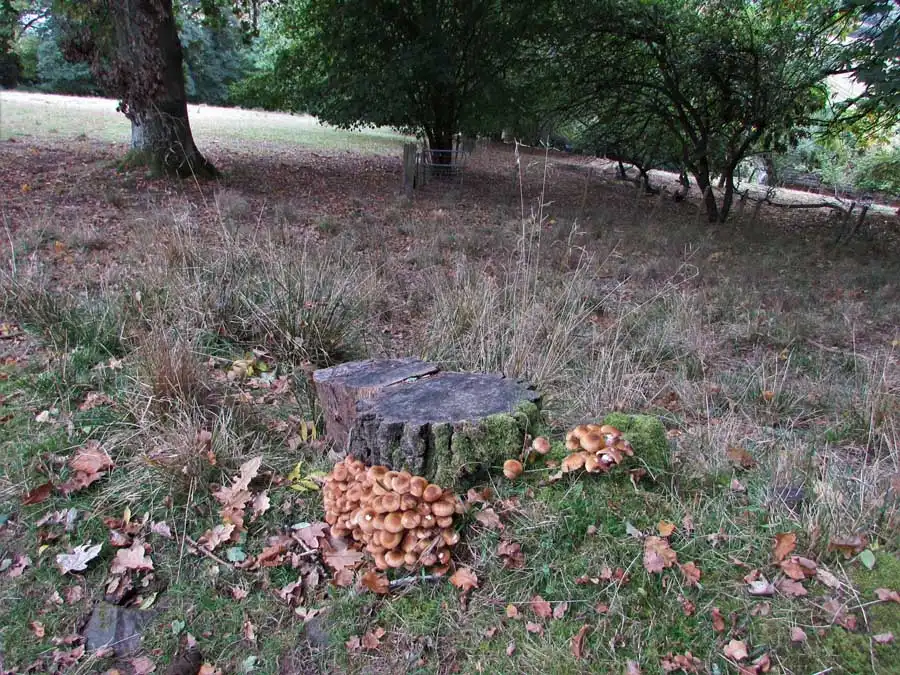
Habitat
Growing in large clusters on deciduous trunks, stumps or dead wood but can also be found in grass as the rhizomorphs spread looking for more trees to infect.

Possible Confusion
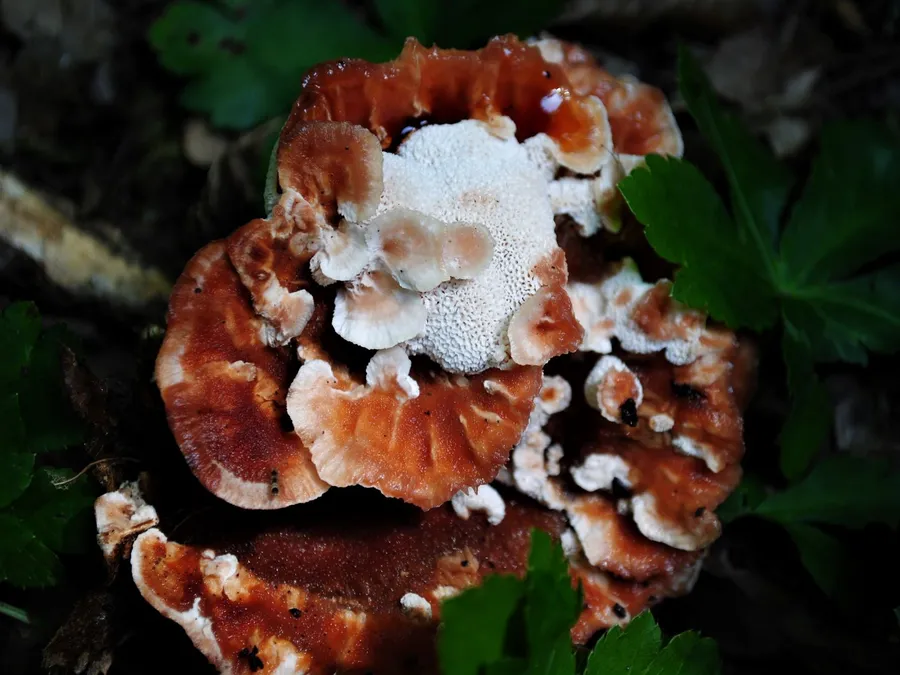
Galerina marginata, pictured, can look similar but is darker and has a distinct smell which is not mushroomy. Care should be taken with the identification of this fungi as Galerina marginata is also called The Funeral Bell.
The Shaggy Scalycap (Pholiota squarrosa) can look similar but has brown spores and has much more pronounced scales on the cap as well as scales on the stem which the Honey Fungus doesn’t have.
Spore Print
White to pale cream. Ellipsoid.
Other Facts
This mushroom is responsible for killing many trees and the rhizomorphs or ‘bootlaces’ can usually be found under the clusters of fungi and surrounding bark. Unlike most mushrooms this fungi can live on its host tree alive or dead and can spread under ground easily and ends up killing its host.
Armillaria do not grow from spores very easily.
An Armillaria has formed what is thought to be the largest living single organism on the planet and has been reported at 3.4 square miles in size and thousands of years old.
Honey fungus are regarded in Ukraine, Russia, Poland, Germany and other European countries as one of the best wild mushrooms. They are commonly ranked above morels and chanterelles and only the cep/porcini is more highly prized. However, honey fungus must be thoroughly cooked as they are mildly poisonous raw. Honey mushrooms are one of four UK species that can cause sickness when ingested with alcohol. For those unfamiliar with the species, it is advisable not to drink alcohol for 12 hours before and 24 hours after eating this mushroom to avoid any possible nausea and vomiting. However, if these rules are followed, this variety of mushroom is a delicacy with a distinctive mushroomy and nutty flavour.