Common Rustgill


An easy to identify family of mushrooms, the Rustgills have rusty looking gills and this one is common and can grow in large numbers on conifer debris or woodchip.
Scientific Name – Gymnopilus penetrans


Common Names:
Common Rustgill (EN), Tagell Goch Gyffredin (CY), Łysak Plamistoblaszkowy (PL), Foltoslemezű Lánggomba (HU)
Please note that each and every mushroom you come across may vary in appearance to these photos.

Cap
2-6 cm. Tawny/yellow/orange to brown coloured, darker towards the middle with very fine velvet like scales or hairs. Starting convex but soon flattening with an uneven edge.
Gills
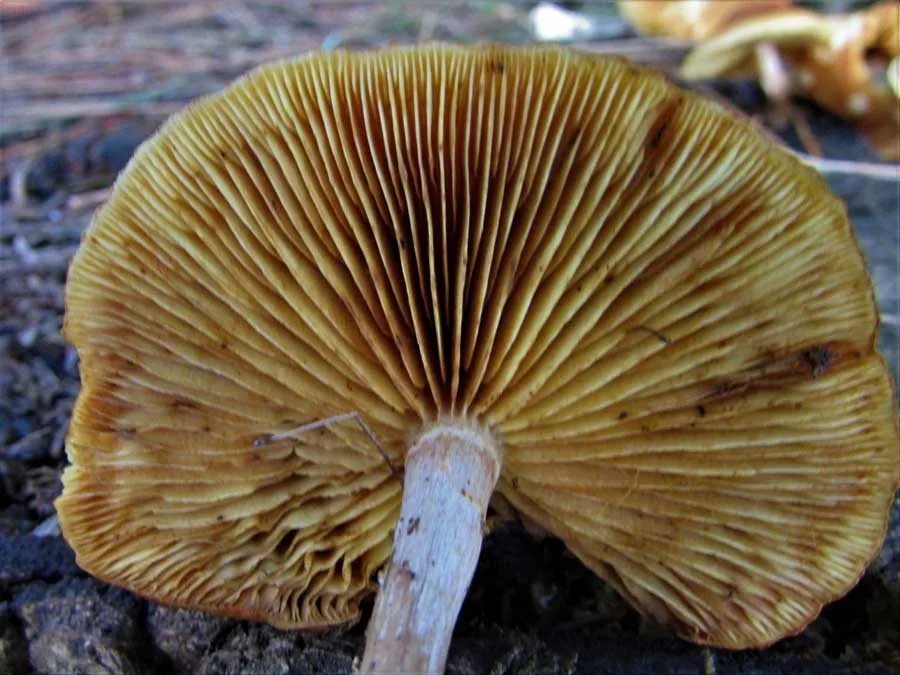
The gills start pale yellow and slightly run down the stem(decurrent) on young mushrooms but they soon change to dark tan with rust coloured spots and the gills rise just before joining the stem (adnate).
Stem
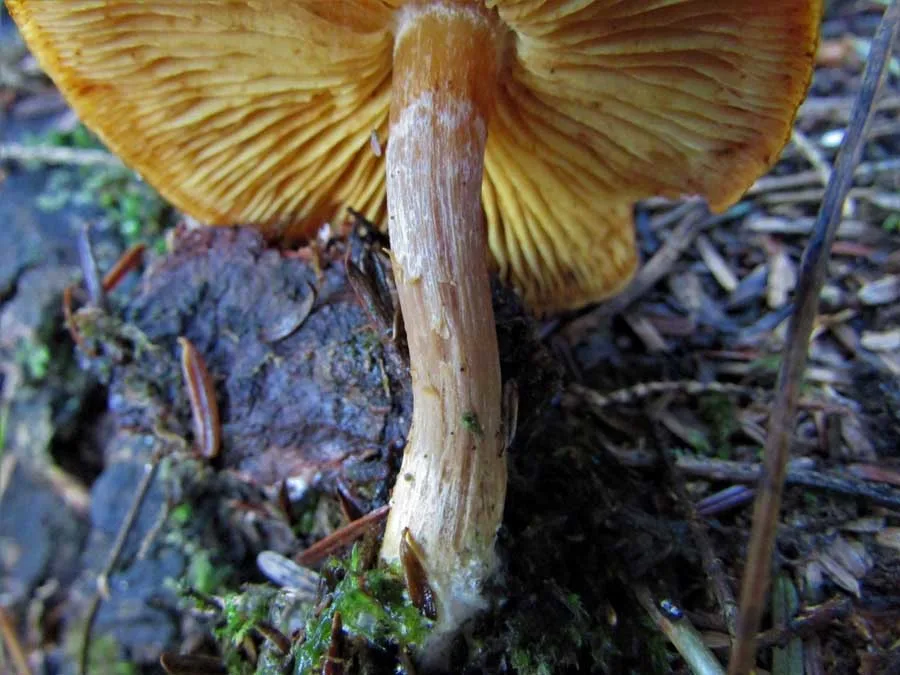
3-8 cm long, 0.3-1 cm diameter. Tan to orange and covered in fine, off white fibres running up and down the stem. Can be lighter at the top and the base is usually covered in fine white down.

Flesh
Tawny coloured, thin in the cap and hollow in the stem.

Habitat
Mainly on conifer stumps and debris but can be found with hardwoods and growing in woodchip.
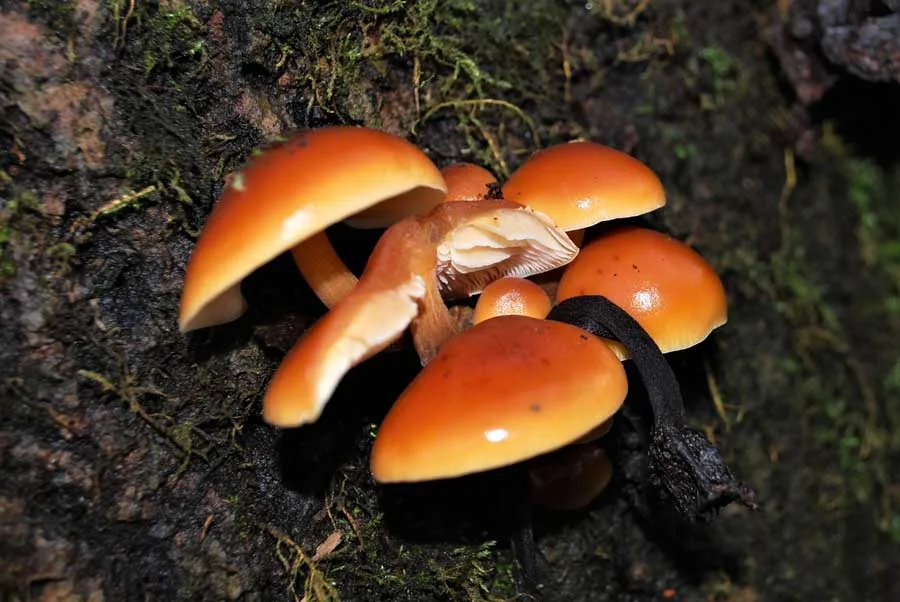
Possible Confusion
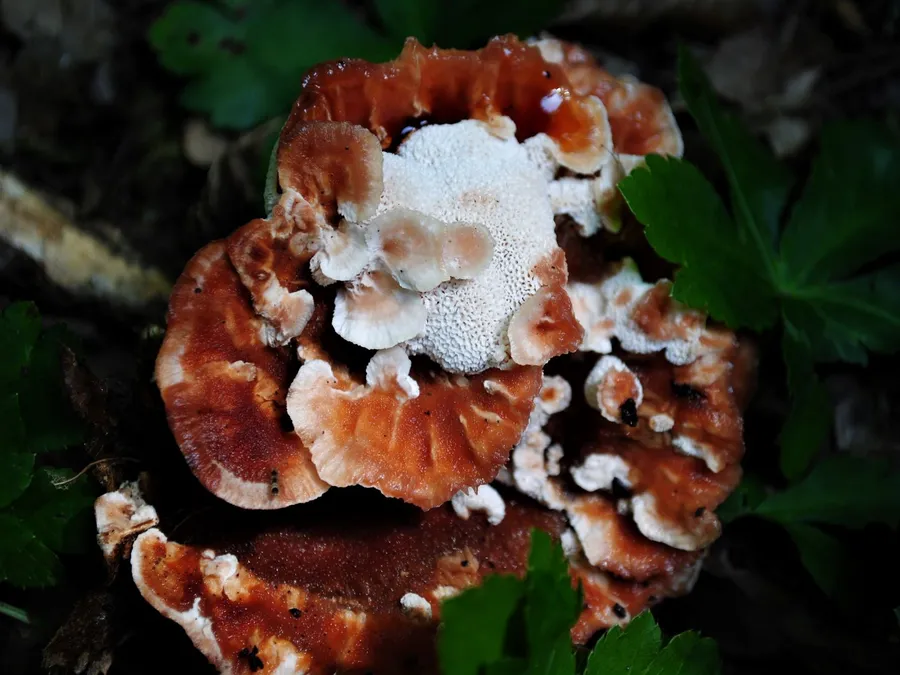
The Velvet Shank, (Flammulina velutipes), pictured, looks very similar when young but develops a black velvety stem when mature. It has thicker, more widely spaced gills that start white and turn off white, pale yellow, the cap is viscid, unlike the Common Rustgill, they grow in much larger clusters and grow in different seasons. December to April for the Velvet Shank, June to just about December for the Common Rustgill.
Spectacular Rustgill (Gymnopilus junonius) is similar but it usually has a scaly cap and a ring on the stem.
Other Facts
The Common Rustgill is inedible and may be poisonous. Certainly several species in the genus Gymnopilus are known to be seriously poisonous, and there is evidence that rustgills from certain parts of the world contain hallucinogenic substances such as psilocybin. We therefore recommend that all fungi in the genus Gymnopilus should be treated as toxic toadstools.