Conifer Mazegill
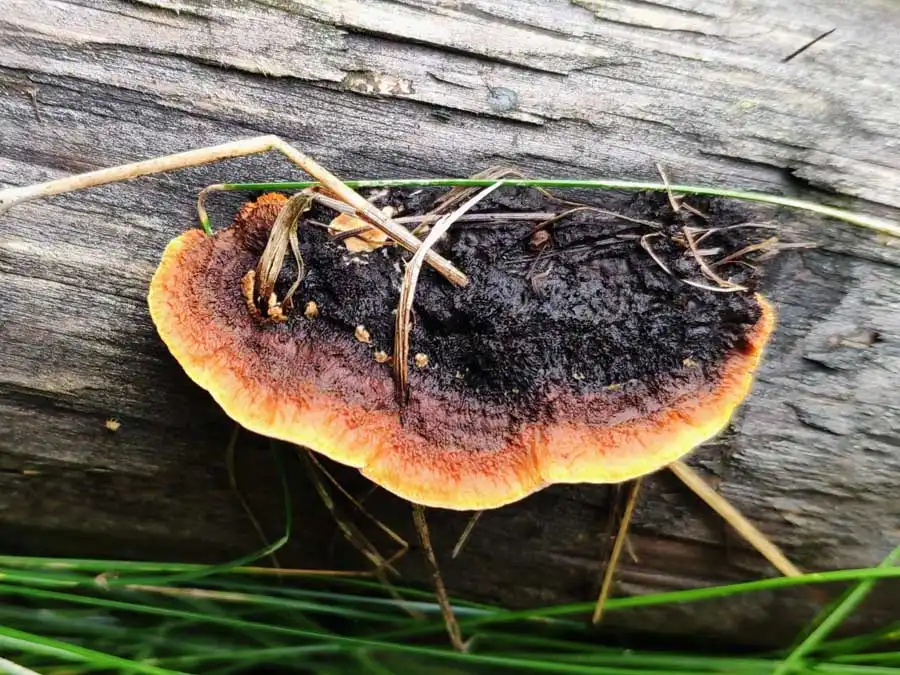


Conifer Mazegill (Gloeophyllum sepiarium) is a common, tough, inedible perennial fungus found on dead conifer wood, especially spruce, causing brown rot. It appears as rusty-brown, felted brackets (2–8 cm) with zoned, fan-shaped caps and distinctive Maze-like, gill-like, or elongated pores beneath
Scientific Name – Gloeophyllum sepiarium
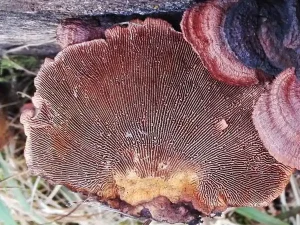
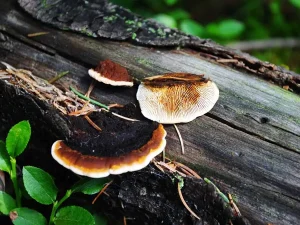
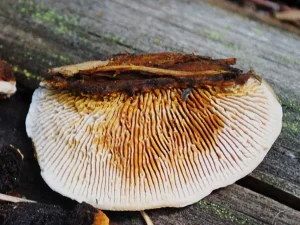
Common Names:
Conifer Mazegill (EN), Rusty-Gilled Polypore (US), Yellow-Red Gill Polypore (US), Tegyll Rhwyllog Conwydd (CY), Niszczyca Płotowa (PL), Cifra Lemezestapló (HU)
Please note that each and every mushroom you come across may vary in appearance to these photos.
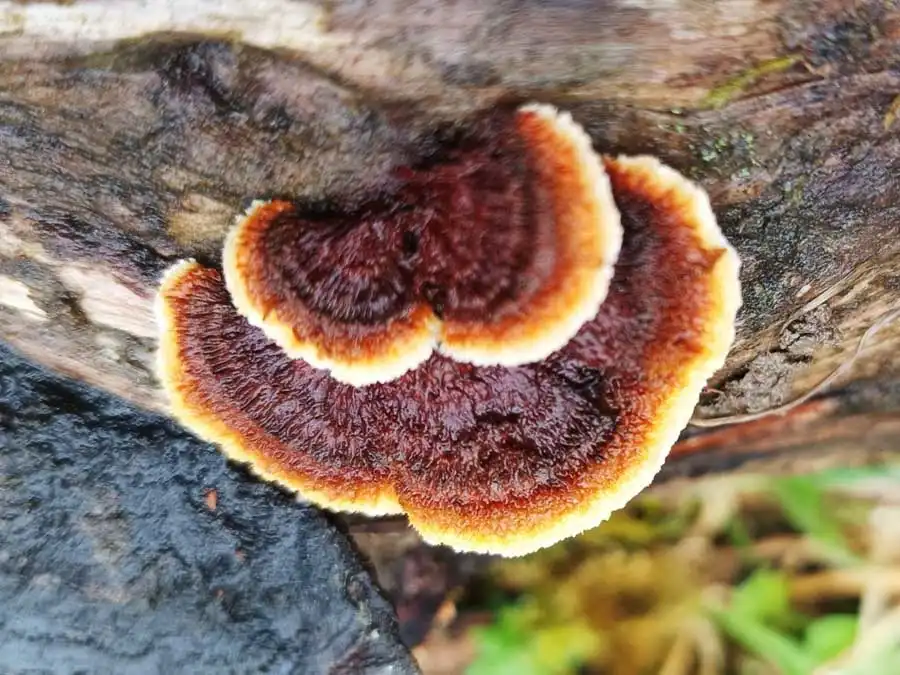
Fruiting Body
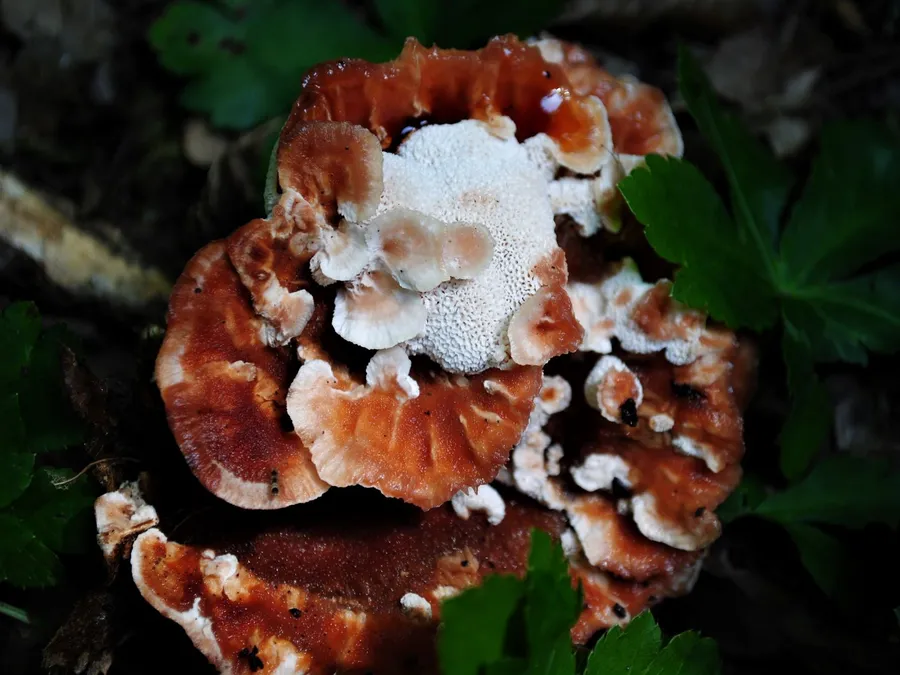
4–12 cm across, semi-circular to elongated fan-shaped, usually grows individually, sometimes in groups (in this case the fruitbodies can merge). Its sterile upper surface is velvety to tomentose (covered with short, stiff hairs), can be smoother with age, zonate. Dark yellowish at first, turning rusty to brown later. Margin bright yellowish to reddish. Its fertile surface is maze-like (daedaleoid) to lamellate (having gills), pore surface is golden brown to rusty brown.

Pores
Tubes up to 7 mm deep. Pores thick, round-angular to elongated, maze-like to lamellate. Radially arranged, widening towards the edge (15–20 per mm).
Flesh
Up to 5 mm thick, tough, amber to dark brown. Turning black in KOH.

Habitat
Annual to perennial, growing individually or in smaller groups, sometimes even overlapping rosette-like clusters on dead woods of coniferous trees (mainly Spruce, but also on Scots pine), more rarely on hardwoods. Often can be found on fences, timber and structural timber. Saprotrophic, causes cubical brown-rot.
Possible Confusion
Until it starts deteriorating, it is hard to confuse with anything else. The most possible lookalikes are from the same genus.
Gloeophyllum abietinum doesn’t have a common English name that we are aware of. It could be larger (up to 20–30 cm) than Conifer Mazegill, also, its fertile surface is purely lamellate (has gills), without having daedaleoid (maze-like) parts of it. It has wavy gills, 8–12 per cm, their edge covered with fine hair (pubescent), and it doesn’t react to KOH.
Timber Mazegill (Gloeophyllum trabeum) it is more brownish than Conifer Mazegill, also, it has a really variable fertile surface, could be maze-like (3–4 pores per mm) to lamellate (3–4 gills per mm), and its flesh doesn’t react to KOH.
Taste / Smell
Inedible. Taste and smell not distinctive.
Other Facts
The epithet (2nd part of the scientific name) means: reddish brown, and refers to the most common colour of the sterile and fertile parts.