Coral Tooth
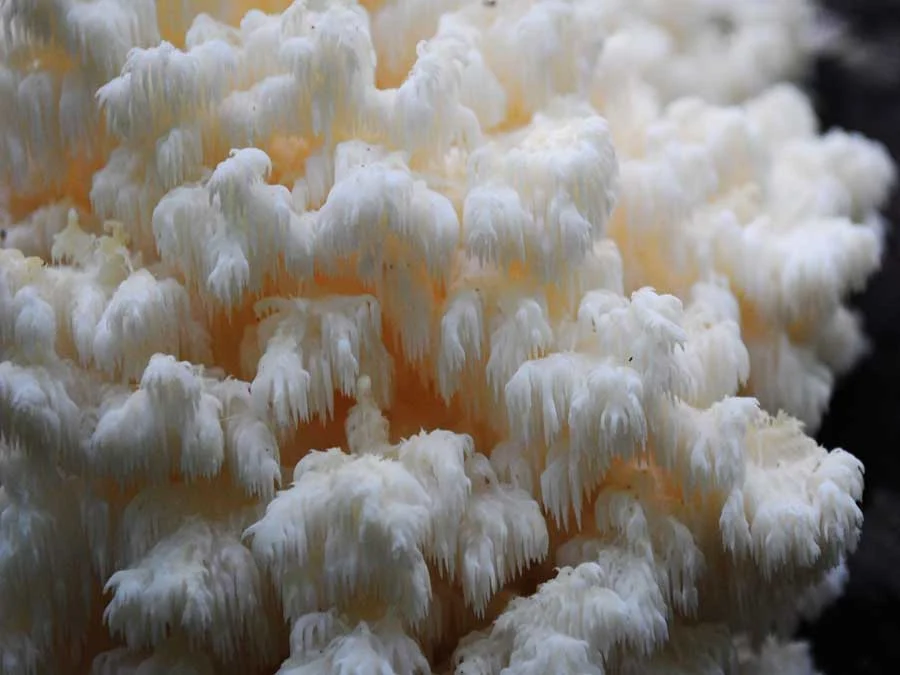


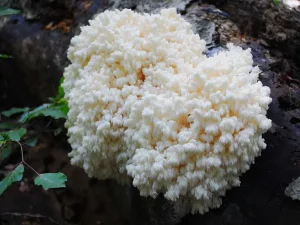
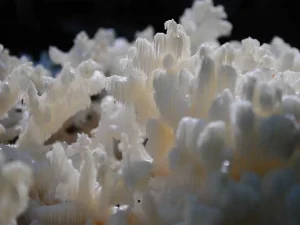
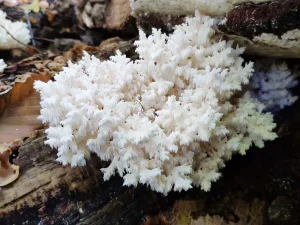
A very rare member of the Europe-wide rare genus Hericium. The fruiting bodies look like white branching corals growing out of dying or dead deciduous trees, mostly Beech. Despite the fact that it is not protected, we recommend only collecting photos, not fruit bodies!
Scientific Name – Hericium coralloides

Common Names:
Coral Tooth, Pigau Cwrel (CY), Soplówka Bukowa (PL), Közönséges Petrezselyemgomba (HU)
Please note that each and every mushroom you come across may vary in appearance to these photos.

Fruiting Body
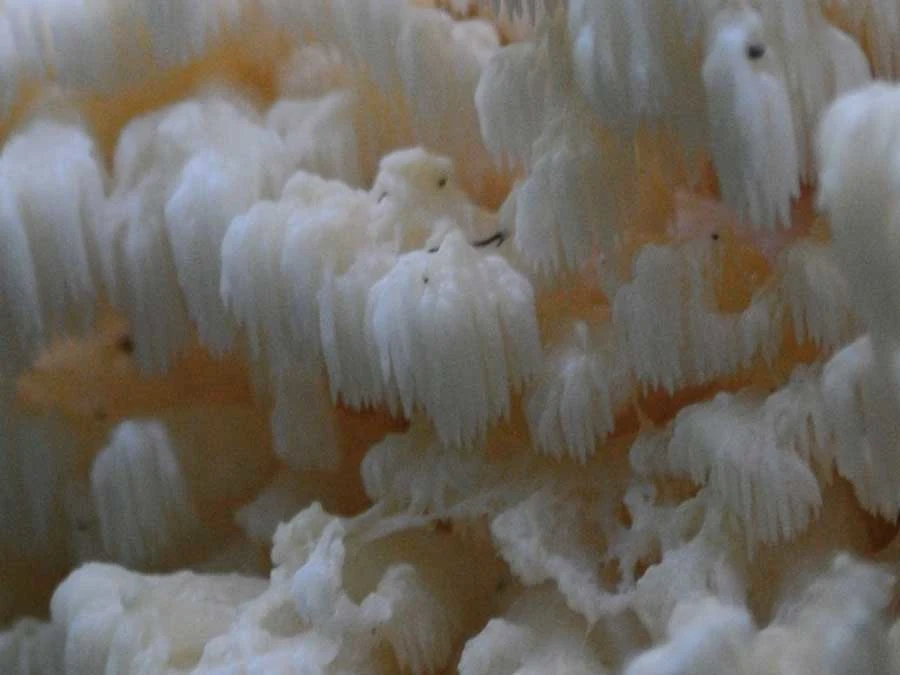
The fruiting body is medium to large in size (5–30 cm in diameter), coral shaped and heavily branched. Each branch is growing out of a very short, broad central stem, and covered in pale, off-white to white, hanging spines or “teeth”, which makes the whole fruit body white when young, off-white to yellow with age.
Spines
Up to 1–1.5 cm long, pale, off-white to white, yellowing with age.
Flesh
Thick, white to cream. Soft and cheese-like at first, more cork-like to tough with age.

Habitat
Saprotrophic on dead or dying hardwoods, most of all Beech, although much more rarely it can be found on other deciduous trees, such as Oak, Elm, Poplar, Ash or Birch. Some authors list it is a weakly parasitic species. Grows individually or in groups on logs or stumps, but it even can grow out of untreated wounds of living, but weak trees. It causes white-rot.
Possible Confusion
It is a very distinctive species, hard to confuse with anything else.
Other Facts
Like all species from the genus Herecium, the coral tooth (Herecium coralloides) is a decomposer, growing on dead wood. It often occurs in large masses on tree trunks of deciduous trees like beech. In principle it is edible, but not special in terms of taste. However, in Chinese and Japanese medicine, it is considered a medicinal mushroom and is used in therapy for stomach ailments, heartburn, nerve diseases and even various forms of cancer.