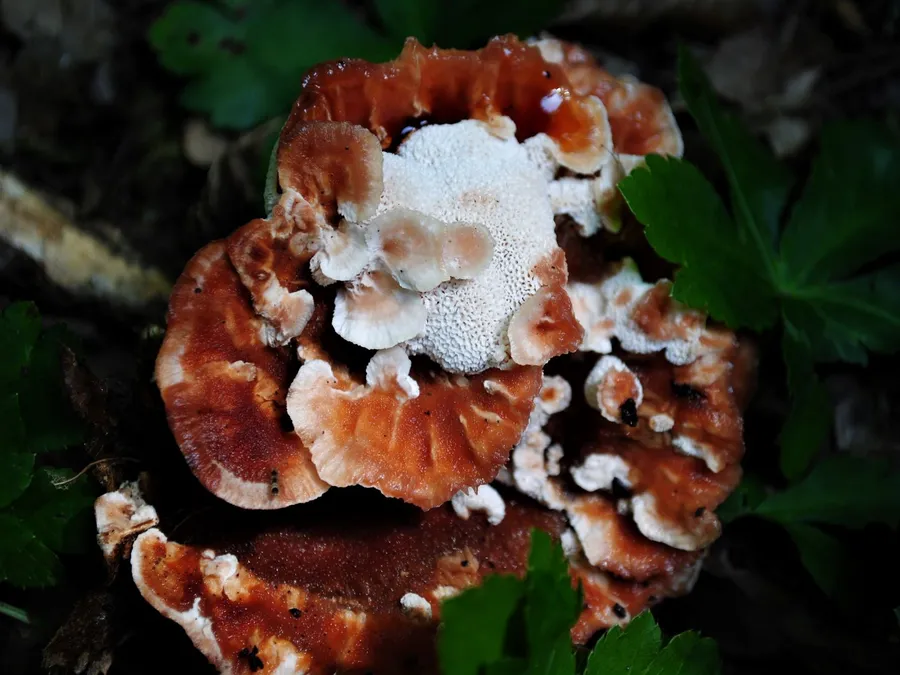
Elfin Saddle
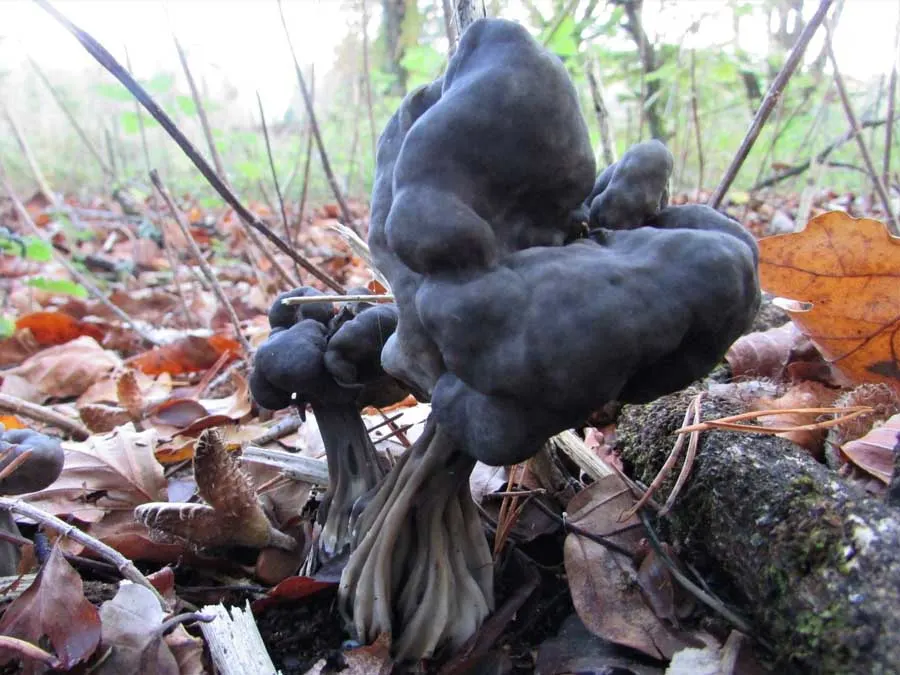


This is a slightly toxic but very unusual mushroom, one of the spore shooters that fire their spores out of their wrinkled caps rather than drop them from underneath.
Scientific Name – Helvella lacunosa


Common Names:
Elfin Saddle (EN), Black Elfin Saddle, Black Helvella, Coesyn Rhychog Du (CY), Piestrzyca Zatokowata (PL), Szürke Papsapkagomba (HU)
Please note that each and every mushroom you come across may vary in appearance to these photos.

Cap
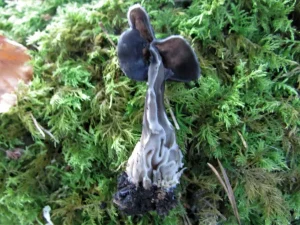
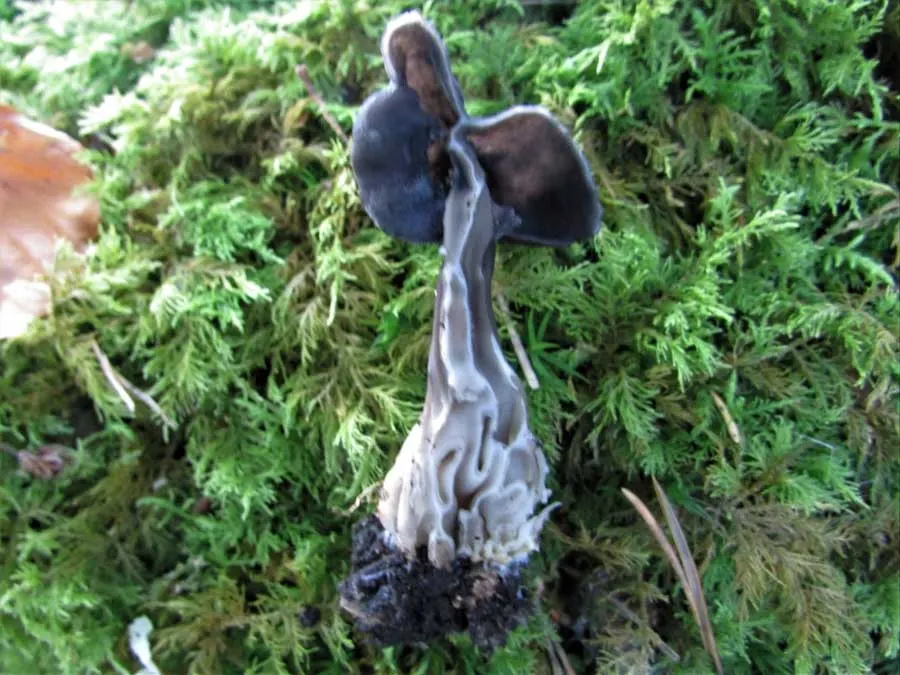
2-5 cm. Highly convoluted sheet extending out from the convoluted stem. Looks like something melted rather than a mushroom!

Pores
Invisible to the naked eye but on the outside surface of the cap.

Stem
3-10 cm long, 1-3 cm diameter. The stem looks like a tube that has pulled and pushed into wrinkles and hollows creating a series of cavities and buttresses, every mushroom quite unique.
Flesh
The whole fruitbody is a highly folded very thin sheet.

Habitat
Woodland in grass or leaves.
Possible Confusion
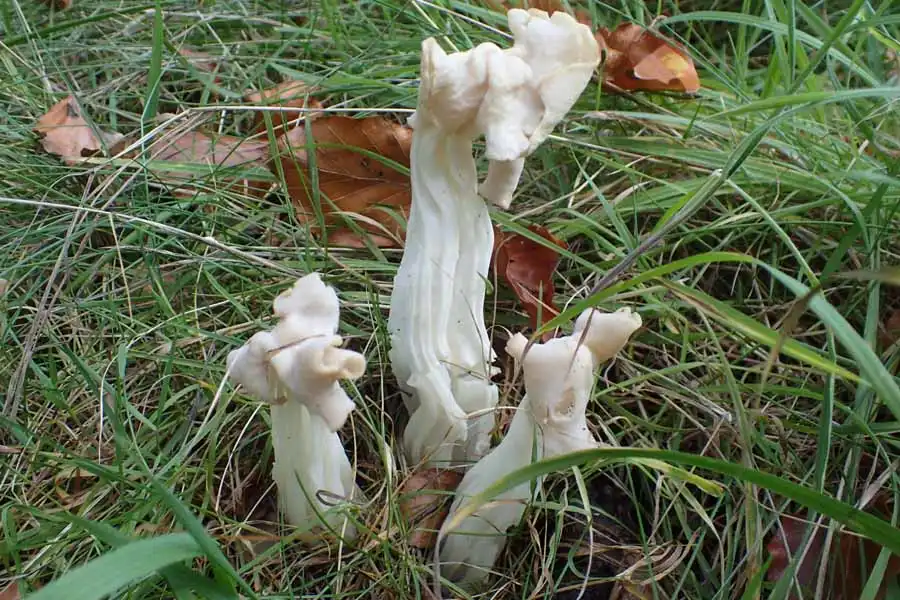
Looks similar to the White Saddle (Helvella crispa), pictured, but this has a white cap unlike the grey look of the Elfin Saddle. Helvella atra is similar in colour and shape but the stem is smoother, much less deeply grooved than the Elfin Saddle.
Other Facts
The fungus was formally described by Swedish botanist Adam Afzelius in 1783. Its specific epithet is the Latin adjective lacunosa, meaning “with holes”. The generic name was originally a type of Italian herb but became associated with morels. H. sulcata; once separated, because of certain differences in the lobe structure is now dropped, or just a synonym. It was not possible to draw a clear distinction between the two.