Destroying Angel
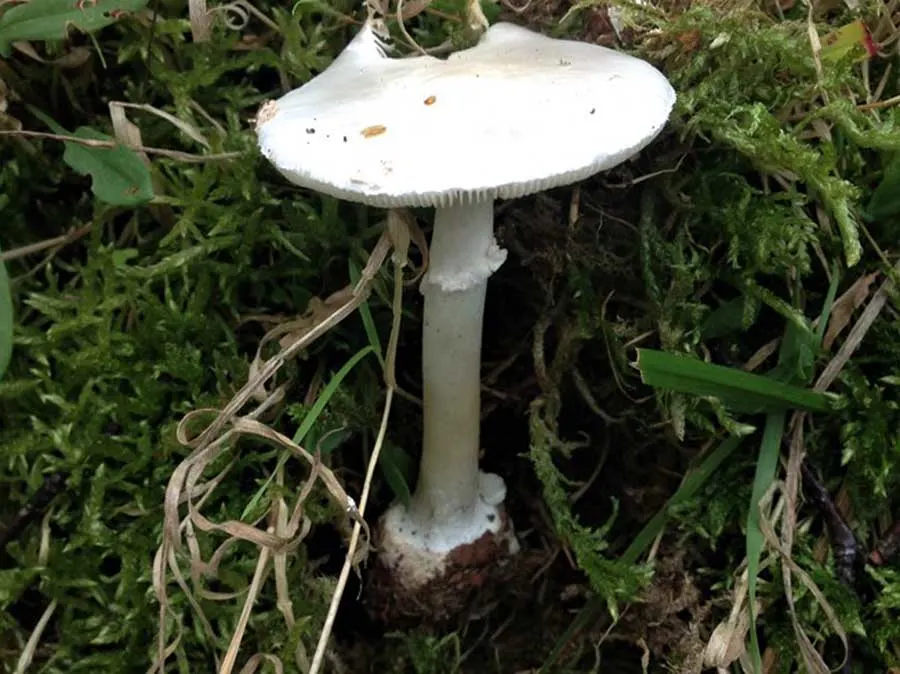


Destroying angels are characterized by having gills and white stalks. The cap can be pure white, or white at the edge and yellowish, pinkish, or tan at the center. It has a partial veil, or ring (annulus) circling the upper stalk, and the gills are “free”, not attached to the stalk.
Scientific Name – Amanita virosa



Common Names:
Destroying Angel (EN), Angel Angau (CY), Muchomor Jadowity (PL), Hegyeskalapú Galóca (HU)
Please note that each and every mushroom you come across may vary in appearance to these photos.
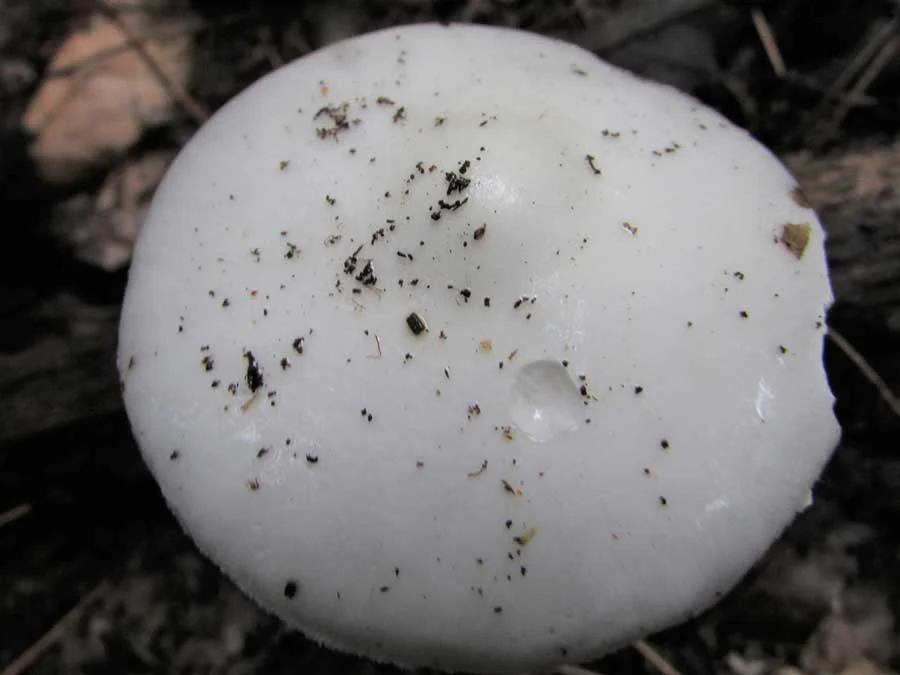
Cap
7-11 cm. Convex then conical to almost flat but usually retaining an umbo. The cap is pure white and can be viscid.

Gills
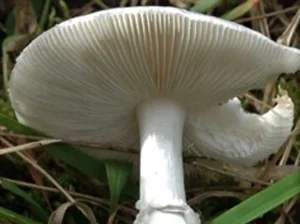
Crowded and free of the stem. White.
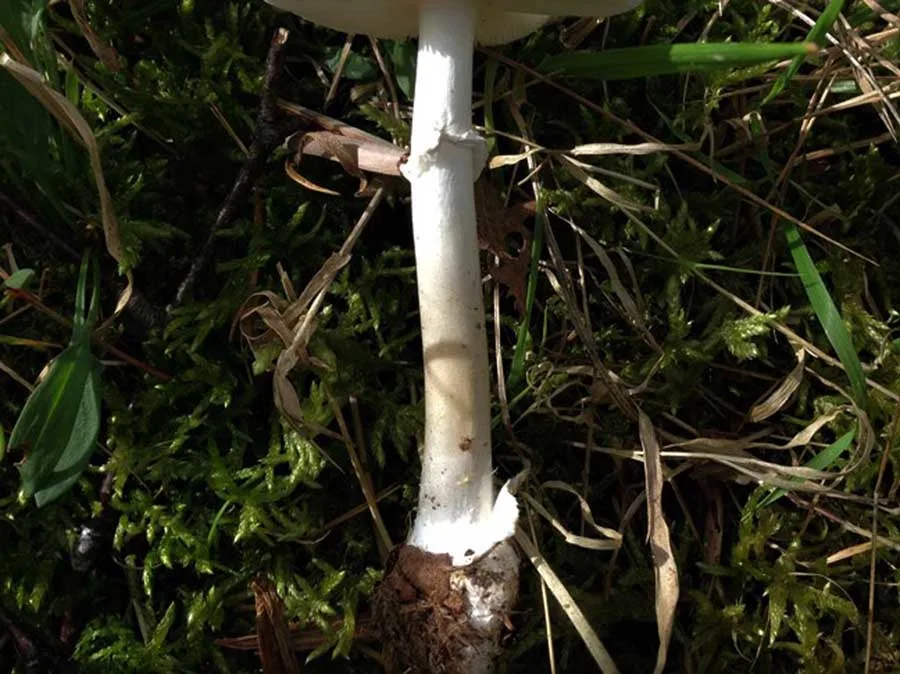
Stem
10-14 cm long, 1-1.5 cm diameter. White with a fibrous skin. As with other Amanitas the stem starts from a bulbous volva but the skirt is fragile and often missing or slight.

Skirt
Superior. A slight skirt with no striations which can be easily damaged or missing.

Volva
A large bulbous volva that can be deep under the surface.
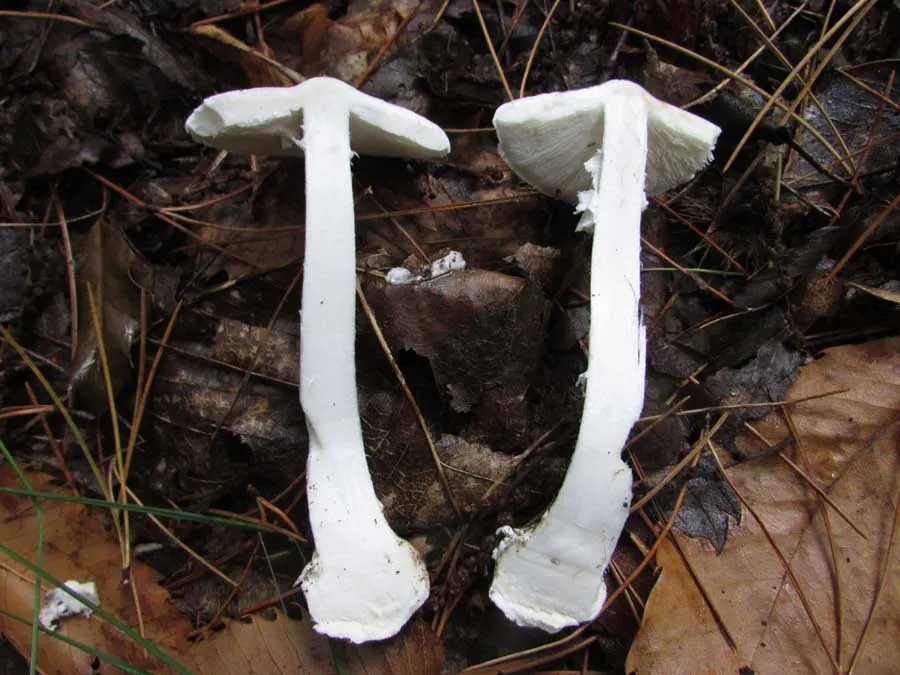
Flesh
Pure white.

Habitat
Most mixed woodland, particularly deciduous.
Taste / Smell
DO NOT try any part of this mushroom.
Other Facts
All Amanita species form ectomycorrhizal relationships with the roots of certain trees. Thus, destroying angels grow in or near the edges of woodlands. They can also be found on lawns or grassy meadows near trees or shrubs. Several species called destroying angels are found all over the world. Amanita bisporigera is associated with oaks and conifers.
Angel of death
The nightmare of inexperienced mushroom hunters everywhere, the Destroying Angel occupies the coveted position of one of the most deadly poisonous mushrooms known to mycologists. The mushroom gets its common name from its infamously pure white fruiting body. Fortunately, it is relatively easy to identify in its mature and button stages, with a little effort. It is equipped with most of the features that a mushroom can have, including a skirt on the stem (annulus) and round cup-like base (volva). It displays a beautiful white cap, stalk, and gills, and deposits a white spore print. These white spores can be the crucial factor between life and death for someone who is trying to distinguish a Destroying Angel in its button stage from an edible, brown-spored, white button mushroom (Agaricus campestris).
The Destroying Angel (Amanita spp.) is a group of all-white, deadly toxic mushrooms notorious in folklore and foraging for their deceptively pure appearance and extreme lethality. Representing the “angel of death,” they cause delayed, severe organ failure—primarily the liver and kidneys—often following a deceptive symptom-free period.