Devil’s Bolete
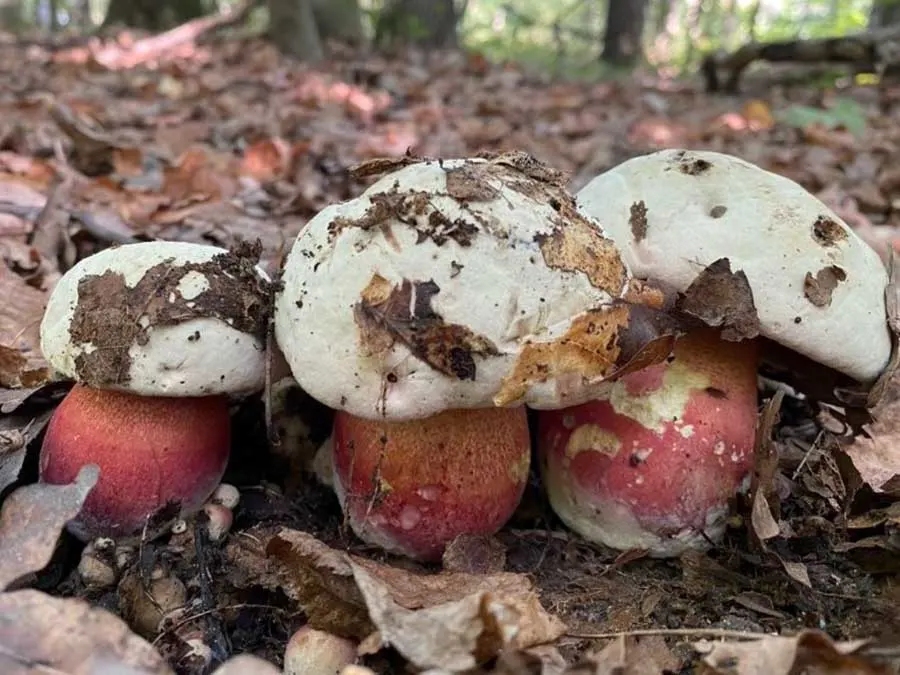


Rubroboletus satanas, commonly known as Satan’s bolete or the Devil’s bolete, is a basidiomycete fungus of the bolete family and one of its most infamous members. It was known as Boletus satanas before its transfer to the new genus Rubroboletus in 2014, based on molecular phylogenetic data.
Scientific Name – Rubroboletus satanas


Common Names:
Devil’s Bolete (UK), Satan’s Bolete,, Cap Tyllog y Cythraul (CY), Krwistoborowik Szatański (PL), Sátántinóru (HU)
Please note that each and every mushroom you come across may vary in appearance to these photos.

Cap
7-11 cm. Convex but often rough and undulating. Off-white with light tan, buff, sometimes with red tones and can crack when dry.

Pores
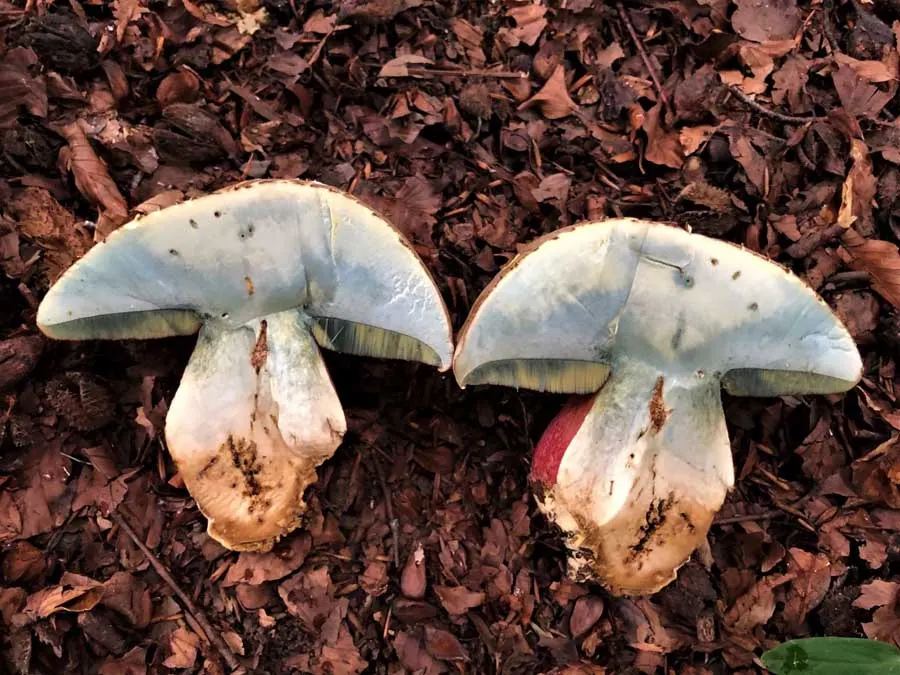
Fine blood red pores fading to orange, bruising blue/green.

Stem
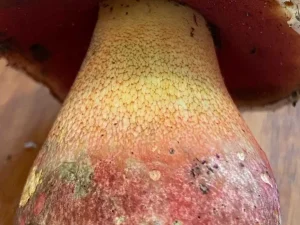
6-9 cm long, 4-10 cm diameter. Swollen towards the base, red/orange turning chrome yellow towards the apex. Usually covered in a fine red reticulation or mesh.
Flesh
White to pale yellow, turning pale blue when exposed to the air.
Habitat
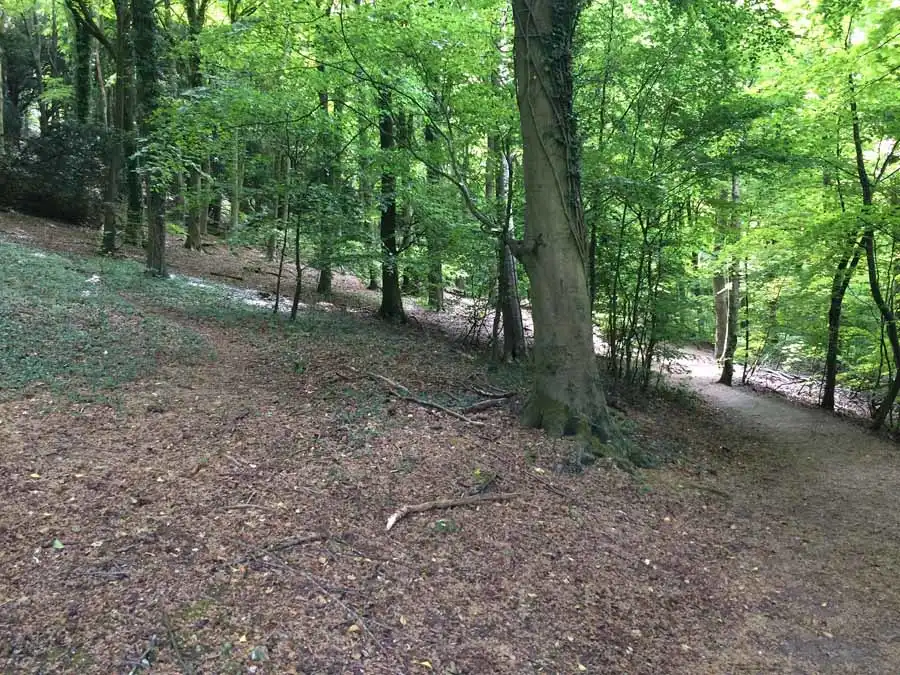
With oak, beech and other broad-leaved trees.
Possible Confusion
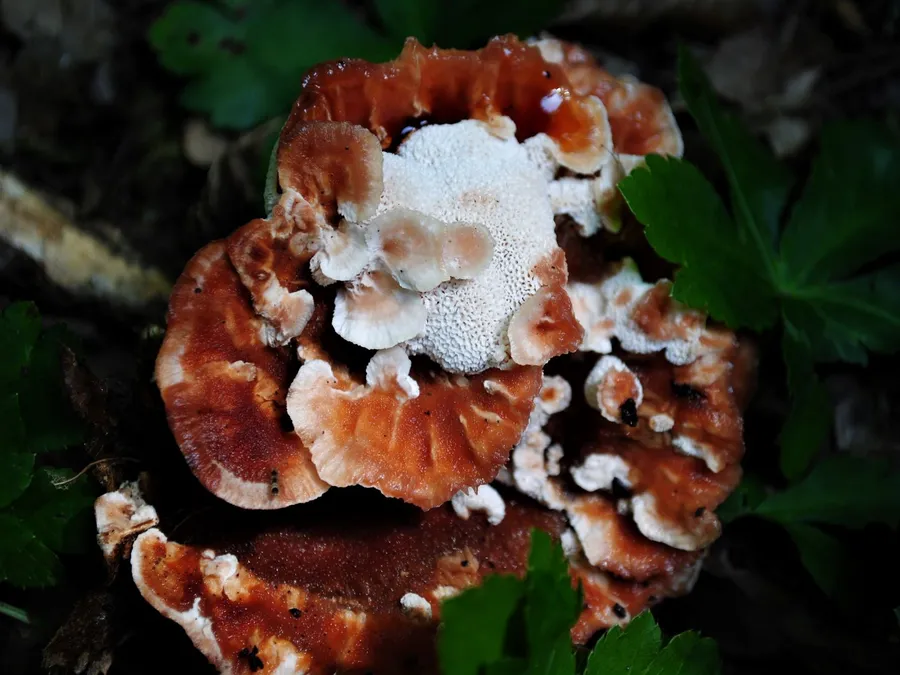
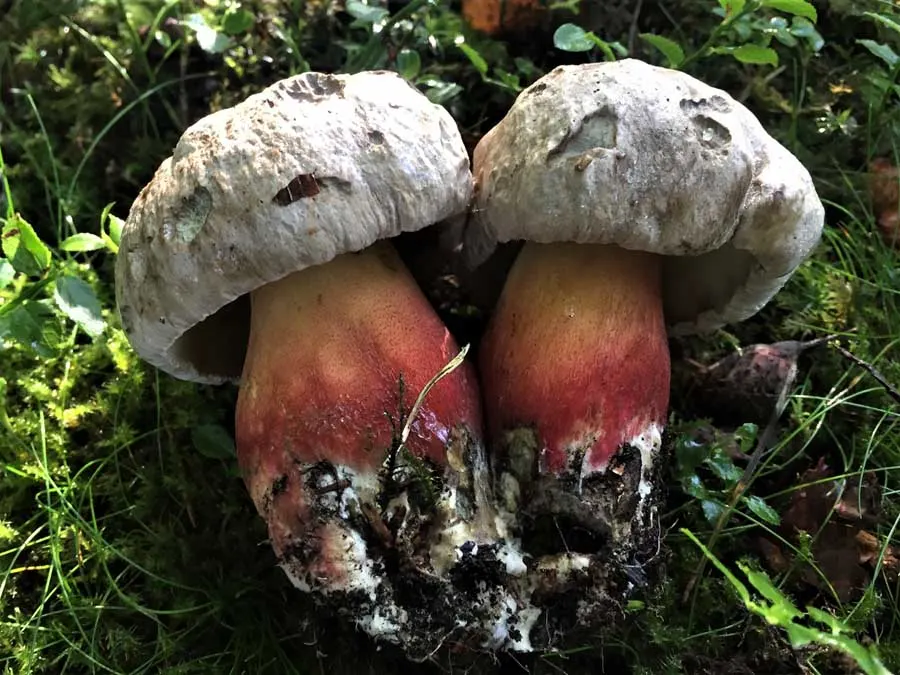
Bitter Beech Bolete (Caloboletus calopus), pictured, has yellow pores. Lurid Bolete (Suillellus luridus), looks similar but tends to have a darker cap and the stem is not as bulbous. Bilious bolete (Rubroboletus legaliae) looks very similar but has red or pink tones in the grey cap.
Other Facts
This mushroom is moderately poisonous, especially if eaten raw. The symptoms, which are predominantly gastrointestinal in nature, include nausea, abdominal pain, and violent vomiting with bloody diarrhea that can last up to six hours.
The toxic enzyme bolesatine has been isolated from fruiting bodies of R. satanas and is implicated in the poisonings. Bolesatine is a protein synthesis inhibitor and, when given to mice, causes massive thrombosis. At lower concentrations, bolesatine is a mitogen, inducing cell division in human T lymphocytes. Muscarine has also been isolated from this fungus, but the quantities are believed to be far too small to cause toxic effects in humans. More recent studies have associated the poisoning caused by R. satanas with hyperprocalcitonemia, and classified it as a distinct syndrome among fungal poisonings.
Controversially, English mycologist John Ramsbottom reported in 1953 that R. satanas is consumed in certain parts of Italy and the former Czechoslovakia. In those regions, the fungus is reportedly eaten following prolonged boiling that may neutralise the toxins, though this has never been proven scientifically. Similar reports exist from the San Francisco Bay Area of the United States, but probably involve a different fungus misidentified as R. satanas. Ramsbottom speculated that there may be a regional variation in its toxicity, and conceded that the fungus may not be as poisonous as widely reported. Nevertheless, R. satanas is rarely sampled casually, not least because of the foul smell, which in addition to their bright red colour and blue staining, make this fungus unappealing for human consumption.