Funeral Bell
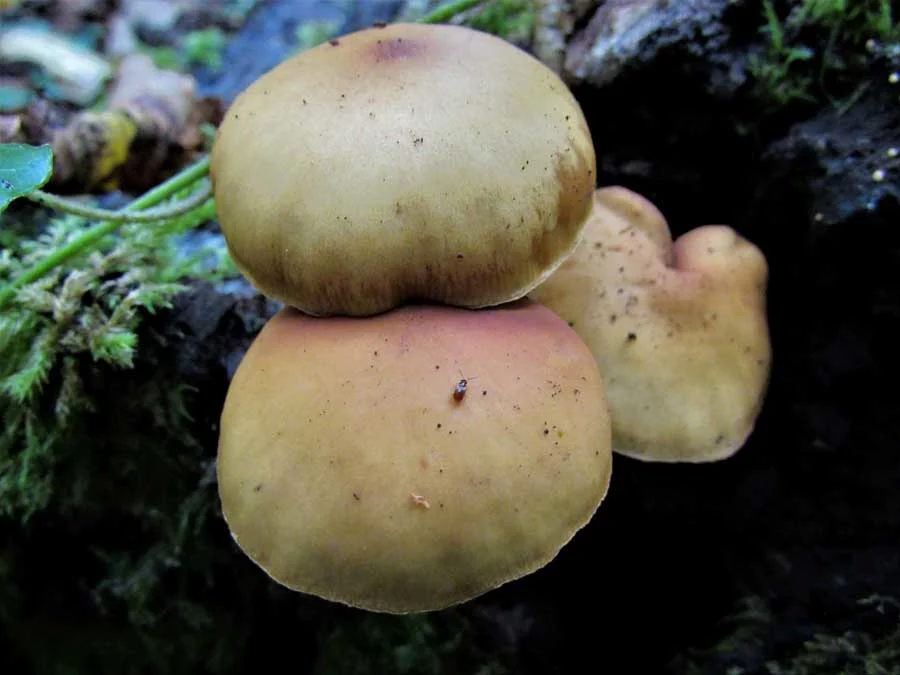


The aptly named Funeral Bell contains the same toxins as the Deathcap so it is a good mushroom to get to know and avoid. It has quite a few similar looking mushrooms as it is an LBM, little brown mushroom, but apart from the velvet shank, which is fairly easy to identify, there are none others of interest to the forager.
Scientific Name – Galerina marginata
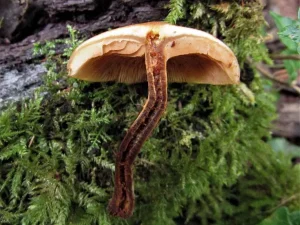
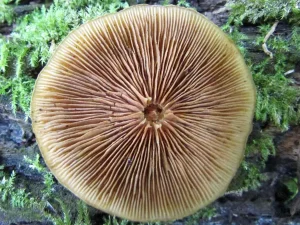
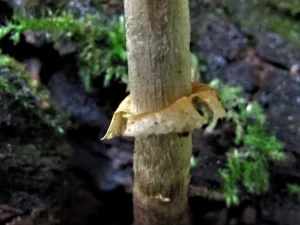
Common Names:
Funeral Bell (EN), Cloch Godreog (CY), Hełmówka Jadowita (PL), Fenyves Sisakgomba (HU)
Please note that each and every mushroom you come across may vary in appearance to these photos.

Cap
2-6 cm. Varying in colour from pale yellow/brown to orange depending on how wet the cap is and how old, usually with a lighter edge compared to the centre.
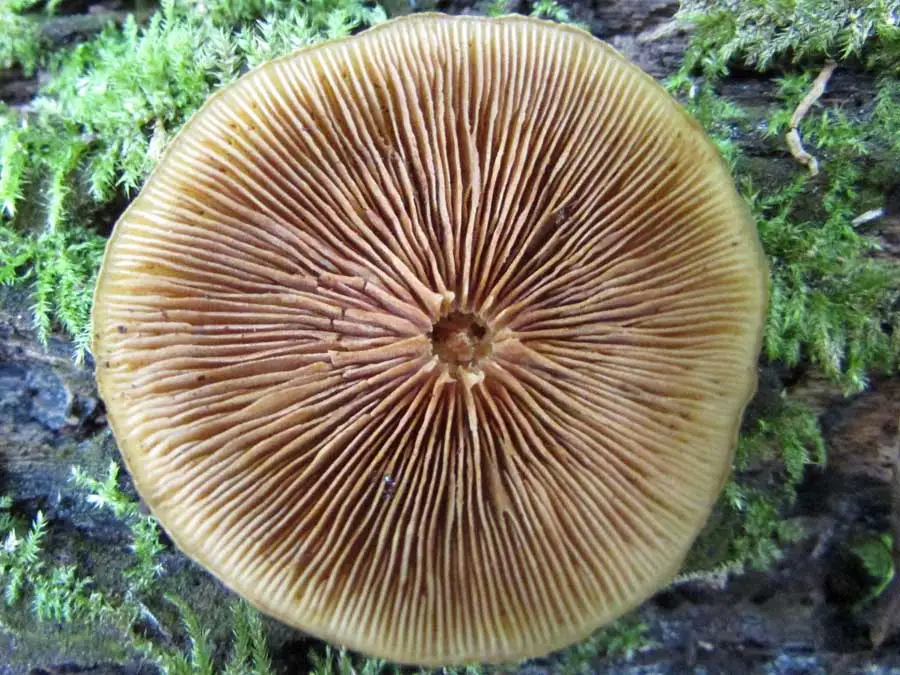
Gills
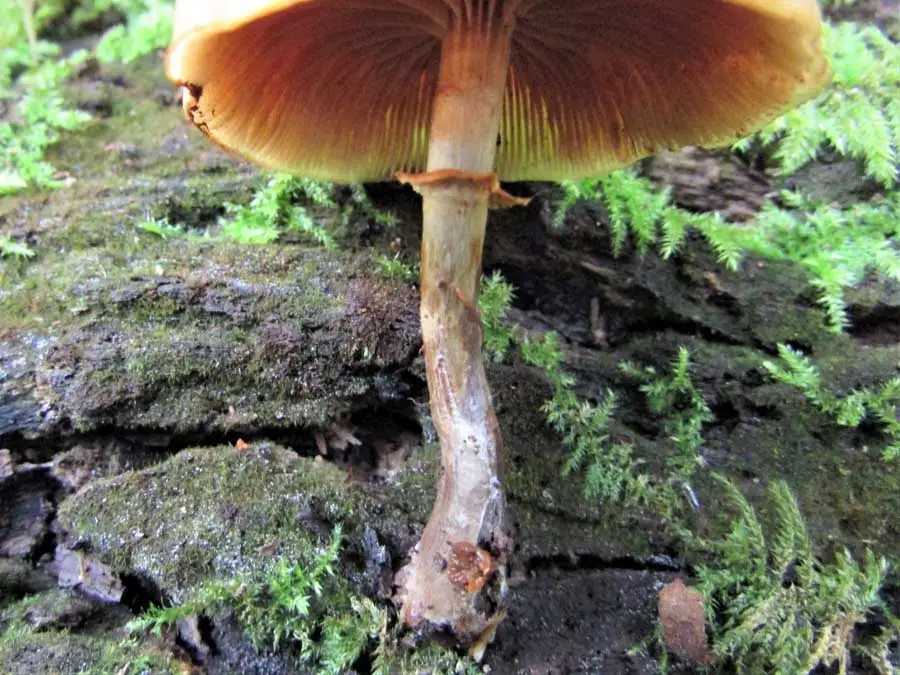
Pale tan to red/brown. Fairly crowded and broadly attached to the stem to slightly running down it (adnate to slightly decurrent).
Stem
2-7 cm long, o.3-0.8 cm diameter. Pale silvery/tan to dark brown depending on age and weather conditions. The stem is fibrilose, particularly below the ring.

Skirt
Has a small membranous skirt.
Flesh
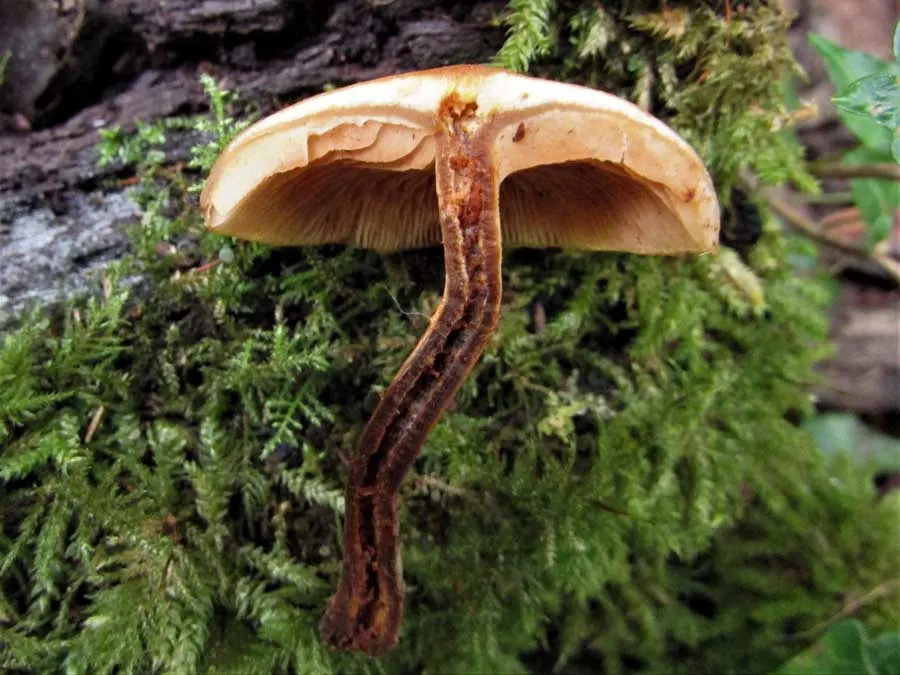
Pale and thin, darkening with age.

Habitat
Mainly on conifer stumps but can be found on deciduous tree stumps, woodchips and in open grassland.

Possible Confusion
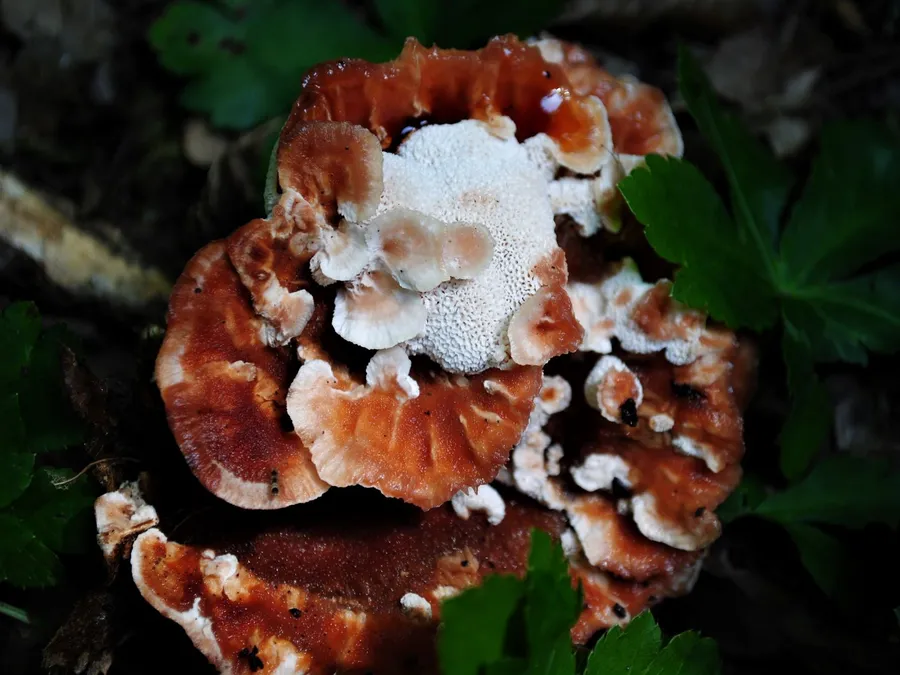
Can look like the Velvet Shank, pictured, but the Velvet Shank (Flammulina velutipes) has a black, velvety stem with no skirt although the stem is light tan on younger mushrooms.
Also looks very like the Sheathed Woodtuft (Kuehneromyces mutabilis), which is an edible mushroom but looks too much like the Funeral Bell to make it a safe mushroom for consumption.
Other Facts
The term “Funeral Bell” primarily refers to Galerina marginata, an extremely poisonous, deadly fungus often called the deadly galerina or autumn skullcap, which grows on wood. It is also commonly used to describe the slow, solitary tolling of a church bell for a funeral or a song by Black Label Society. The toxicity of certain Galerina species has been known for a century. In 1912, Charles Horton Peck reported a human poisoning case due to G. autumnalis. In 1954, a poisoning was caused by G. venenata. Between 1978 and 1995, ten cases caused by amatoxin-containing Galerinas were reported in the literature. Three European cases, two from Finland and one from France were attributed to G. marginata and G. unicolor, respectively. Seven North American exposures included two fatalities from Washington due to G. venenata, with five cases reacting positively to treatment; four poisonings were caused by G. autumnalis from Michigan and Kansas, in addition to poisoning caused by an unidentified Galerina species from Ohio. Several poisonings have been attributed to collectors consuming the mushrooms after mistaking them for the hallucinogenic Psilocybe stuntzii.