Grey Waxcap


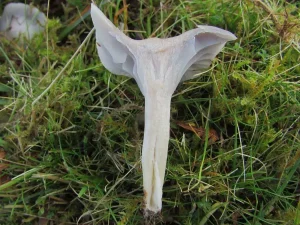
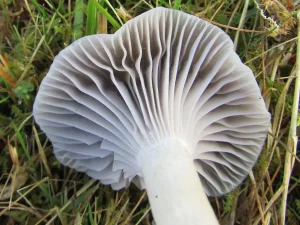
A medium-size greyish coloured Waxcap with greasy-viscid cap when wet. The greyish, decurrent, interveined gills and the lack of yellow at the stem base are the most important macroscopic features of this species.
Scientific Name – Cuphophyllus lacmus


Common Names:
Grey Waxcap, Cap Cwyr Llwyd (CY), Wilgotnica Lakmusowa (PL)
Please note that each and every mushroom you come across may vary in appearance to these photos.

Cap
2–6 cm. First umbonate or bluntly conical, then convex, becoming more or less flat, or even slightly funnel-shaped with age. Grey, bluish grey to buff brown, greasy-viscid when wet, slightly ‘bobbly’ when dry, with a translucent, striated margin which is often irregular.
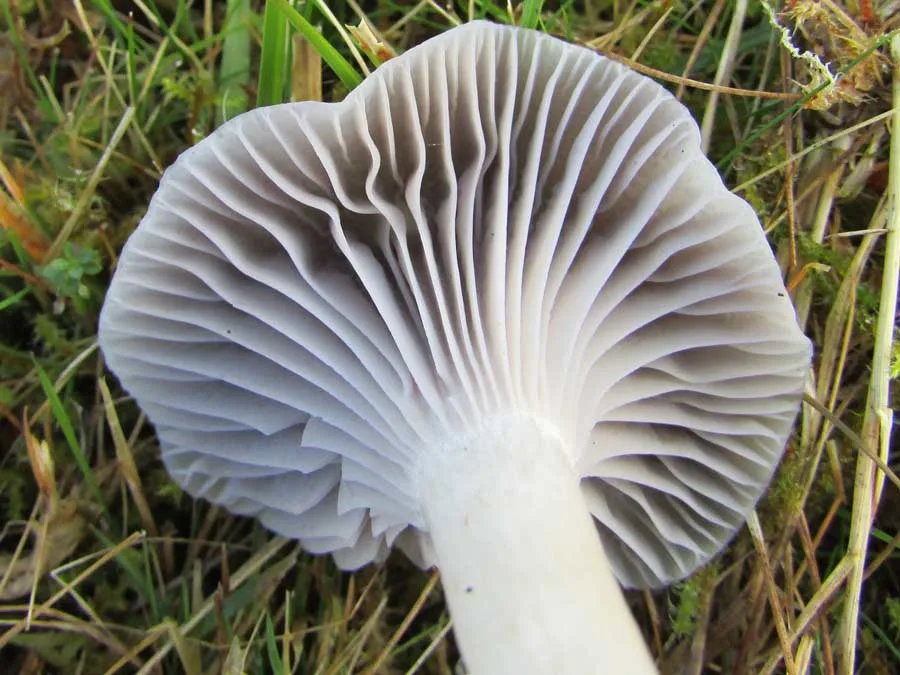
Gills
Pale bluish grey, widely spaced, interveined, running down the stem (decurrent), with a smooth, paler edge.
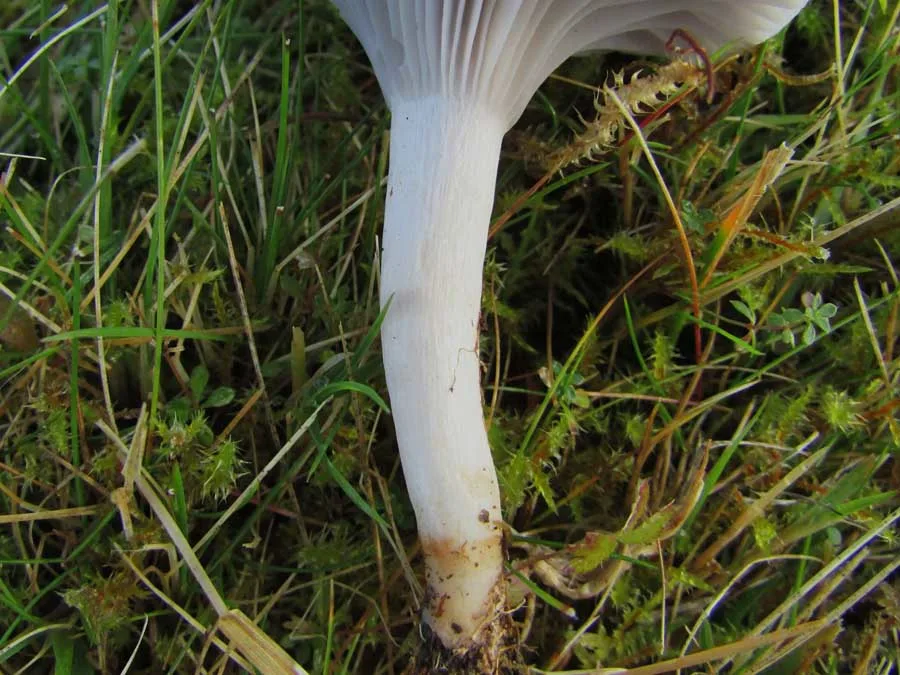
Stem
3–7 cm long, 3–6 mm diameter. Cylindric, slightly tapering at the base, smooth, white to pale greyish, often with a violaceous tinge. Base is cream to buff.

Flesh
Thin, fragile, pale greyish to buff.

Habitat
Growing individually or a few specimens might form a smaller clusters on soil in unimproved grasslands.

Possible Confusion
The Yellow Foot Waxcap, Cuphophyllus flavipes, pictured, looks very similar but has a yellow stem base (foot).
Taste / Smell
All the Cuphophyllus species are edible, but this one is not the tastiest. It tastes slightly acidic or bitter, the cap’s skin is even rancid sometimes and it smells a bit of earthy (might remind you of the smell of the Earthballs).
Other Facts
The grey waxcap (Cuphophyllus lacmus, formerly Hygrocybe lacmus) is a rare, vulnerable gilled fungus found in unimproved European grasslands. It features a greasy, grey to brownish cap, thick pale grey gills, and a whitish stem, often appearing in grazed or mown lawns. It is a valuable indicator species for habitat conservation.