Golden Waxcap
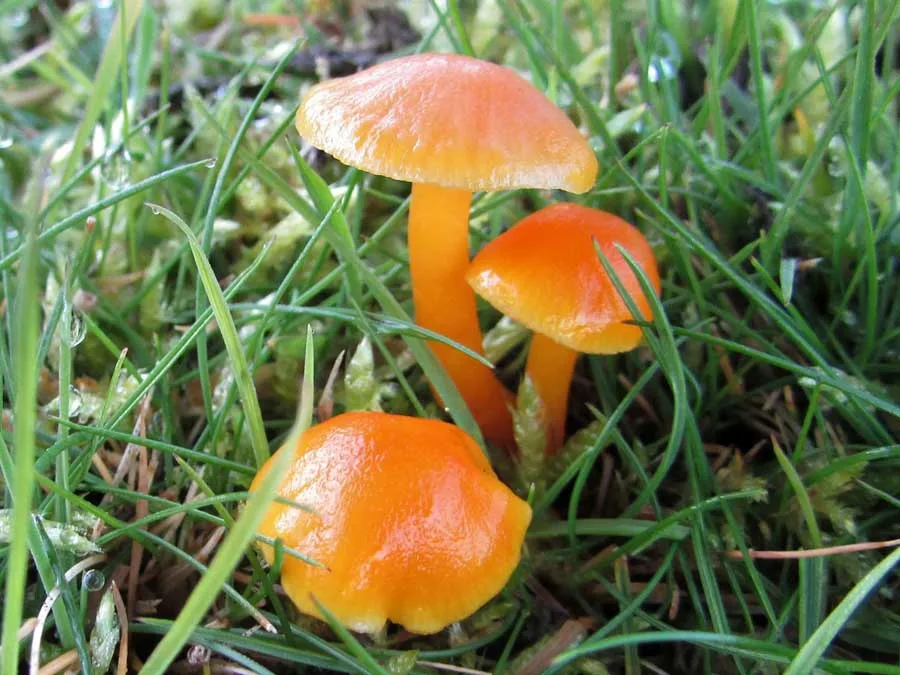


The Golden Waxcap is fairly common for a waxcap but still uncommon enough to not warrant picking these mushrooms. They can also be easily mistaken for other yellow waxcaps some of which are mildly toxic.
Scientific Name – Hygrocybe chlorophana
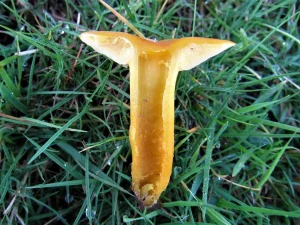
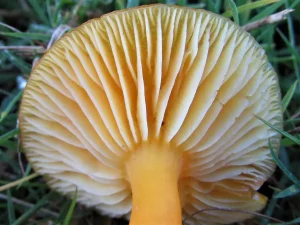
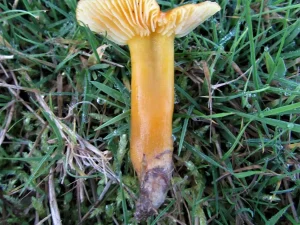
Common Names:
Golden Waxcap (EN), Cap Cwyr Euraidd (CY), Wilgotnica Żółknąca (PL), Zöldessárga Nedűgomba (HU)
Please note that each and every mushroom you come across may vary in appearance to these photos.

Cap
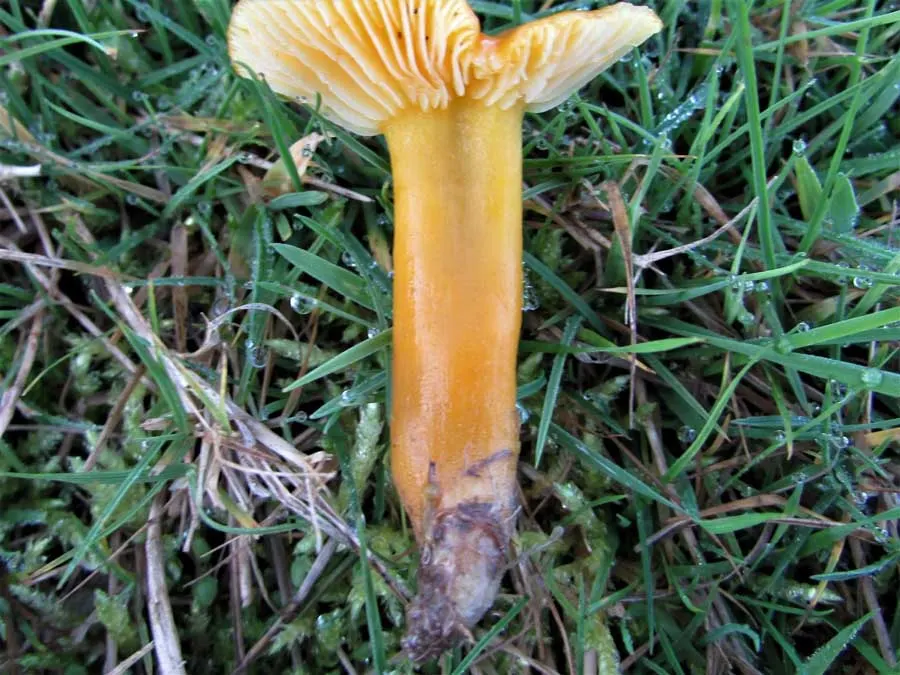
2-6 cm. The cap starts a more orange colour and conical, as it flattens out it becomes much paler and yellow. It has a greasy feel but can seem slimy in wet weather.
Gills
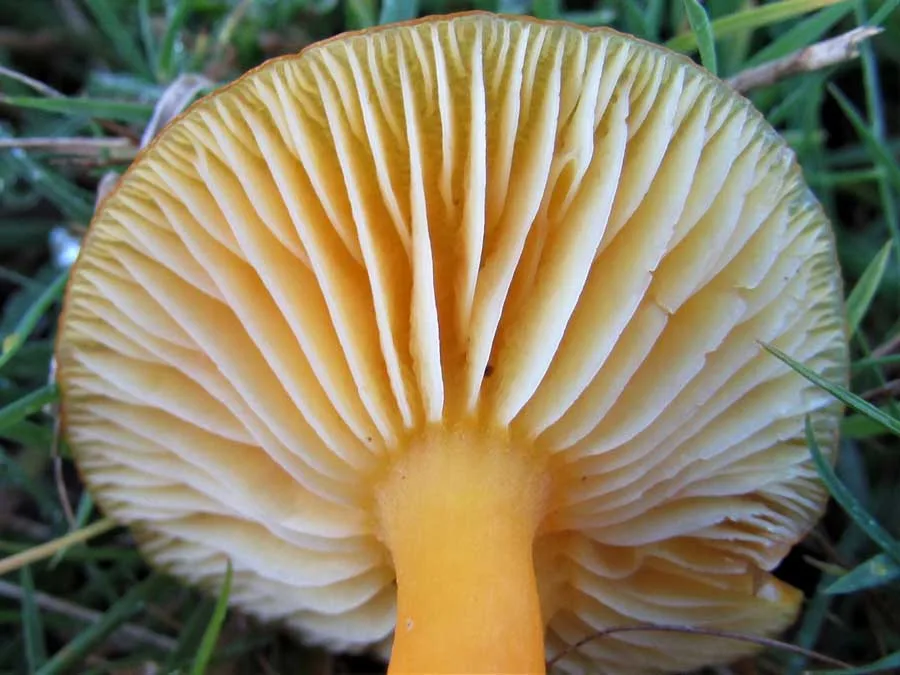
Pale yellow or off white, widely spaced and fairly thick. They are narrowly joined to the stem (adnexed). Transverse ‘gills’ running between the main gills are often visible.
Stem
4-7 cm long, 0.3-0.6 cm diameter. Concolourous with the cap, usually straight and sticky to slimy feeling.

Flesh
Concolourous with the outside, hollow in the stem.

Habitat
Unimproved fields, meadows, heaths, open woodland, grasslands, lawn and roadsides, they prefer land that has not been fertilised, treated with chemicals or ploughed.
Possible Confusion
The Butter Waxcap (Hygrocybe ceracea) has a greasy, not a sticky, cap, and broadly adnate/slightly decurrent gills, and s often smaller. There are other yellow waxcaps with slimy or sticky caps.
Other Facts
Being fairly rare and small this beautiful mushroom, although edible, is better to admire and photograph than to pick for any reason.
Waxcaps don’t like to be disturbed or sprayed so will be found where fields and woodland have been left alone.
It is now thought that waxcaps grow in association with mosses, before it was thought that waxcaps were saprophytic living on decaying organic matter.