Heath Waxcap


A rather pale and slimy Waxcap found on Heaths or shortly cropped grass, particularly where moss is also growing. There are two forms of Heath Waxcap that can be found, the more common orange form is shown here, there is a rarer yellow variant.
Scientific Name – Hygrocybe / Gliophorus laetus


Common Names:
Heath Waxcap (EN), Cap Cwyr y Rhosydd (CY), Wilgotniczka Jasna (PL), Nyálkás Nedűgomba (HU)
Please note that each and every mushroom you come across may vary in appearance to these photos.
Cap
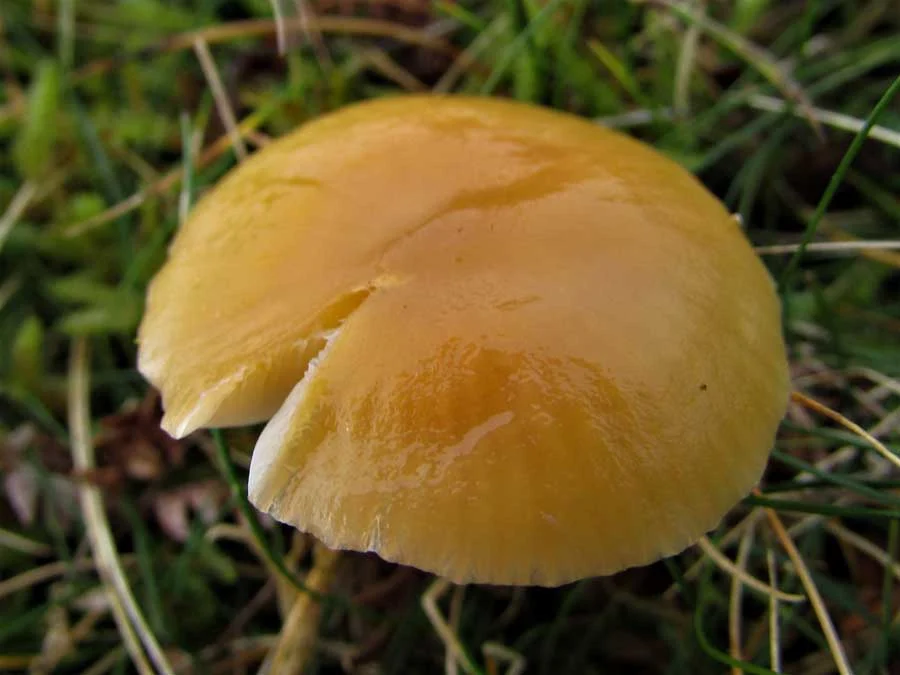
1.5-5 cm. Pale orange to tawny brown. Domed to start with but soon flattening out. The cap develops clear striations in line with the below gills and the edge of the cap can become ragged or toothed.
Gills
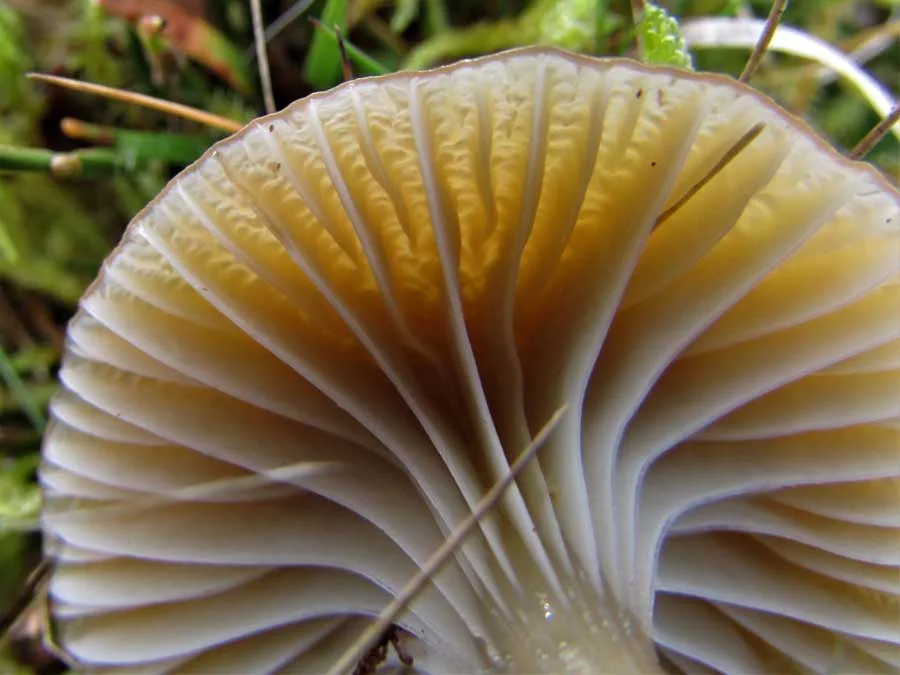
Pale grey/off white to start with then turning salmon pink. Running down the stem (decurrent) and widely spaced with tiny ‘gills’ or veins running laterally between the gills. The edge of the gills can be slimy.
Stem
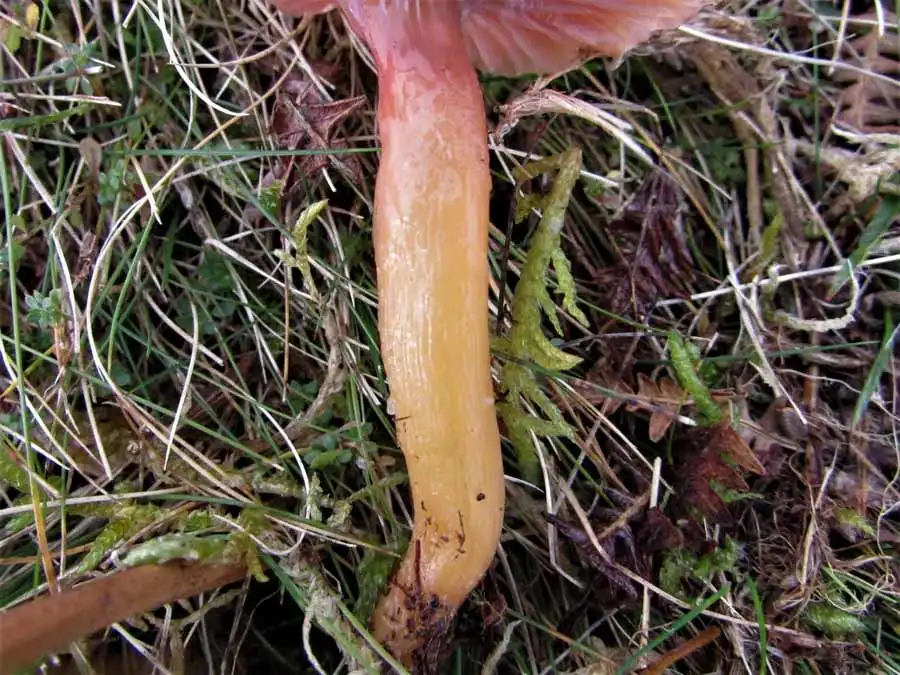
2-6 cm long, 2-4 mm diameter. The stem is pale orange sometimes with a pink or red apex when older. Quite slimy.

Flesh
Thin, hollow and pale orange/yellow.

Habitat
Mainly heaths with short grass and moss but can be found in other grassy habitats.

Possible Confusion
The Meadow Waxcap (Cuphophyllus pratensis) can look similar but is a bigger, more robust mushroom and generally drier feeling than the Heath Waxcap. Also, Parrot Waxcap (Gliophorus psittacinus) could be really variable in colour and sometimes might look rather similar than the orange form of Heath Waxcap.
Other Facts
The genus Gliophorus comes from the from Greek glia-, meaning glue, and the Latin -phorus from the Greek -phoros which means bearing: Gliophorus refers to the glue-like thick liquid that coats the caps, gills and stems of mushrooms in this genus. (Its former genus Hygrocybe is so named because fungi in this group are always very moist: Hygrocybe means ‘watery head’.) The specific epithet laetus means joyful or happy. Well, it is certainly a joy to come across a group of the lovely little waxcaps.