Medusa Mushroom
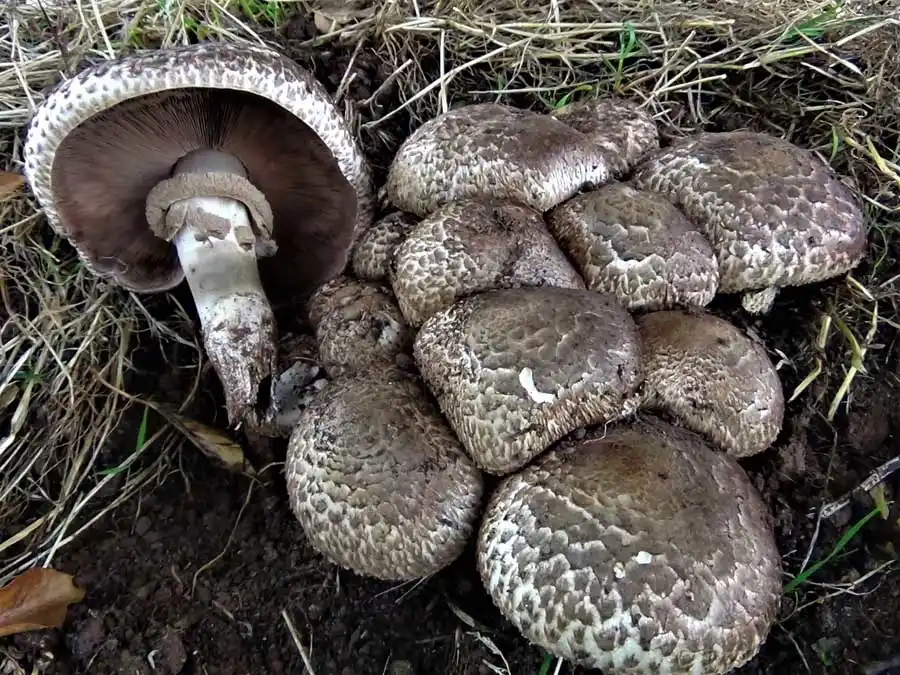


This really tasty Agaric is still considered rare in most books but it seems to have become more common over the last few years. It grows in clusters so it’s found in large numbers but needs careful cleaning to remove all of the grit.
Scientific Name – Agaricus bohusii



Common Names:
Medusa Mushroom, Pieczarka Kępkowa (PL), Csoportos Csiperke (HU)
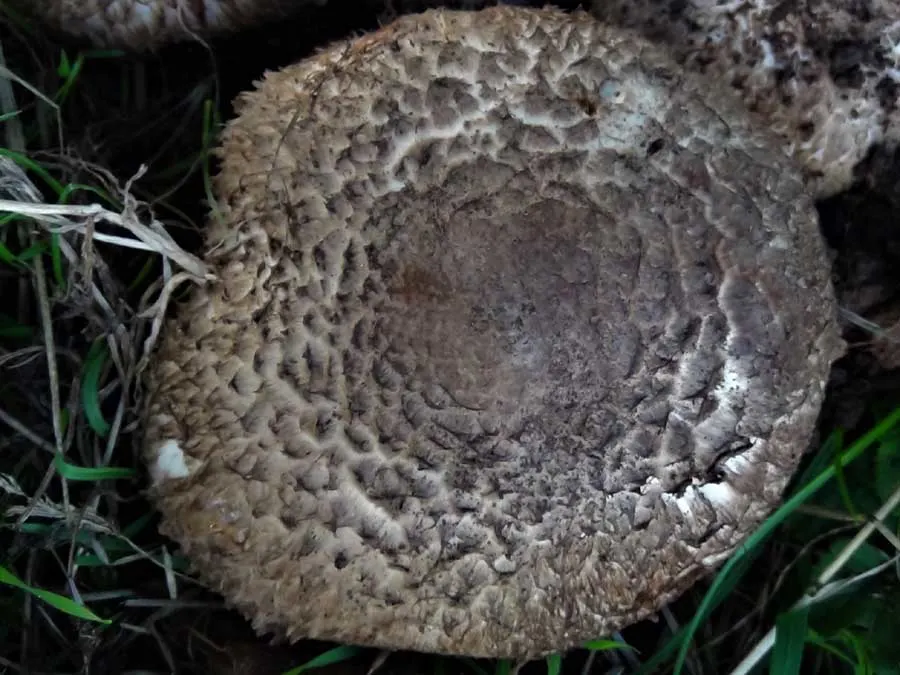
Cap
8-12 cm. A firm capped mushroom with brown triangular scales that are distinctly pointed and raised. The caps are often covered in soil as they burst through the ground so rapidly.
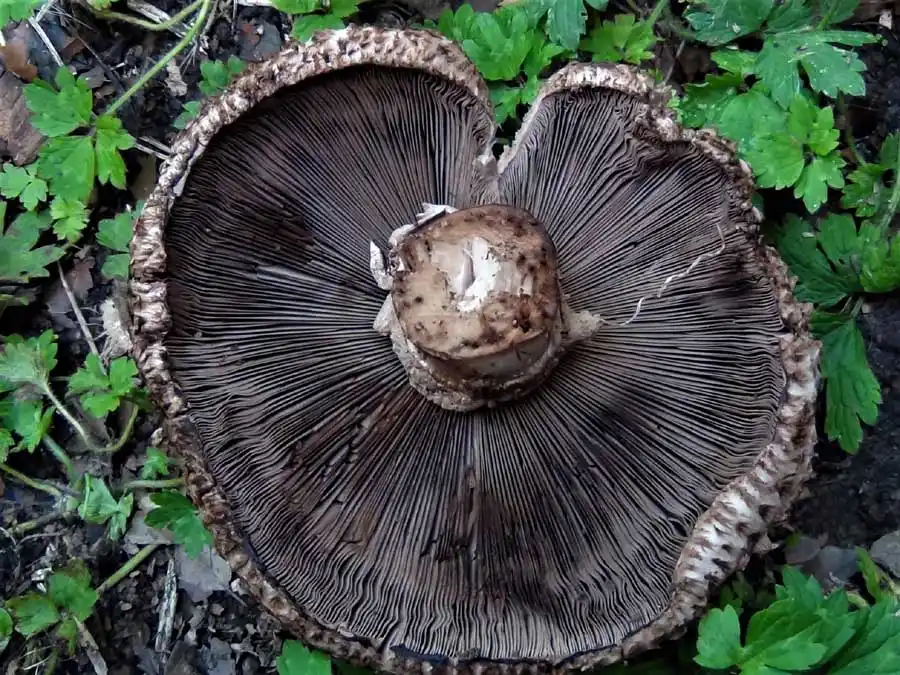
Gills
Crowded and free from the stem. The gills start off white to pale pink and soon turn red brown to very dark brown.

Stem
8-14 cm long, 1.5-2 cm diameter. The long stems have a tapered pointy base like a spindle and grow from a central point ,with the mushrooms in each cluster joined at the base of the stem.
It starts with a whitish colour but often becomes brown, sometimes scaly below the ring. The flesh will bruise red brown if damaged.
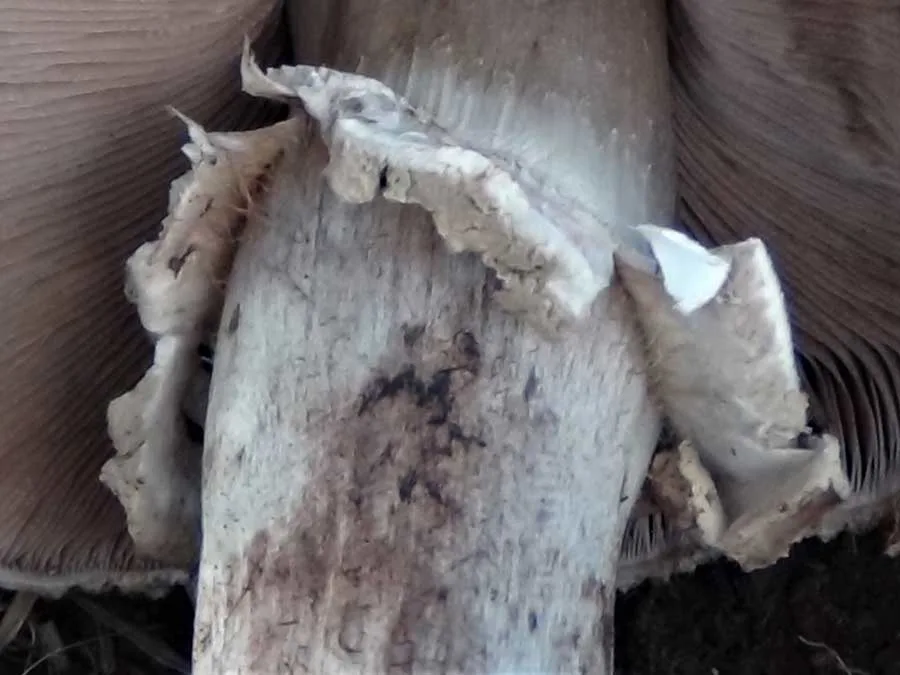
Skirt
Has a thick, superior skirt that is usually towards the upper part of the stem. It is pale brown, scaly and can appear double ringed.
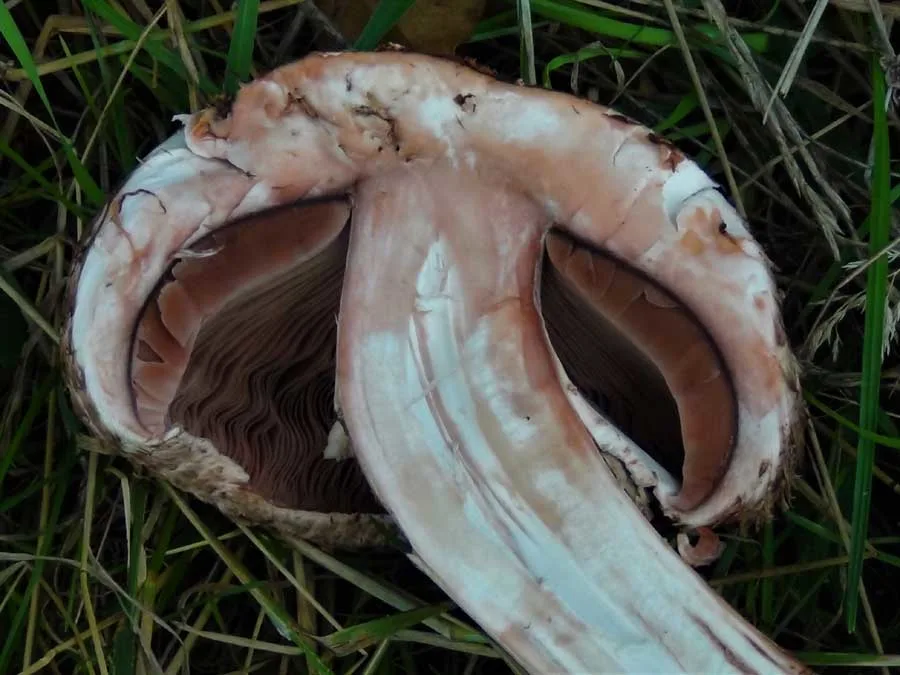
Flesh
Initially white but rapidly turning red-brown when exposed and then becoming darker brown.

Habitat
Growing from soil usually under trees in mixed woodland and parks.
Possible Confusion
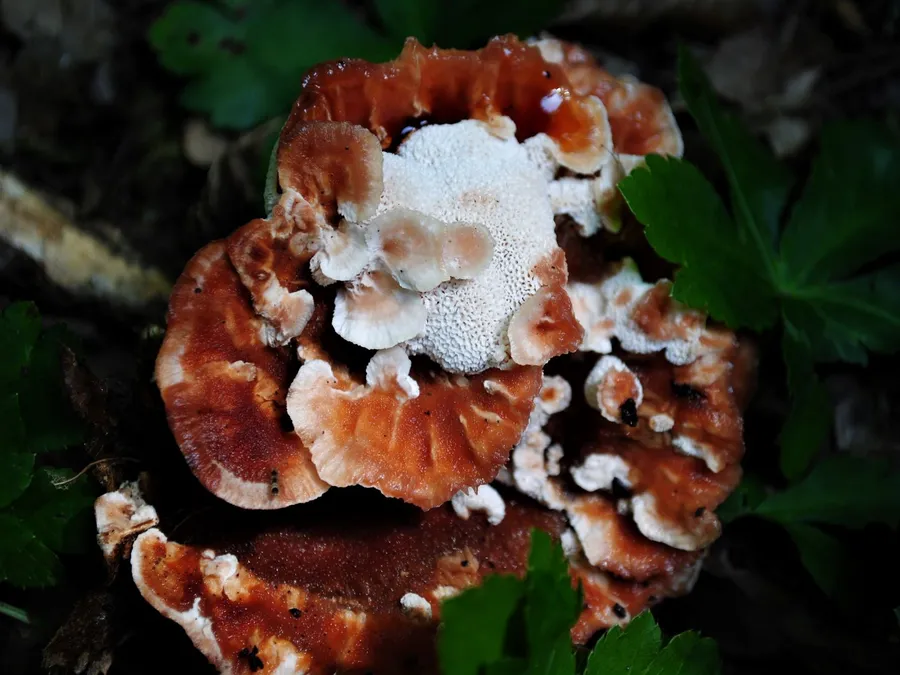
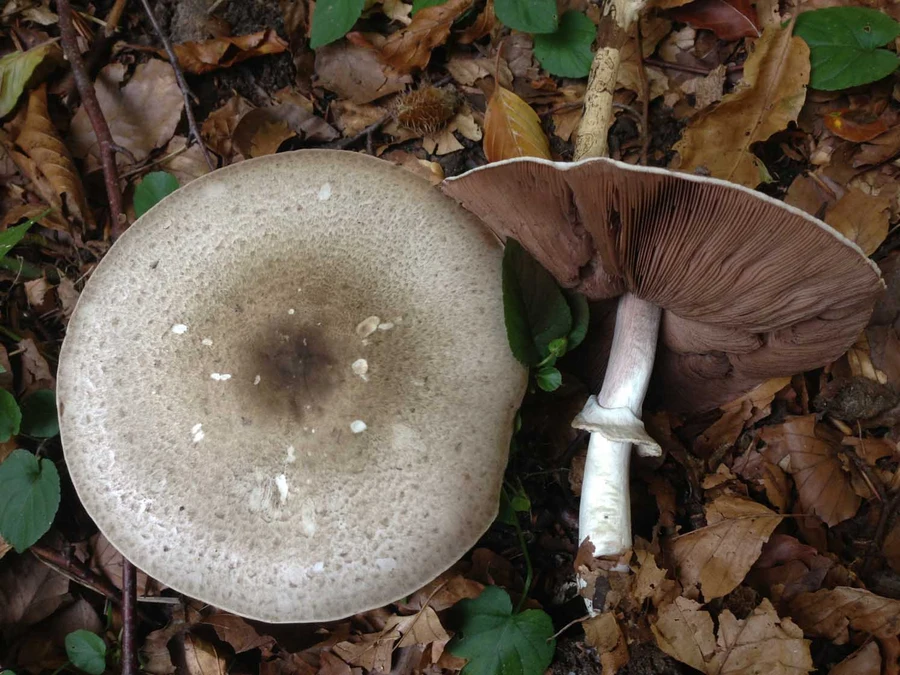
The Inky Mushroom (Agaricus moelleri), pictured, is the most similar toxic species but this has a phenol/Indian ink/iodine smell to put you off, the flesh does not turn red and each mushroom grows individually from the soil and not from a central point.
It could easily be confused with the Clustered Mushroom (Agaricus cappellianus) which is a good edible but gives a gastric upset to some people. The scales on the cap of the Clustered Mushroom are never raised.
A couple of edible Agarics can look similar but the clustered nature, raised scales on the cap and deep rooting stems of Agaricus bohusii are good aids for identification of this mushroom. The generic rule for Agaricus applies: being 100% it’s an Agaricus species, if doesn’t smell of phenol/carbolic and doesn’t stain bright yellow then it’s edible.
Other Facts
Agaricus bohusii is one of the most attractive of the Agaricus species – the true mushrooms, as some peoople call them. Although occasionally occurring singly, this species is most often seen fruiting in fasciculate groups with the stem bases conjoined at a common point. The common name Medusa Mushroom refers to the Greek gorgon, a beast in the form of a woman with snakes instead of hair.