Orange Peel Fungus
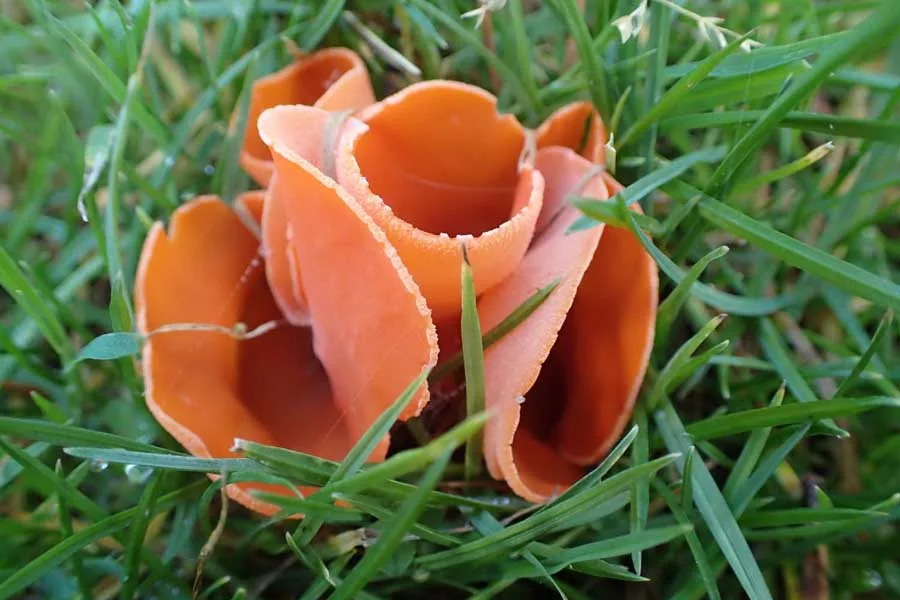


A very unusual, completely unmistakable. Though thin and rather brittle, the fruiting bodies are edible and have been consumed either raw or cooked.
Scientific Name – Aleuria aurantia
Please note that each and every mushroom you come across may vary in appearance to these photos.

Fruiting Body
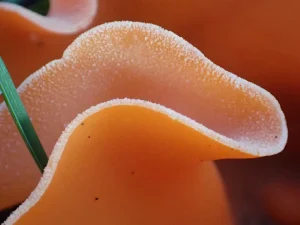
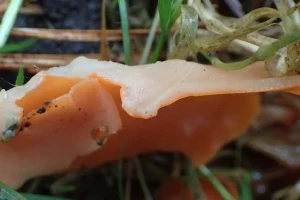
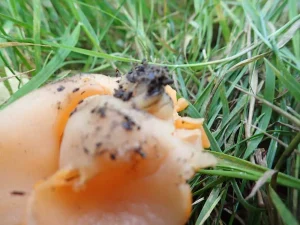
No distinct cap, just a sheet of thin fragile bright orange flesh usually corrugated forming a rosette sometimes with multiple ‘petals’. Can be completely flat to the ground, or more upright becoming 5cm tall.

Gills
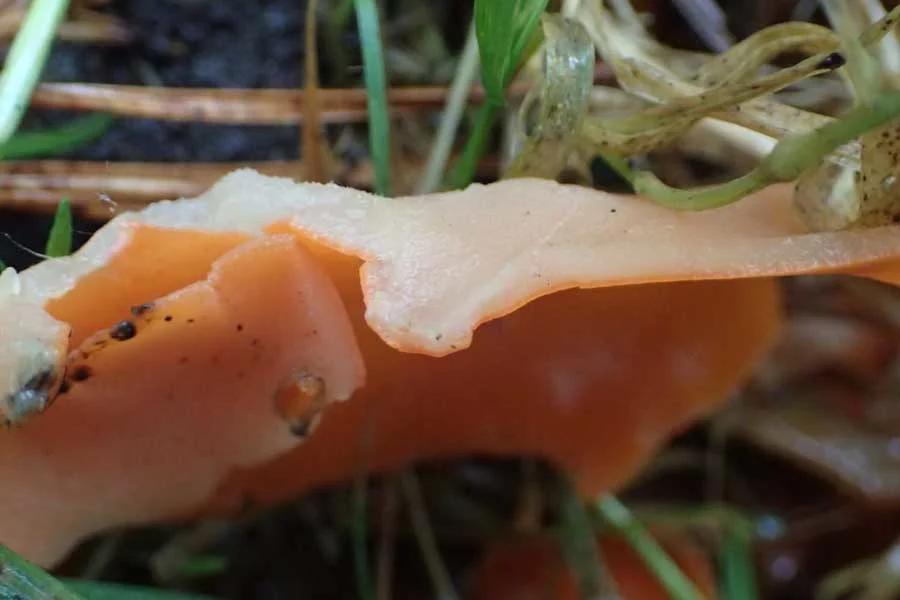
Does not have gills but the underside is paler than the upper surface and finely flocculose with a more matt finish.

Stem
No real stem, more a very short thickening in the middle of the cap going into the ground.
Flesh
Very thin, same colour as underside of cap.
Habitat
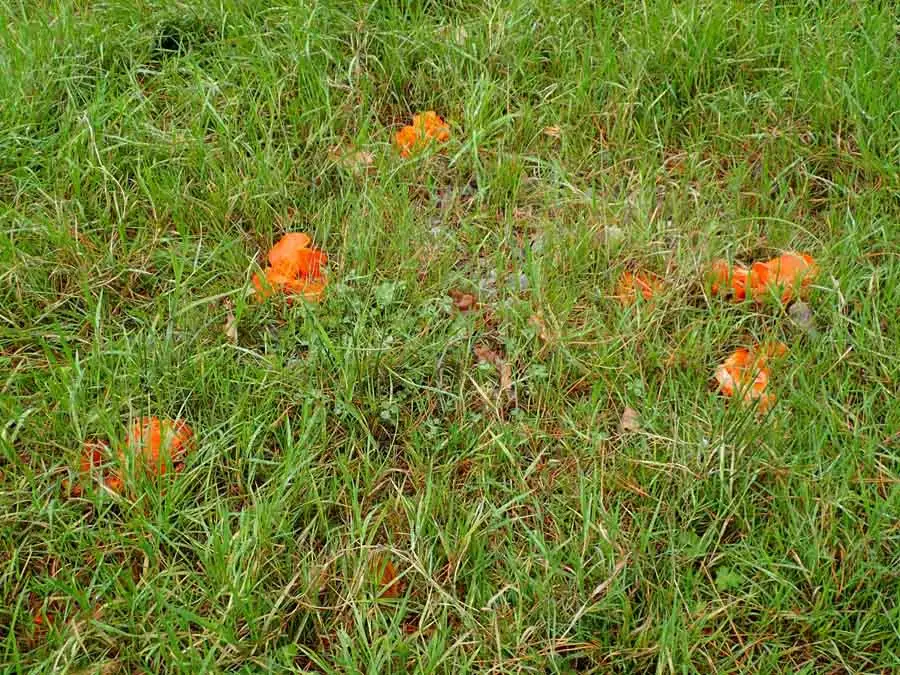
Saprobic on grass, gravel, or soil, usually compacted such as the side of paths.
Possible Confusion
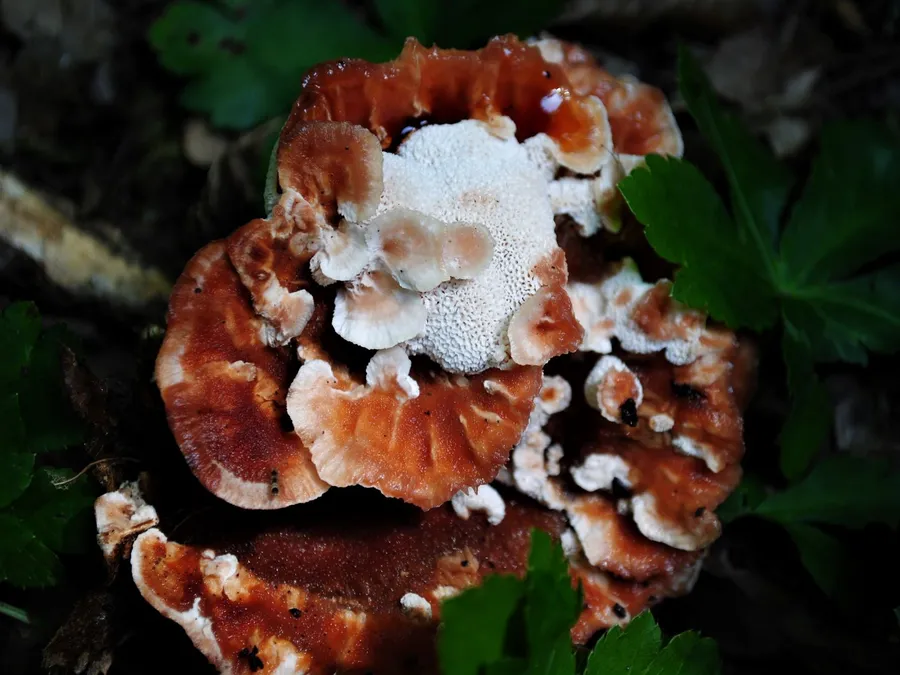
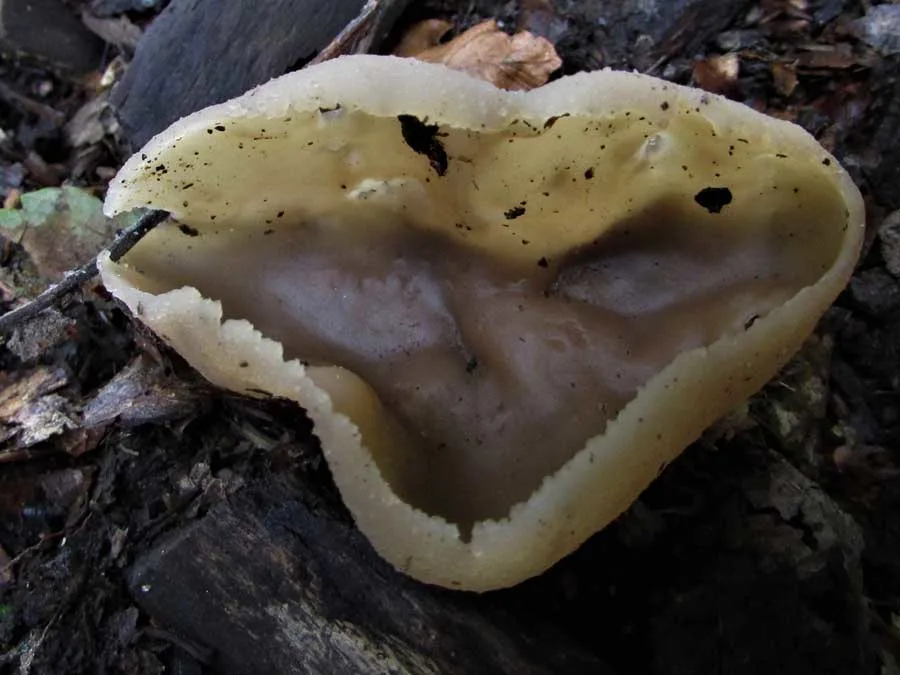
Some species from genus Peziza, pictured, can look similar but are brown to tan and never as bright orange as the Orange Peel Fungus. Pezizas are inedible not toxic.
The Scarlet and Ruby Elfcup are similar but bright red.
The Salmon Salad Fungus (Guepinia helvelloides), can look similar but is more a salmon pink than bright orange. It is edible but not worth eating so confusion would not be dangerous.

Spore Print
Pores are too small to see with the naked eye but are on the upper surface of the cap to allow the spores to be released into the air and be blown away.