Snakeskin Grisette
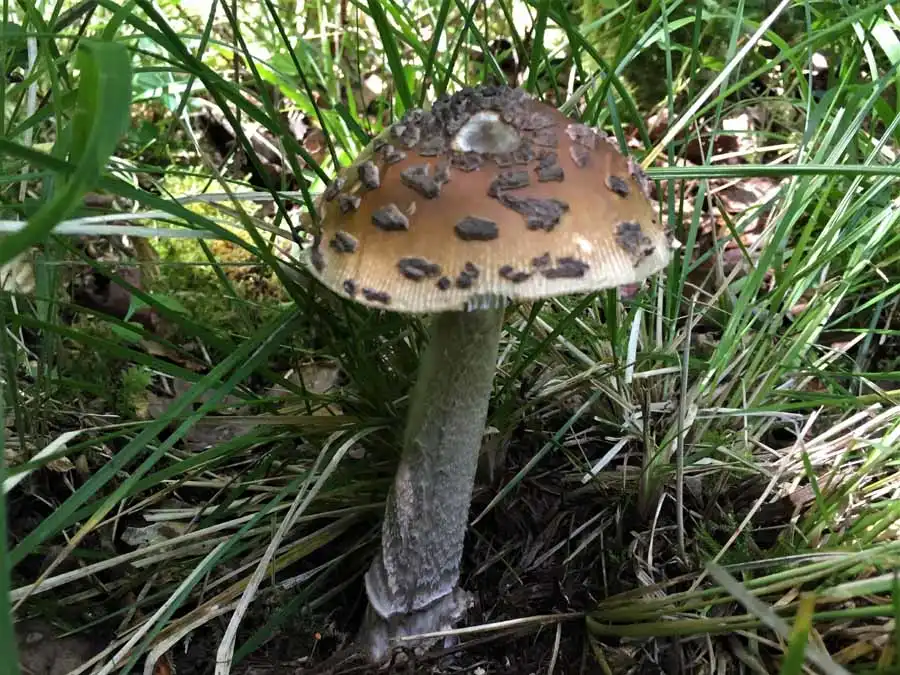


One of the Grisette section within the broader Amanita genus. Typically a chunky mushroom, with the cap usually narrower than the length of the stem. It has no ring, emerges from a volva or sack structure, parts of which adhere to the cap. It is uncommon and its edibility is debatable, however it is very similar to other toxic species such as the panther cap so not recommended for the novice forager.
Scientific Name – Amanita ceciliae


Common Names:
Snakeskin Grisette, Cecilia’s Ringless Amanita, Strangulated Amanita, Amanita Croen Neidr (CY), Muchomor Złotawy (PL), Óriás Selyemgomba (HU)
Please note that each and every mushroom you come across may vary in appearance to these photos.
Cap
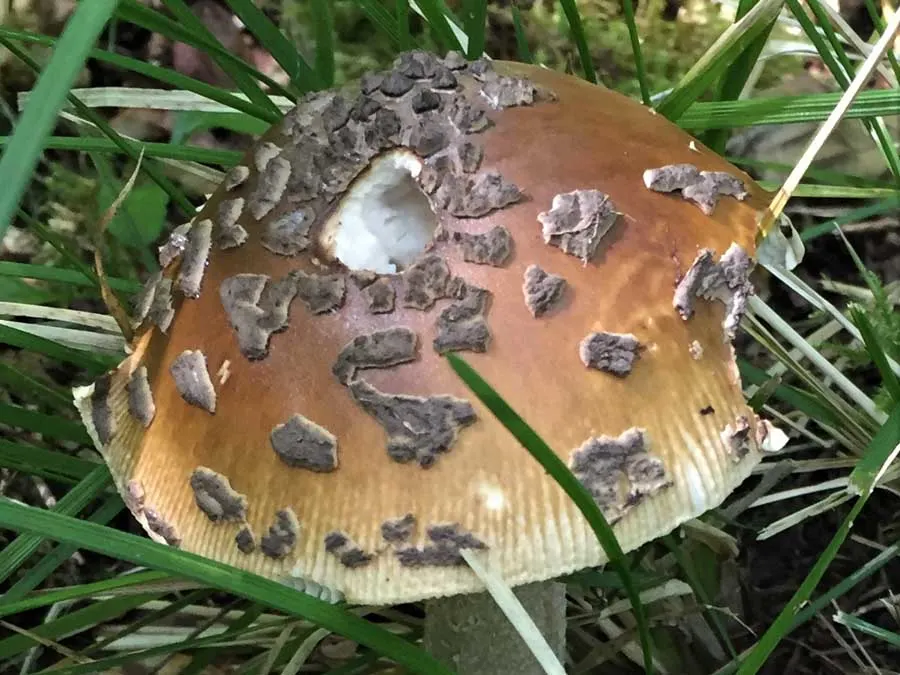
8-14 cm. Chestnut brown with easily removed grey scales. Well defined striations around the edge and a pale margin in immature specimens. Starting ovoid, convex but flattening out with age.

Gills
Typical Amanita, crowded white gills, free from the stem.

Stem
8-14 cm long, 1-2 cm diameter. No ring (as with all the Grisettes) but distinct shaggy grey zig-zag banding running across the stem – hence the term snakeskin.
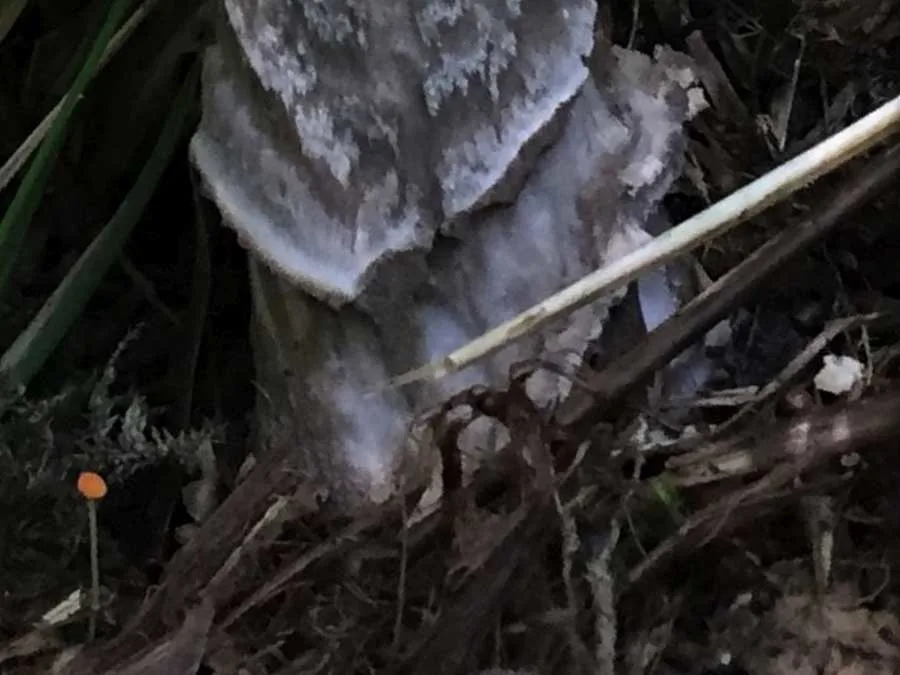
Volva
It has a volva but this is fragile and collapses quickly

Habitat
Mycorrhizal with deciduous trees, often in a parkland setting.

Possible Confusion
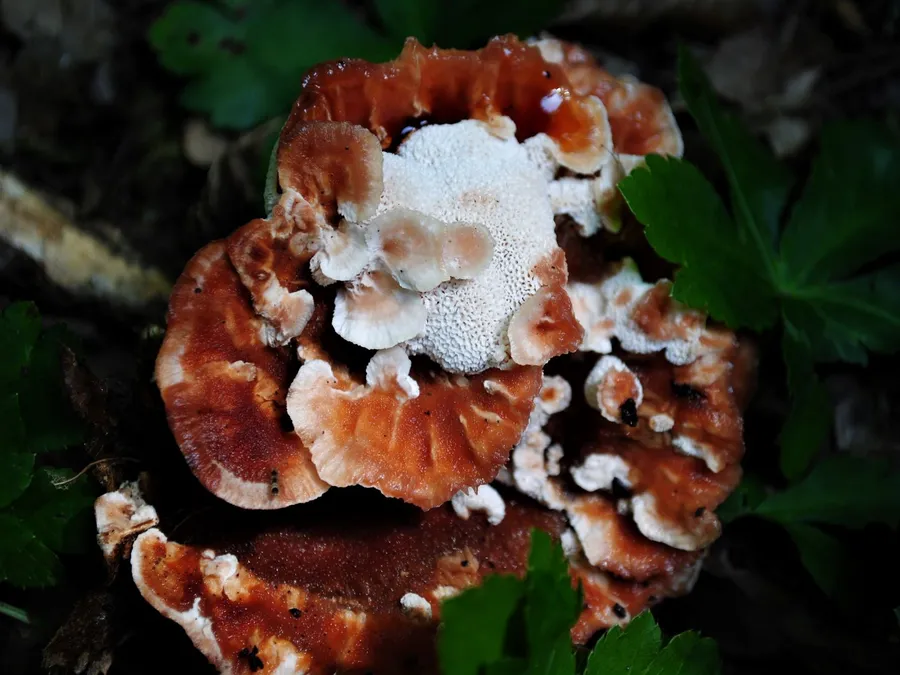
The edibility of this mushroom is unclear, however the big potential for confusion here would be one of the other seriously poisonous Amanitas, particularly the Panthercap (Amanita pantherina) pictured. The Snakeskin Grissette does not have a skirt but these can be easily lost from look-a-like mushrooms leading to potential confusion. The stem of the Snakeskin Grisette should be a key identifier however this is not a mushroom for the novice forager!
Spore Print
White. Globose, smooth and colourless (hyaline).
Other Facts
The name Amanita inaurata, given by Swiss mycologist Louis Secretan in 1833, has also been used for this species. In 1978, the name was declared nomenclaturally incorrect according to the rules of International Code of Botanical Nomenclature. Other synonyms are Agaricus ceciliae, Amanitopsis inaurata and Amanitopsis ceciliae. The present name, Amanita ceciliae, was given by Cornelis Bas, a Dutch mycologist, in 1984.
The species is commonly called “snakeskin grisette”. Another common name is “strangulated amanita”, referring to the tightly clasping volva. It is also called Cecilia’s ringless amanita after Cecilia Berkeley, the wife of M. J. Berkeley. The name was meant “to record the services which have been rendered to Mycology by many excellent illustrations and in other ways”.