Pale Brittlestem


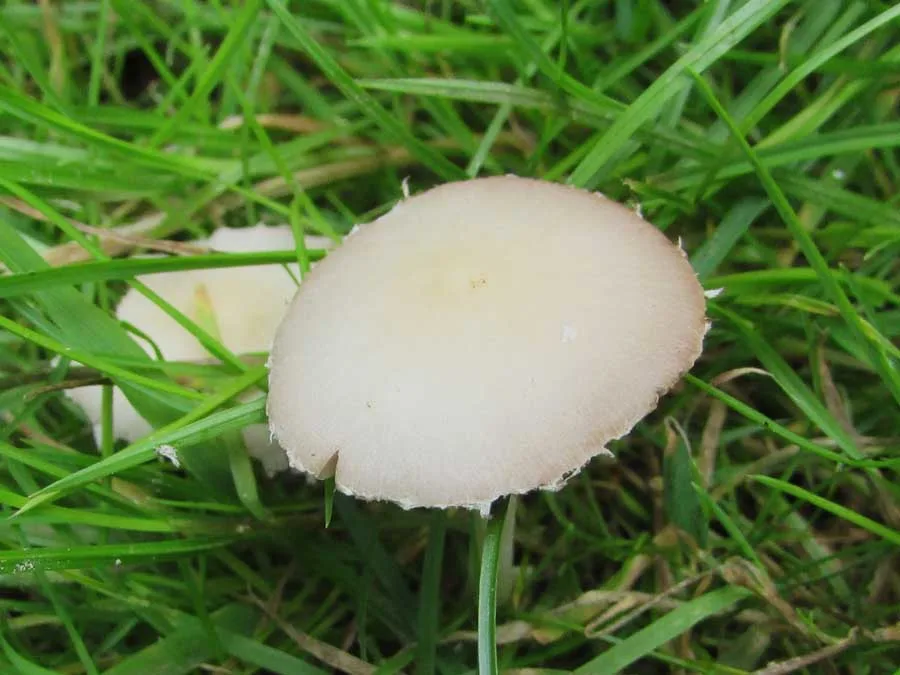
It is a fairly large Brittlestem species with a pale, sometimes almost white, hygrophanous cap. The margin of the cap often covered with ephemeral, lacey remnants of the partial veil. It usually grows in larger groups.
Scientific Name – Candolleomyces candolleanus


Common Names:
Pale Brittlestem (EN), Coesyn Brau Gwelw (CY), Kruchaweczka Zaroślowa (PL), Fehér Porhanyósgomba (HU)
Please note that each and every mushroom you come across may vary in appearance to these photos.
Cap
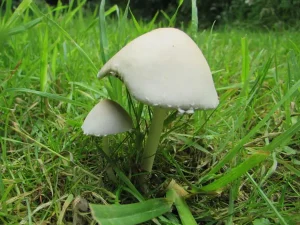
1.5–6 cm across. Bell-shaped (campanulate) at first, then convex, finally more or less flattened. The skin is hygrophanous, golden brown when young, but quickly fading; light to ochre-brown when wet, paler cream to white-cream, or pale greyish when dry. The centre of the cap is usually darker than the rest. Surface is smooth, margin more or less densely covered with hanging, lacey, white remnants of the ephemeral partial veil.
Gills
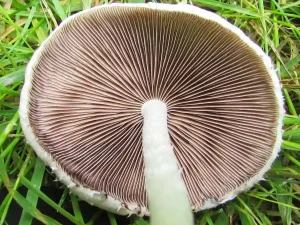
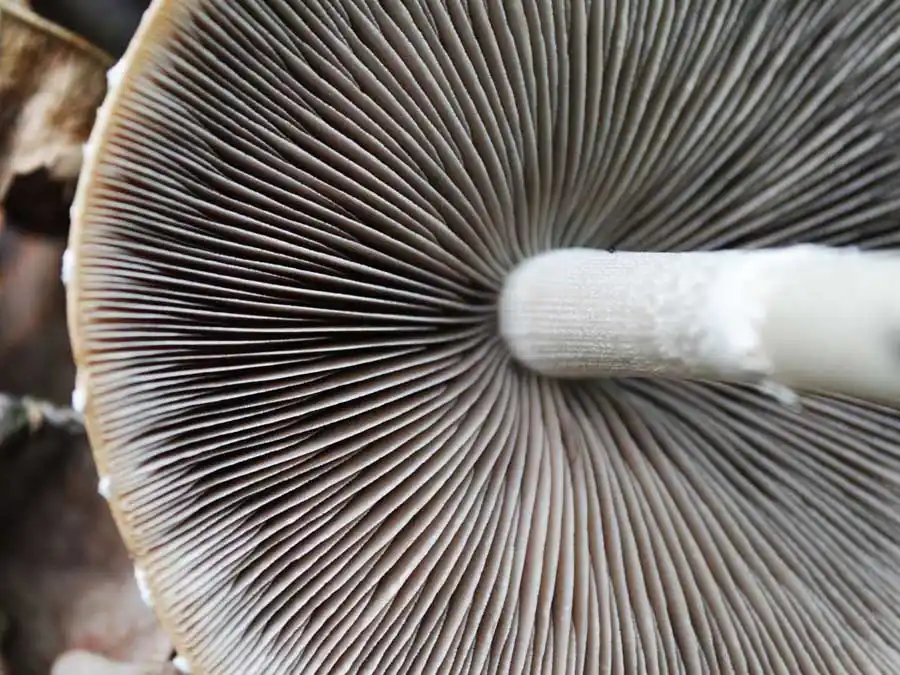
Fairly crowded, broadly (adnate) or narrowly attached to the stem (adnexed). White at first, soon becoming greyish or grey-lilac, then dark brown once the spores have matured. The edge of the gills are paler (white/whitish) and can be slightly toothed. When the fruitbody is young, the gills are covered with an ephemeral, white partial veil, which usually leaves visible remnants at the margin of the cap.

Stem
4–7.5 cm tall, 0.3–0.8 cm in diameter. White, hollowed, cylindrical with a swollen base. Its surface is smooth, but there are small powdery scales on the apex. Very fragile.

Flesh
Thin, white and very fragile.
Habitat
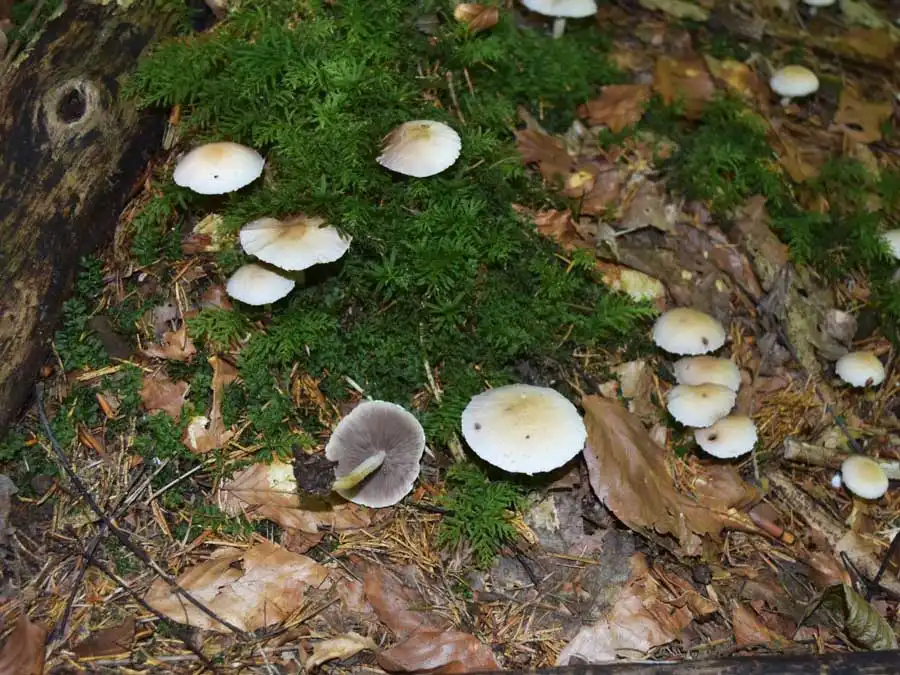
It grows usually in smaller groups, occasionally individually on soil or (hard)wood in woodlands, also, on grass debris on lawns, parks and gardens, or nutrient-rich mud in dried-out pools and ponds. Saprotrophic species.
Possible Confusion
There is only a few species, which might look rather similar in the UK by naked eyes.
Psathyrella leucotephra has a membranaceous ring/skirt around its stem, and is different in its micro details too. Its slightly larger spores have no germ pore, and it lacks pleurocystidia.
The Ephemeral Inkcap (Coprinopsis marcescibilis) it has fairly larger spores, also, it lacks pleurocystidia.
Taste / Smell
Edible, but almost never foraged. Most of the mycological literature states, it has an indistinctive taste and smell. However, based on our own experience, it has a pleasant, but weak mushroomy smell and a weak, but pleasant taste.
Other Facts
The basionym of this species dates from 1818, when the great Swedish mycologist Elias Magnus Fries described the Pale Brittlestem, giving it the binomial scientific name Agaricus candolleanus. (French mycologist Jean Baptiste Francois (Pierre) Bulliard had described this mushroom nearly thirty years earlier, calling it Agaricus appendiculatus; however, the specific epithet appendiculatus had already been used and so under ICBN rules for botanical/mycological binomial names Fries’ epithet takes precedence.) The currently-accepted scientific name Psathyrella candolleana dates from a 1913 publication by French mycologist G. Bertrand. (Currently we have no biographical information about Bertrand other than a publication date.)
In the past more commonly referred to as the Common Crumblecap, Psathyrella candolleana is a very delicate member of the inkcap-related group of fungi. This mushroom occurs in all kinds of woodlands and woodland clearings as well as on timber buried in damp grassland.