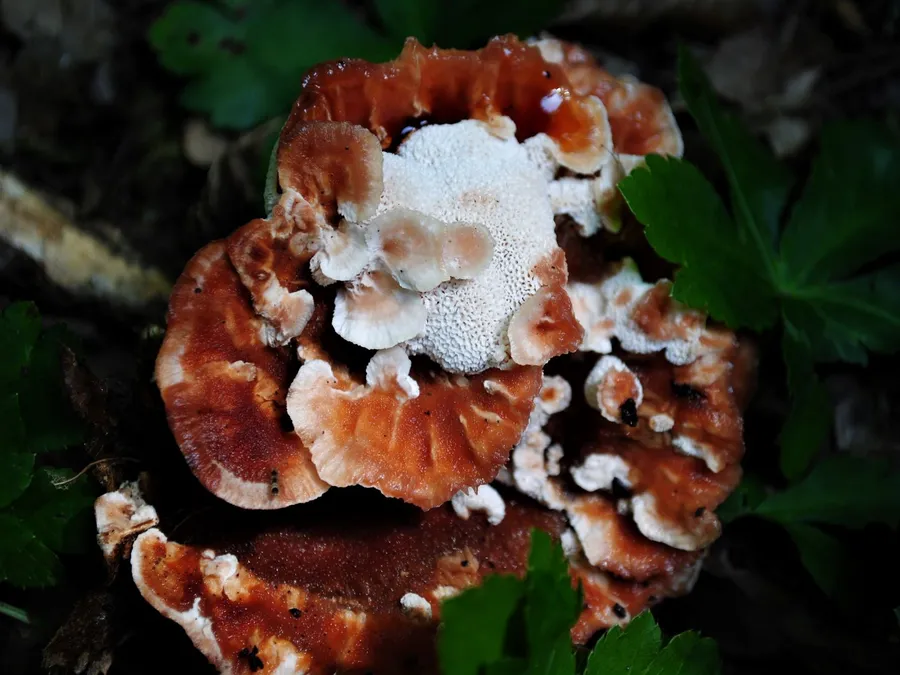
Oak Polypore
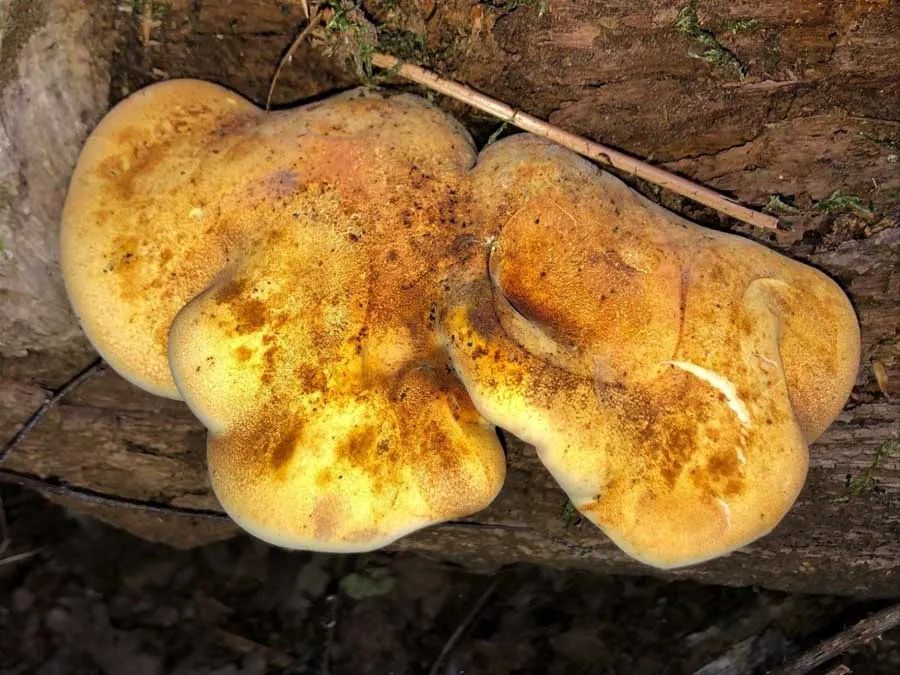


Oak Polypore (Buglossoporus quercinus) is a rare, protected bracket fungus found on ancient or veteran oak trees (250–800+ years old). It causes heart-rot in standing trees or fallen wood, typically forming 10–15cm wide, white-pored, and yellowish-brown, fleshy brackets that harden over time.
Scientific Name – Buglossoporus quercinus
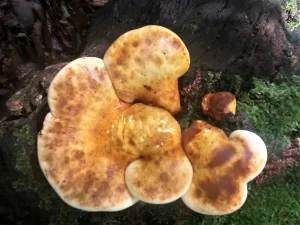
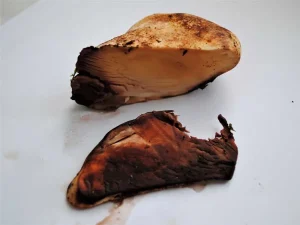
Common Names:
Oak Polypore (EN), Porojęzyk Dębowy (PL), Tölgyfa-Kérgestapló (HU)
Please note that each and every mushroom you come across may vary in appearance to these photos.
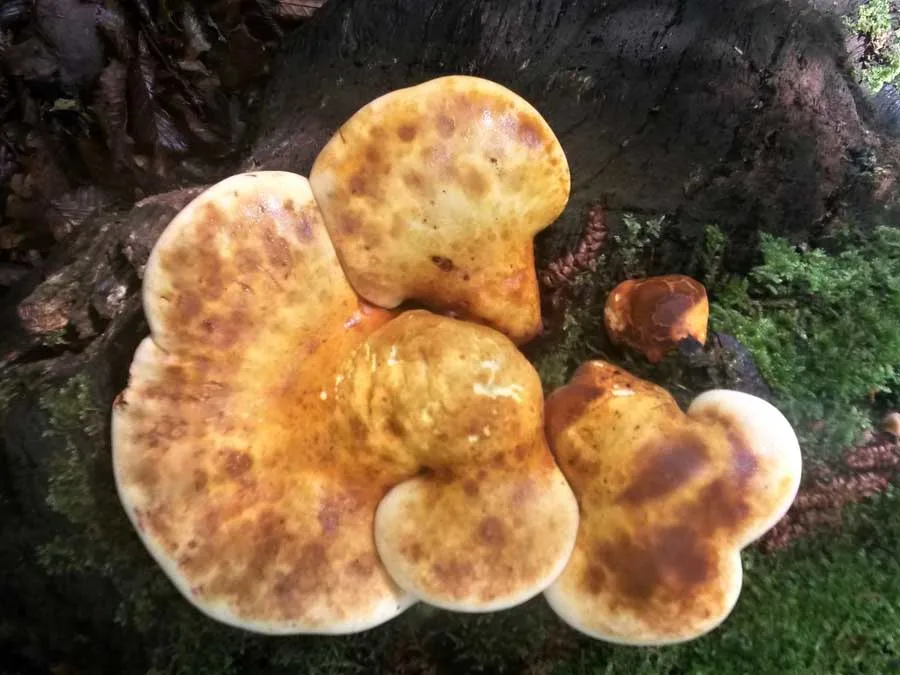
Fruiting Body
10–30 cm across, shelf-like to slightly convex, fan-shaped, semicircular or rounded. Margin rounded and finely suede-like. Whitish at first, then yellowing, but turns brownish with age. Upper surface smooth, finely velvety when young, might be cracking with age.
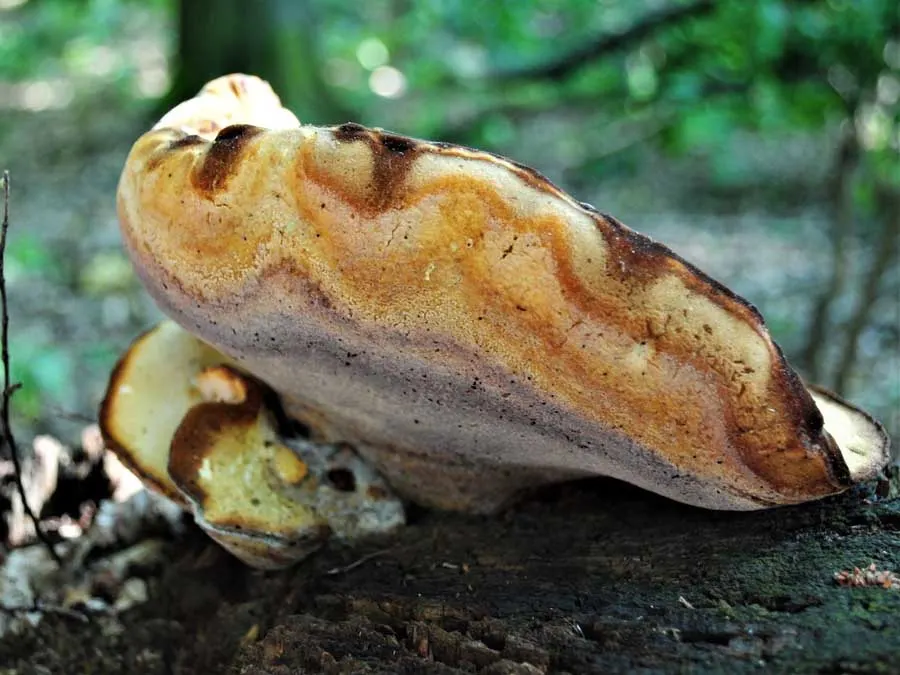
Pores
Tubes up to 4 mm long, white, pores circular, 2–4 per mm, pore surface is white when young, then off-white to buff, bruising brownish when damaged.
Flesh
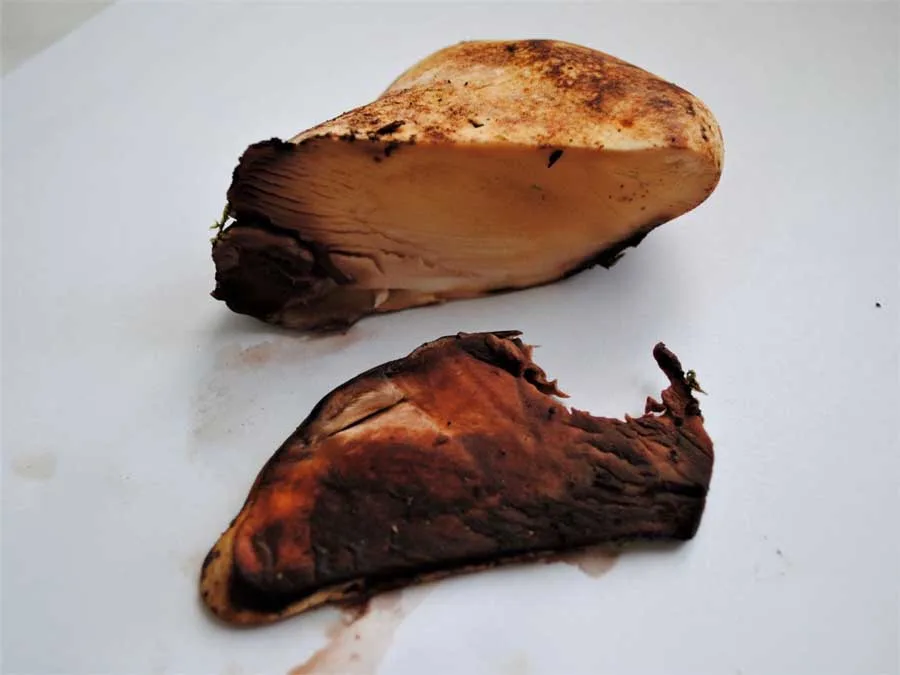
Up to 4 cm thick, soft or corky. Whitish, once cut bruising reddish first, then slowly turns brownish.
Habitat
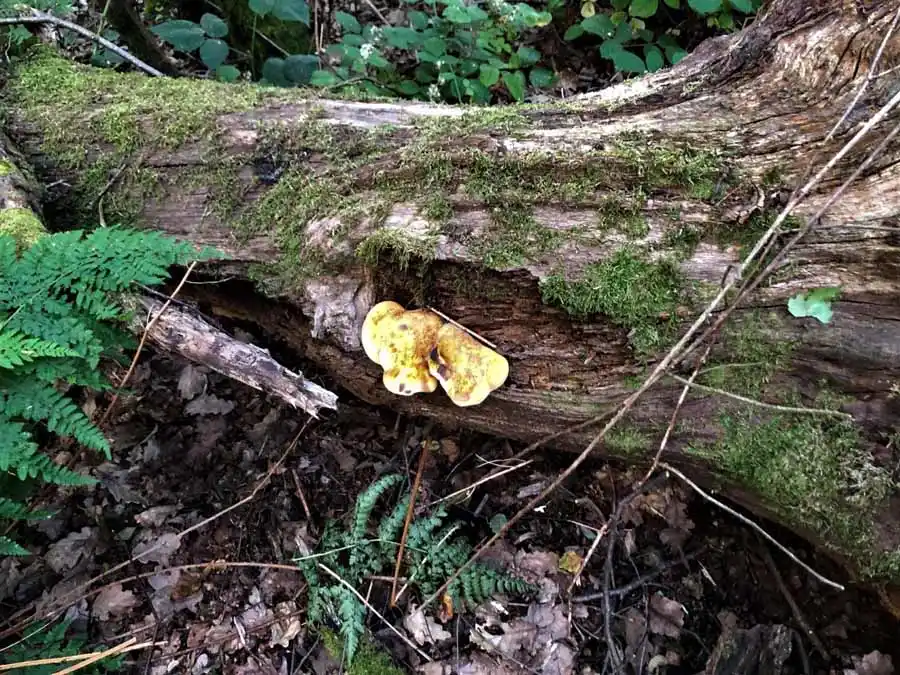
Often on barkless hulks, fallen bigger branches or cutting surface of Oak trunks. Saprotrophic on weak, old Oaks (some authors wrote it is parasitic on Oaks), causing brown-rot on its heartwood. Growing solitary or in small groups of 2-3 fruit bodies.
Possible Confusion
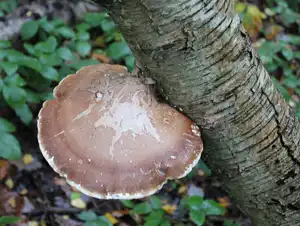
Birch Polypore (Fomitopsis betulina), pictured, grows on Birch only, and its flesh remains white.
Beefsteak Fungus (Fistulina hepatica) has red flesh with white veins and can often be found bleeding, while Oak Polypore has whitish flesh which turns reddish first then slowly to brownish.
Oak Bracket (Pseudoinonotus dryadeus) is mostly much tougher. Growing at the base of old Oak trees, on oak stumps or on the ground attached to buried roots. Often can be seen some dried amber coloured droplets on its margin.
Chicken of the Woods (Laetiporus sulphureus) is bright yellow everywhere, including its flesh.
Other Facts
The scientific name changed recently to Fomitopsis pulvina, but apart from mycologists, nobody uses it just yet, so we decided to leave the scientific name as it was before, until the new name became more well-known.
This change is supported by DNA-evidence, and the relevant publication is:
Spirin V, Runnel K, Vlasák J, Viner I, Barrett MD, Ryvarden L, Bernicchia A, Rivoire B, Ainsworth AM, Grebenc T, Cartabia M, Niemelä T, Larsson KH, Miettinen O: The genus Fomitopsis (Polyporales, Basidiomycota) reconsidered. Studies in Mycology, 2024.
In March 2025 the IUCN (International Union for Conservation of Nature) added 1000 fungal species to the IUCN Red List of Threatened Species. The IUCN (Global) Conservation Status of Oak Polypore (Fomitopsis pulvina, syn: Buglossoporus quercinus) is: VU – Vulnerable, with decreasing population.