Sepia Bolete
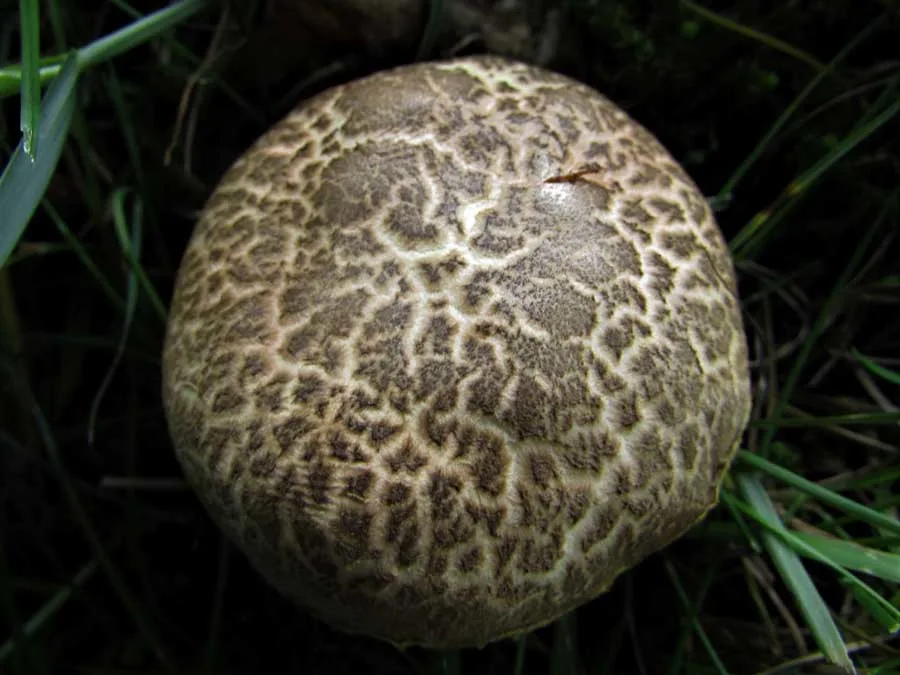


A rather unspectacular Bolete that can be difficult to identify to species, particularly as it ages. Although edible, this mushroom is rather tasteless and has a very spongy texture.
Scientific Name – Boletus / Xerocomellus porosporus


Common Names:
Sepia Bolete (EN),, Cap Tyllog Llwydfrown (CY), Suchogrzybek Obciętozarodnikowy (PL), Csapottsprórás Tinóru (HU)
Please note that each and every mushroom you come across may vary in appearance to these photos.
Cap
5-9 cm. Starts olive brown and covered in tiny velvet like hairs, becoming paler and cracking, revealing cream to pale yellow flesh.
Pores
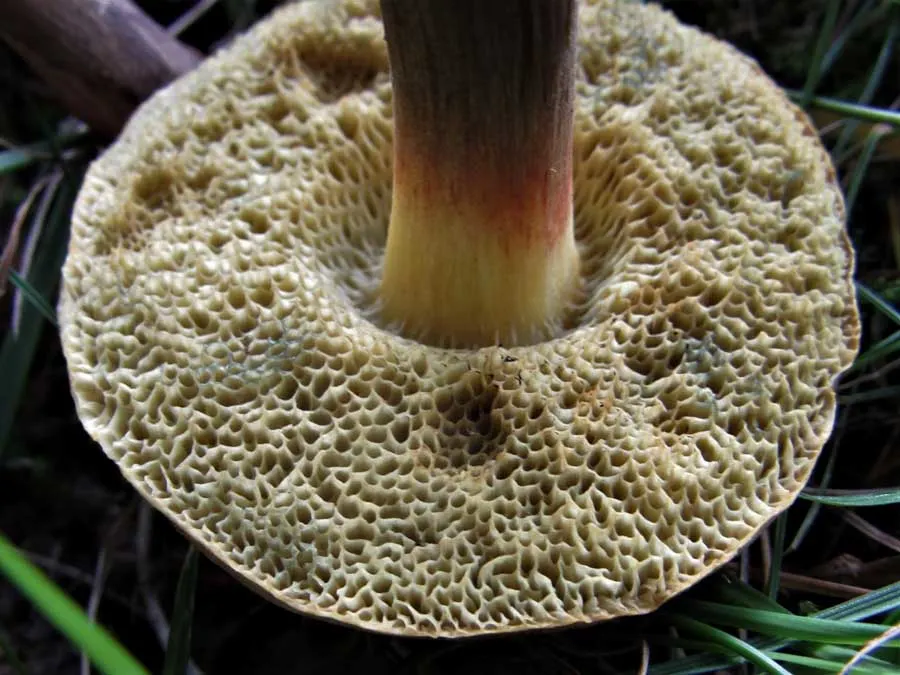
The pores are angular and start lemon yellow but darken with age and can then bruise blue. Xerocomoid Boletes have pore tubes that will generally split in half if the cap is torn apart, other Boletes pore tubes will normally separate and remain whole leaving them unbroken.

Stem
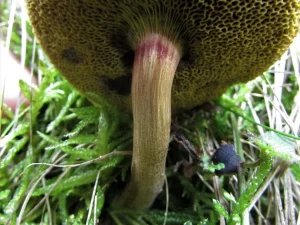
6-10 cm long, 1-2.5 cm diameter. The top of the stem is bright yellow with a red zone surrounding the stem near the apex becoming brown/grey lower down, as the mushroom ages it looses these features with the stem becoming grey/brown with a slightly lighter apex.
Flesh
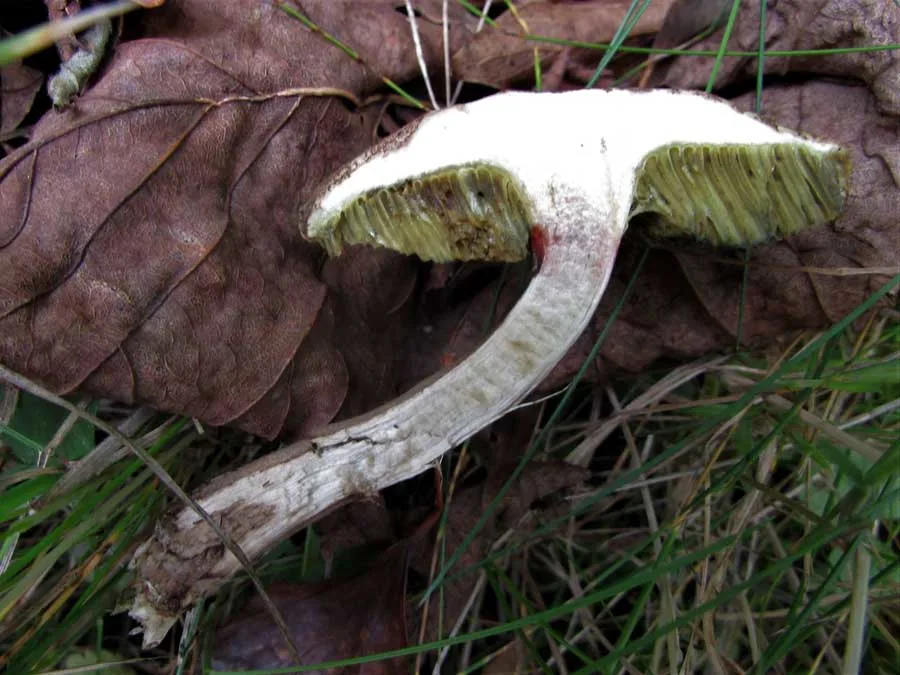
White/yellow in the cap and top of the stem, becoming red/brown towards the base. Can stain blue when cut, especially in the cap.
Habitat
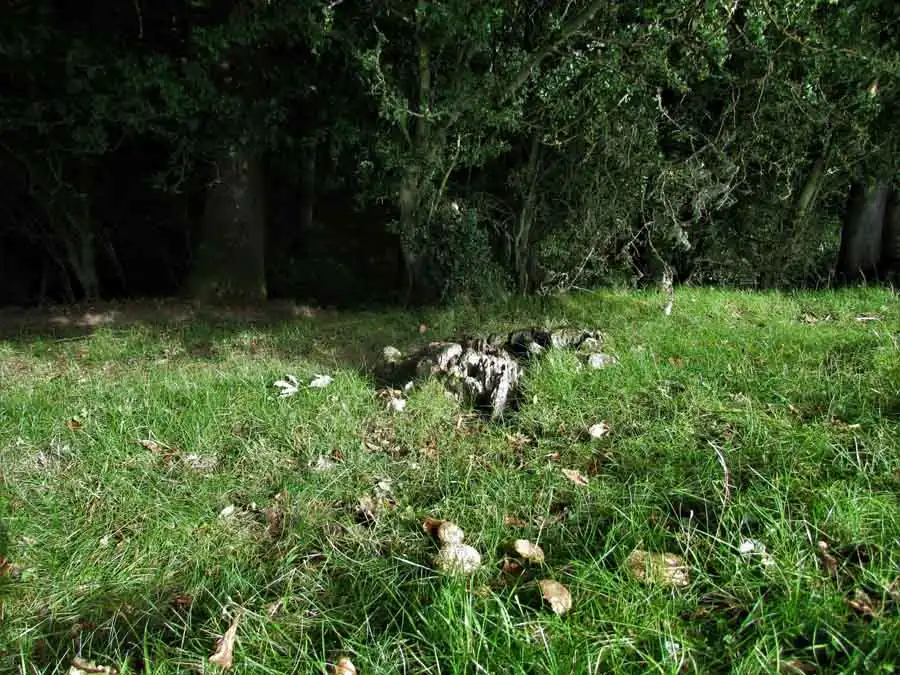
In mixed deciduous woods and hedgerows, more often with Oak.

Possible Confusion
3 other Xerocomellus species are frequently or occasionally recorded in VC55. All have dry, brown caps and yellow pores that stain blue when bruised. Identification can be difficult, and the species have been much confused in the past.
Red Cracking Bolete (X. chrysenteron) is associated wth conifers, rarely Beech, never Oak. It has a zone of red flesh under the cap surface that is revealed when it is cracked or nibbled. Matt Bolete (X. pruinatus) is associated with Beech. The cap is usually darker plum-brown or red brown, not cracking, and has a narrow red margin. Bluefoot Bolete (X. cisalpinus) is associated wth deciduous and coniferous trees, including oak. The cap has a zone of red flesh under the cap surface that is revealed when it is cracked or nibbled. The flesh of the stipe and cap slowly stains slowly blue throughout when cut; the surface of the stipe also stains blue a few minutes after it is bruised.
Other Facts
Xerocomellus pruinatus is generally considered edible, but it is regarded as a mushroom of poor texture and flavour. It is unlikely that you will ever find sufficient for this bolete to ever justify making a meal of it – in any sense!