Yellow Stagshorn
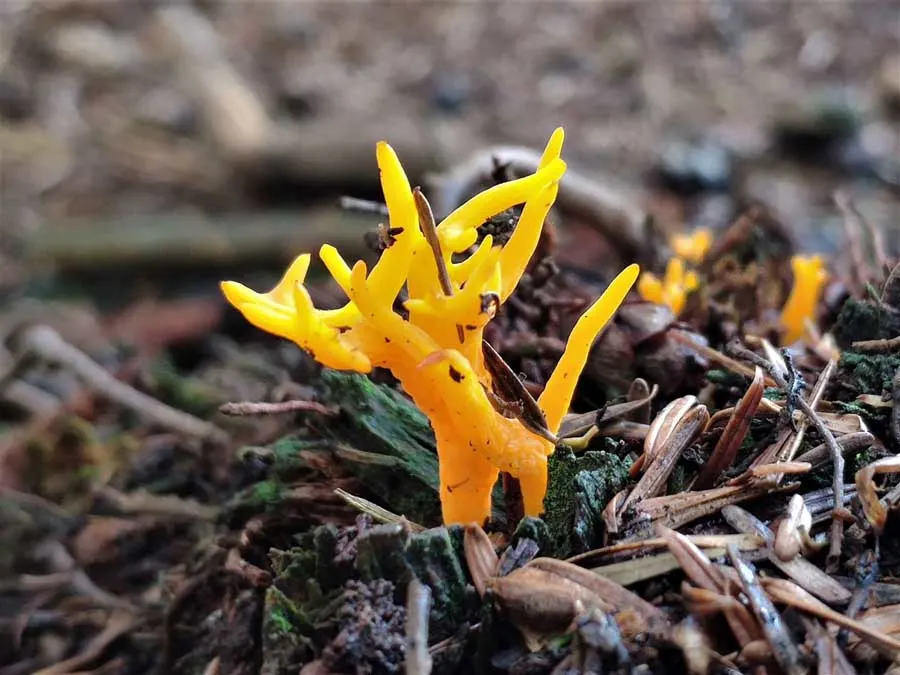


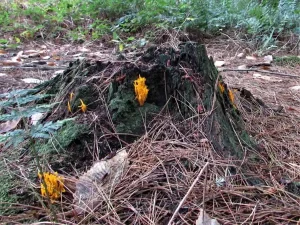
It is a really beautiful, inedible mushroom. One often can spot it from distance, because it looks like a freshly set fire emerging from conifer stumps or roots.
Scientific Name – Calocera viscosa


Common Names:
Yellow Stagshorn (EN), Jelly Antler Fungus (US), Corn Carw Melyn (CY), Pięknoróg Największy (PL), Narancsszínű Enyveskorallgomba (HU)
Please note that each and every mushroom you come across may vary in appearance to these photos.
Fruiting Body
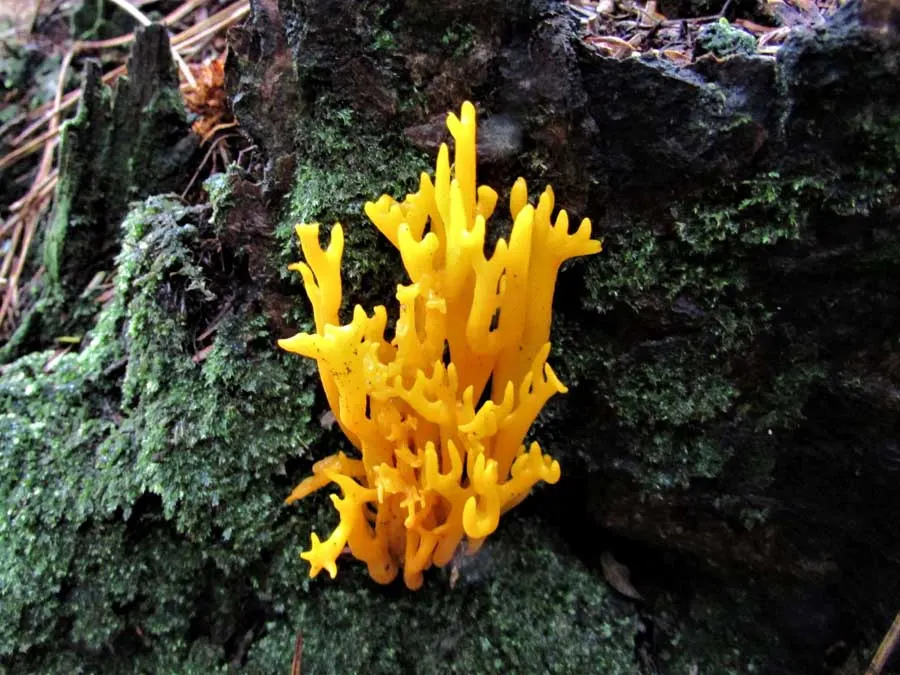
2–9 cm tall, 2–5 cm wide, coral-like, branched (like an antler) and forked. It has a more or less deeply rooting stem. The whole fruit body is bright yellow to orange, darker orange to red when dry, might be paler towards the base. Smooth, viscid or tacky, especially after rains.
Flesh
Yellow, somewhat viscid, tough when dry.
Habitat
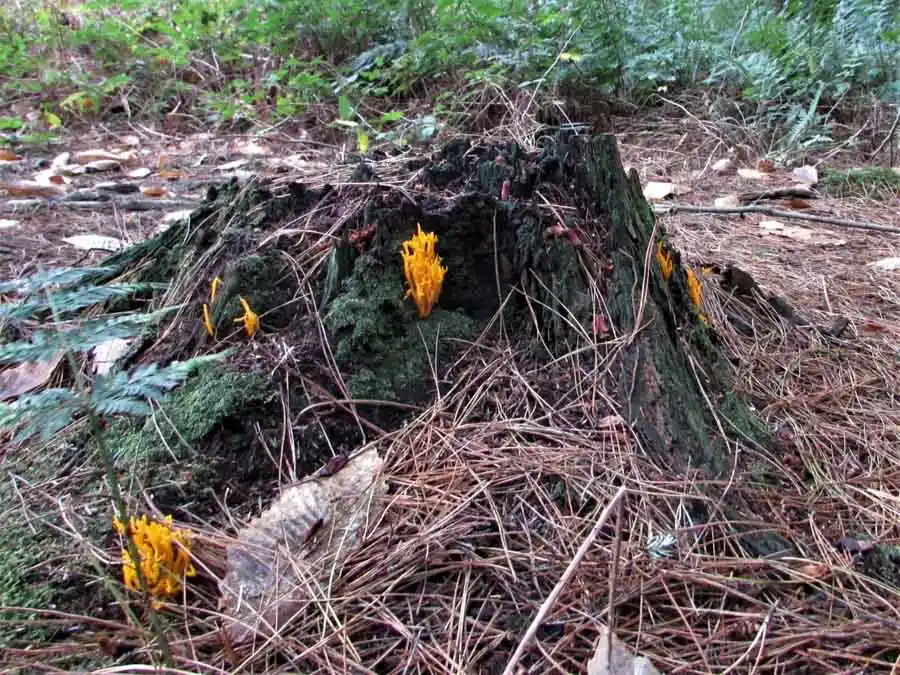
Saprotrophic on woods. Grows on stumps, dead branches or roots of Pine and Spruce trees, regardless if they are in a forest, a plantation, a park or a private garden. Sometimes can be found on conifer bark woodchips too.
Possible Confusion
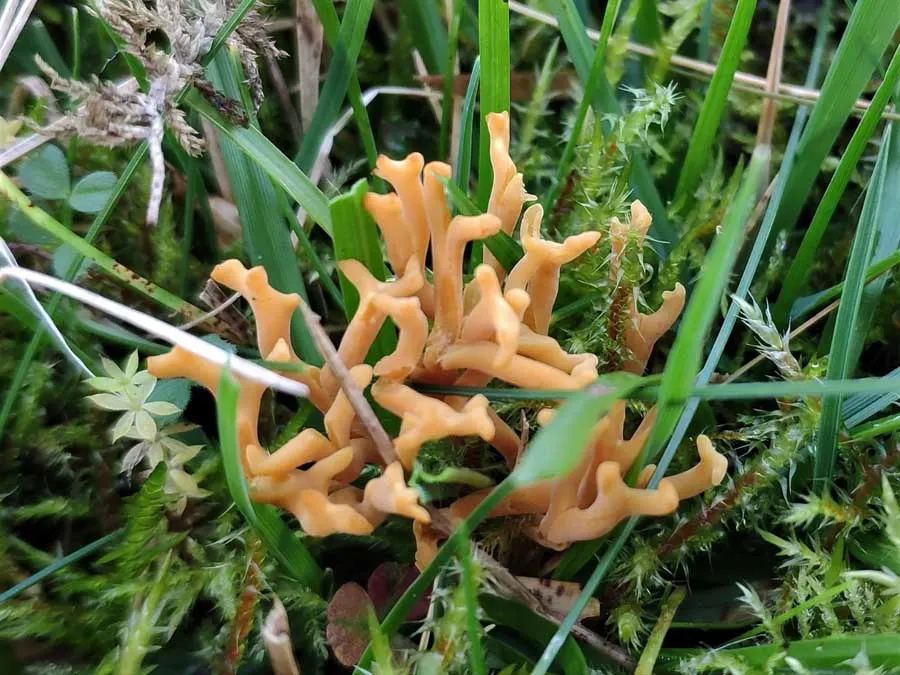
Meadow Coral (Clavulinopsis corniculata), pictured, looks rather identical, but it is often a bit paler and not slimy, not to mention it is growing on different habitat (among grass and mosses).
Taste / Smell
Inedible (there is no tradition of consuming it). Taste and smell is not distinctive.
Other Facts
Calo- as a prefix means beautiful, while the extension -cera comes from ancient Greek and means ‘like wax’, so that the genus name Calocera translates to ‘beautiful and waxy’ – and surely Calocera viscosa, which is the type species of its genus, deserves such an accolade. Just as it sounds, the specific epithet viscosa simply means viscous, sticky or greasy, and when it is wet the Yellow Stagshorn does indeed have a sticky surface.