Shaggy Bracket
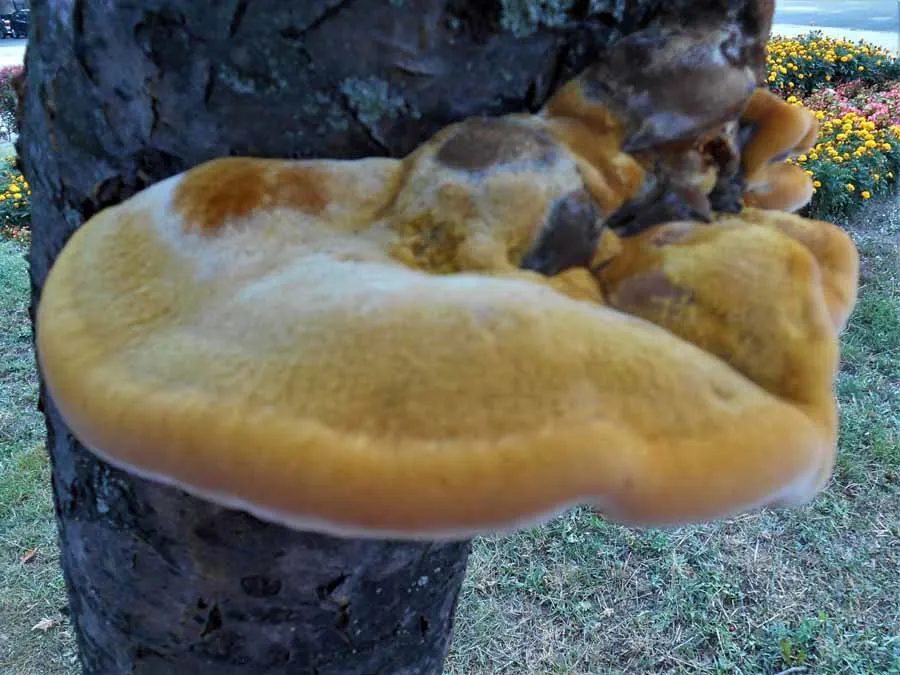


An annual, medium to large bracket fungus. Unmistakable when young, but when it is getting old it is probably the one which is most commonly mistaken with Chaga.
Scientific Name – Inonotus hispidus



Common Names:
Shaggy Bracket (EN), Shaggy Polypore (US), Ysgwydd Felfed (CY), Błyskoporek Szczotkowaty (PL), Almafa-Rozsdástapló (HU)
Please note that each and every mushroom you come across may vary in appearance to these photos.
Fruiting Body
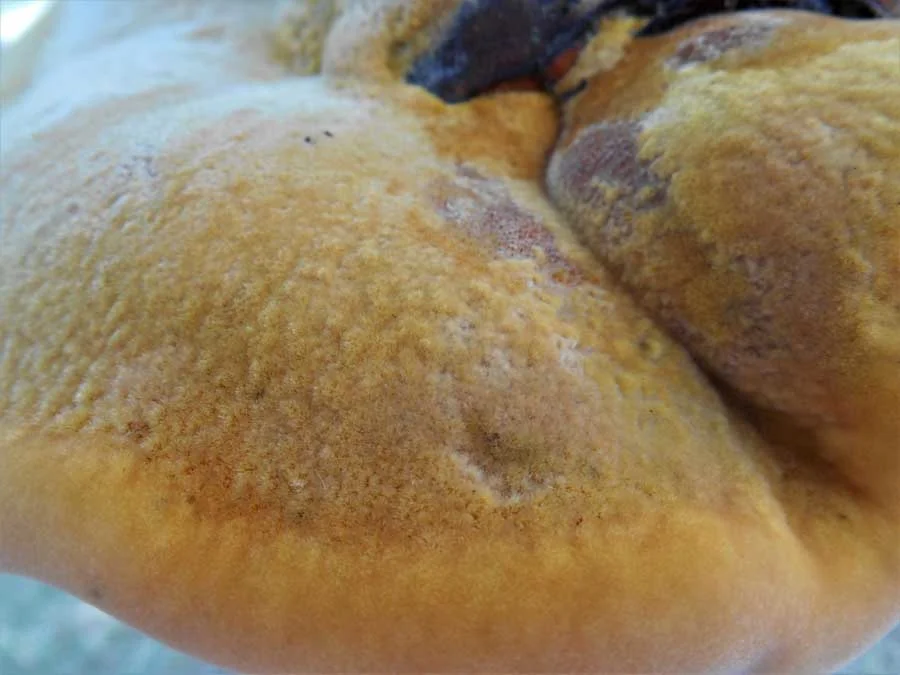
Annual, 10–30 wide and 5–8(10) cm thick, shelf-like. Soft and spongy when young, dry and brittle with age. Widely attached to its substrate, without having a stem (sessile).
Upper surface (skin): Rough, hairy (hirsute, hispid), zonate to azonate. Variable in colours from bright orangish red to reddish brown when young, dark brown to black with age. Margin obtuse, concolorous with the upper surface.
Pores
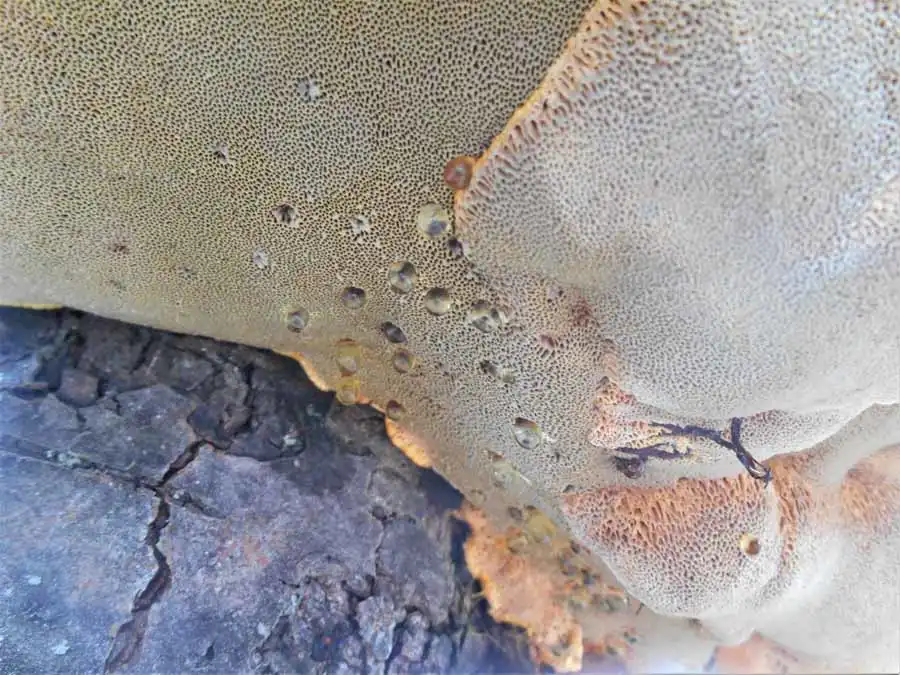
Tubes 5–20 mm long, soft, yellowish brown to dark brown when young, dark brown to almost black and brittle with age. Pores 1–3 per mm (sometimes even wider), angular, yellow to olive-yellow when young, turning dark rusty brown to almost black with age. It bruises brown if cut or otherwise damaged. Often secreting very pale yellow to amber coloured droplets (this phenomenon is called: guttation).

Flesh
Up to 5 cm thick. Azonate, yellowish, soft, hygrophanous, spongy to fleshy when young, dark brown to black, brittle when dry. Turns black with KOH.
Habitat
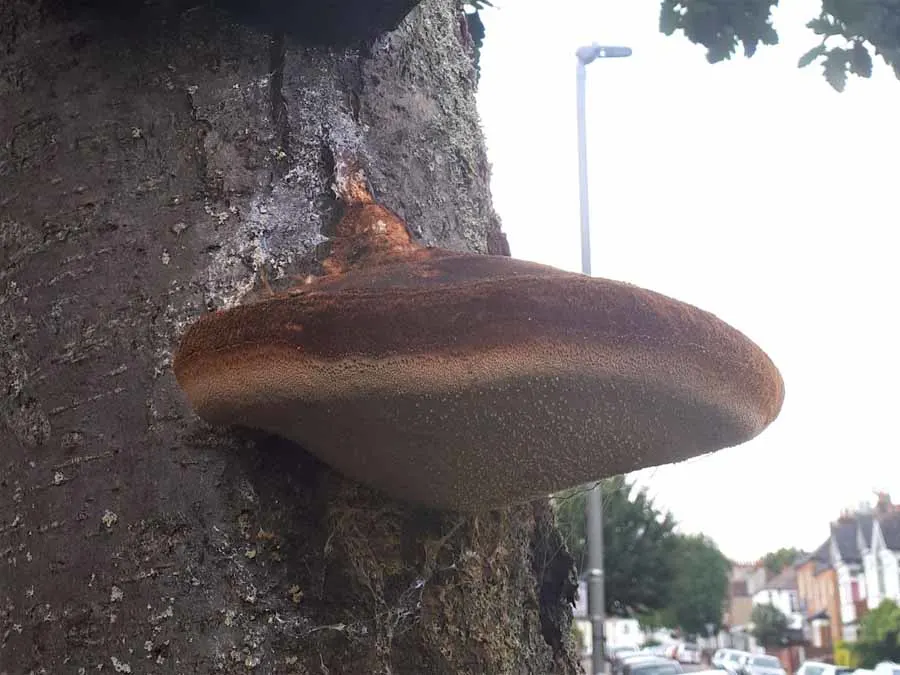
Growing on living deciduous broadleaf trees. Its most common hosts are probably Ash and Oak in the UK, but commonly found on fruit-bearing trees in gardens, parklands, old orchards and forests. Necrotrophic parasite, causing white-rot of sapwood and the crack of the wood along the annual ring.
Possible Confusion
It is almost unmistakable when young, but when its is dry, there are a few possible confusions.
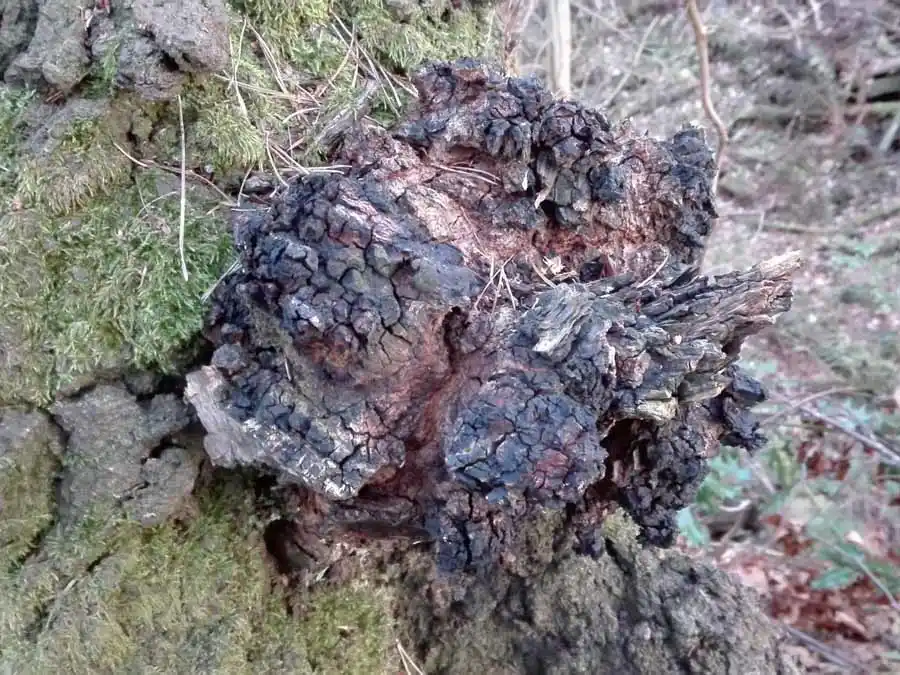
Chaga, the sterile conk (sclerotium) of Inonotus obliquus, pictured, is rather rare in England, more common in Scotland, and regardless it may grow on a few hardwood genera, it is more common on Birch. If you crack it or cut it, the inside of Chaga is reddish brown, but without having any tubes or pores.
The old and dry fruit body of Dyer’s Mazegill (Phaeolus schweinitzii) might look similar, but it is a root parasitic species of conifers (rarely of broadleaf, deciduous trees too) with a noticeable stem.
Other Facts
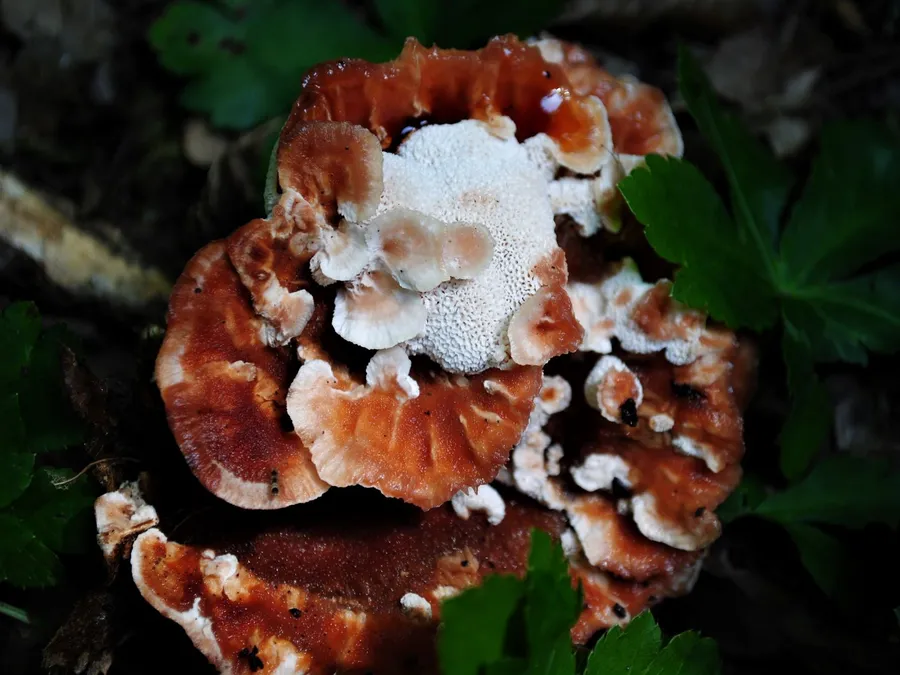
Young fruitbodies sometimes exude clear or slightly reddish liquid droplets, as illustrated by the specimens of the left. These young Shaggy Brackets were seen together with more mature brackets on an old Ash tree in Bedfordshire, England. Photograph: Matt Leivers, by whose kind permission this picture is shown here.
This colourful but inedible bracket fungus is also found in many other parts of the world including much of Asia and North America. In the USA it is sometimes referred to by the common name Inonotus Canker.